Winnipeg to Cancún
Cancún → WinnipegFTL freight transportation service between Winnipeg and Cancún. Reliable logistics solutions for your business.
Route Description
Everything you need to know about the corridor Winnipeg - Cancún
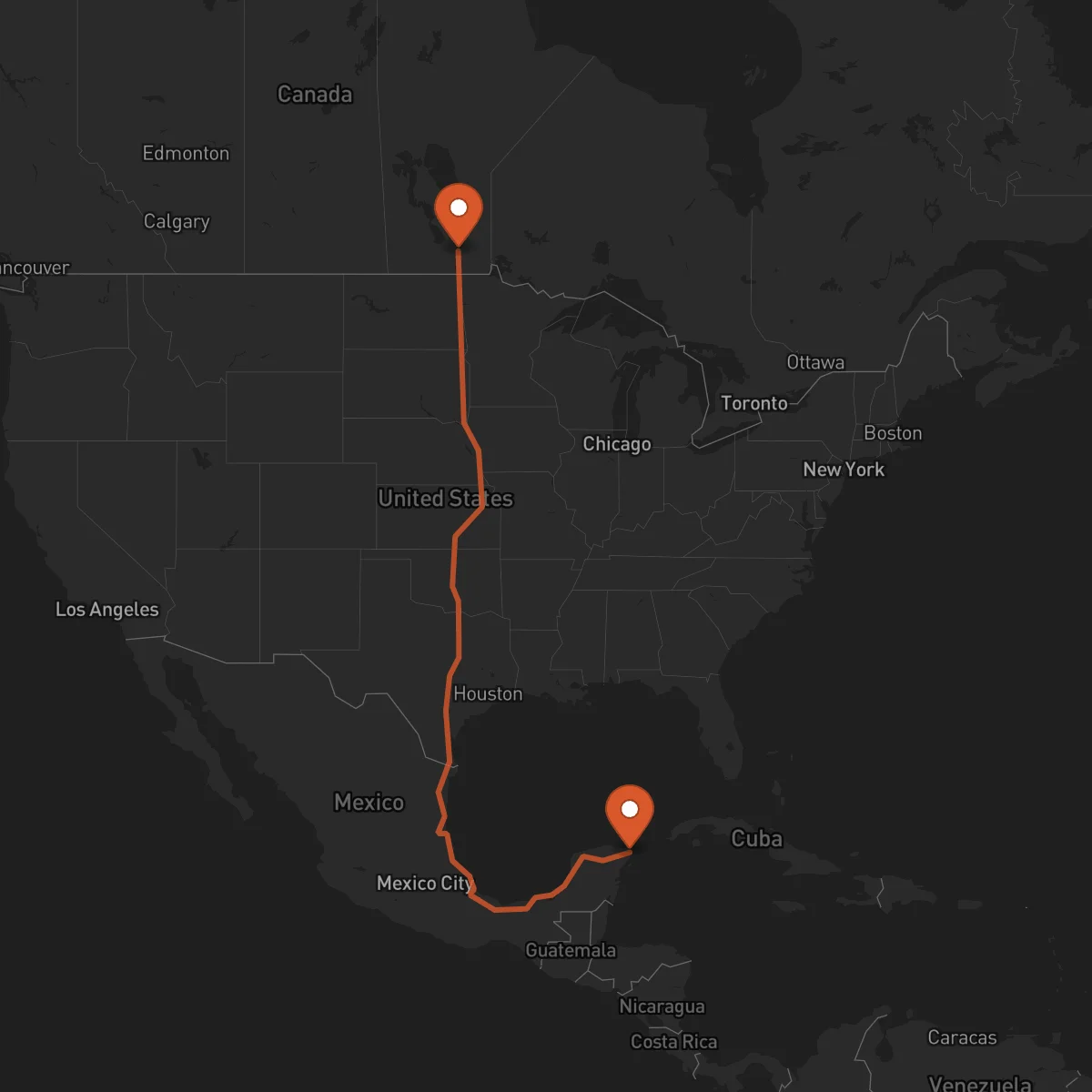
The Winnipeg-Cancún corridor represents a vital logistics connection between Canada and Mexico, spanning approximately 3,321 kilometers across North America. This cross-border route traverses diverse geographic and economic regions, connecting the Canadian prairies with Mexico's Caribbean coast. The corridor facilitates the movement of goods between two distinct economic zones, enabling trade and commerce across three countries.
The transportation infrastructure along this route includes major highways such as Highway 75 in Manitoba, I-29 and I-35 through the United States, and Mexican Federal Highways 180 and 307. Key border crossings include Pembina (North Dakota) and Laredo (Texas), which serve as critical nodes for customs clearance and cargo transfer. Control Terrestre's expertise in cross-border operations ensures seamless movement of freight through these checkpoints, with our certified providers handling all necessary documentation and compliance requirements.
This corridor serves numerous industries including automotive, agricultural products, manufacturing components, and consumer goods. The route particularly benefits companies with operations in the Great Lakes industrial region and the Yucatán Peninsula's growing manufacturing sector. Control Terrestre's dedicated FTL services provide reliable transportation solutions for businesses requiring consistent, scheduled freight movement along this strategic North American corridor.
Services for this Route
Available services for the corridor Winnipeg - Cancún
 Origin
Winnipeg, located in the heart of Canada's prairies, serves as a strategic logistics hub for Manitoba and the surrounding region. The city's position at the confluence of the Red and Assiniboine rivers has historically made it a transportation nexus, now enhanced by modern infrastructure including the Winnipeg James Armstrong Richardson International Airport and extensive rail connections. Winnipeg's economy is diverse, with strong sectors in manufacturing, agriculture, aerospace, and information technology.
The city benefits from its central location within Canada, providing access to major markets in both Western and Eastern Canada. Winnipeg's transportation infrastructure includes the Trans-Canada Highway, multiple rail yards operated by CN and CPKC, and the Port of Churchill for northern shipping connections. The city's cold storage facilities and food processing industries create specific logistics needs that require specialized transportation solutions, particularly for temperature-sensitive cargo.
 Destination
Cancún
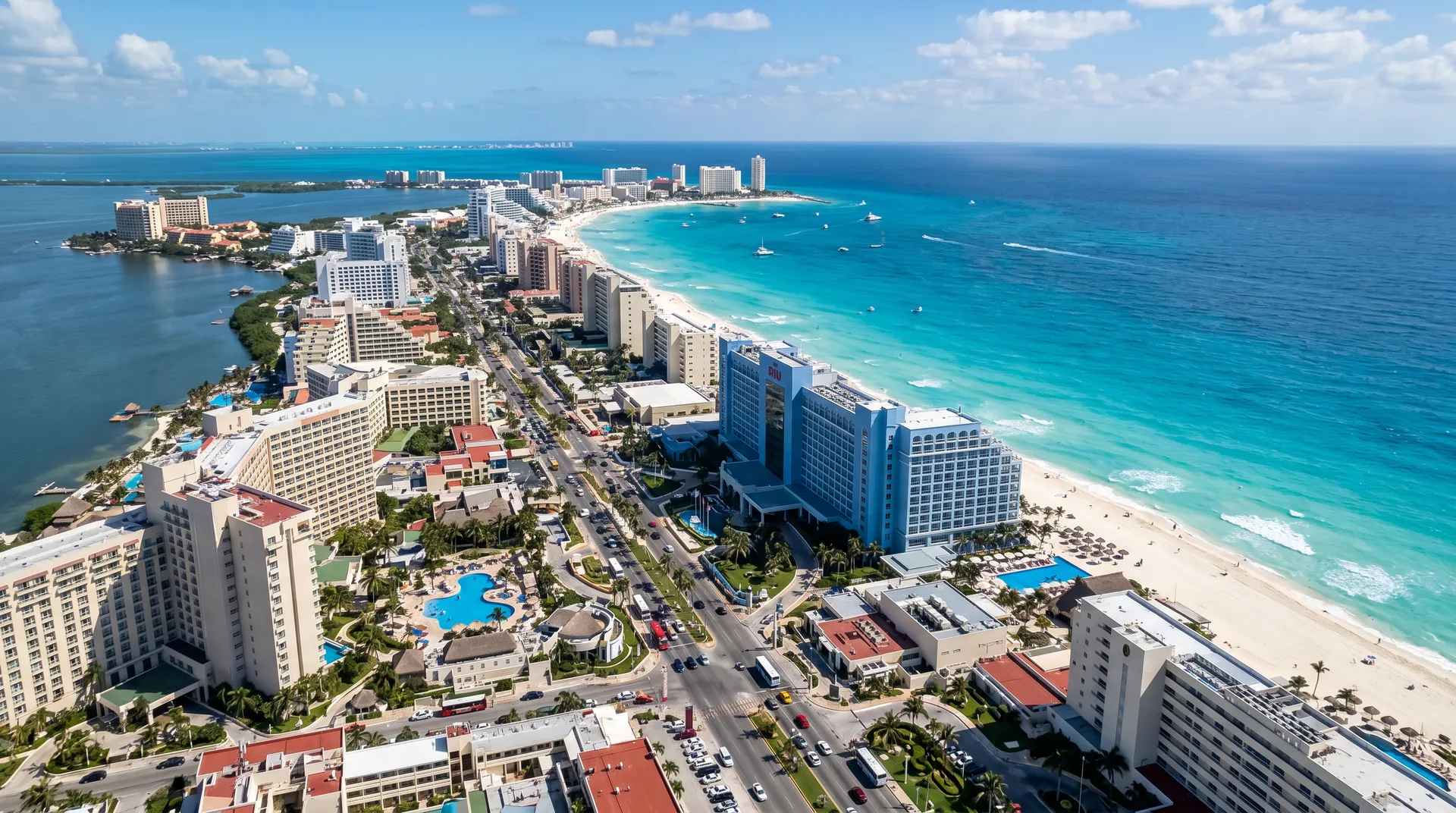
Cancún, situated on Mexico's Caribbean coast in Quintana Roo, has evolved from a tourism destination into a significant logistics and industrial center. The city's strategic location provides access to both maritime shipping routes through the nearby Port of Puerto Morelos and air cargo services via Cancún International Airport. Cancún's economy has diversified beyond tourism to include manufacturing, particularly in the hospitality supply chain, electronics, and automotive components.
The region's infrastructure includes modern highways connecting to the rest of Mexico's road network, with Highway 307 providing direct access to major industrial centers in the Yucatán Peninsula. Cancún's proximity to the Riviera Maya and its integration with the Mesoamerican trade corridor make it an increasingly important node for logistics operations. The city's free trade zone and industrial parks attract businesses requiring efficient import/export capabilities, creating demand for reliable freight transportation services connecting to North American markets.










