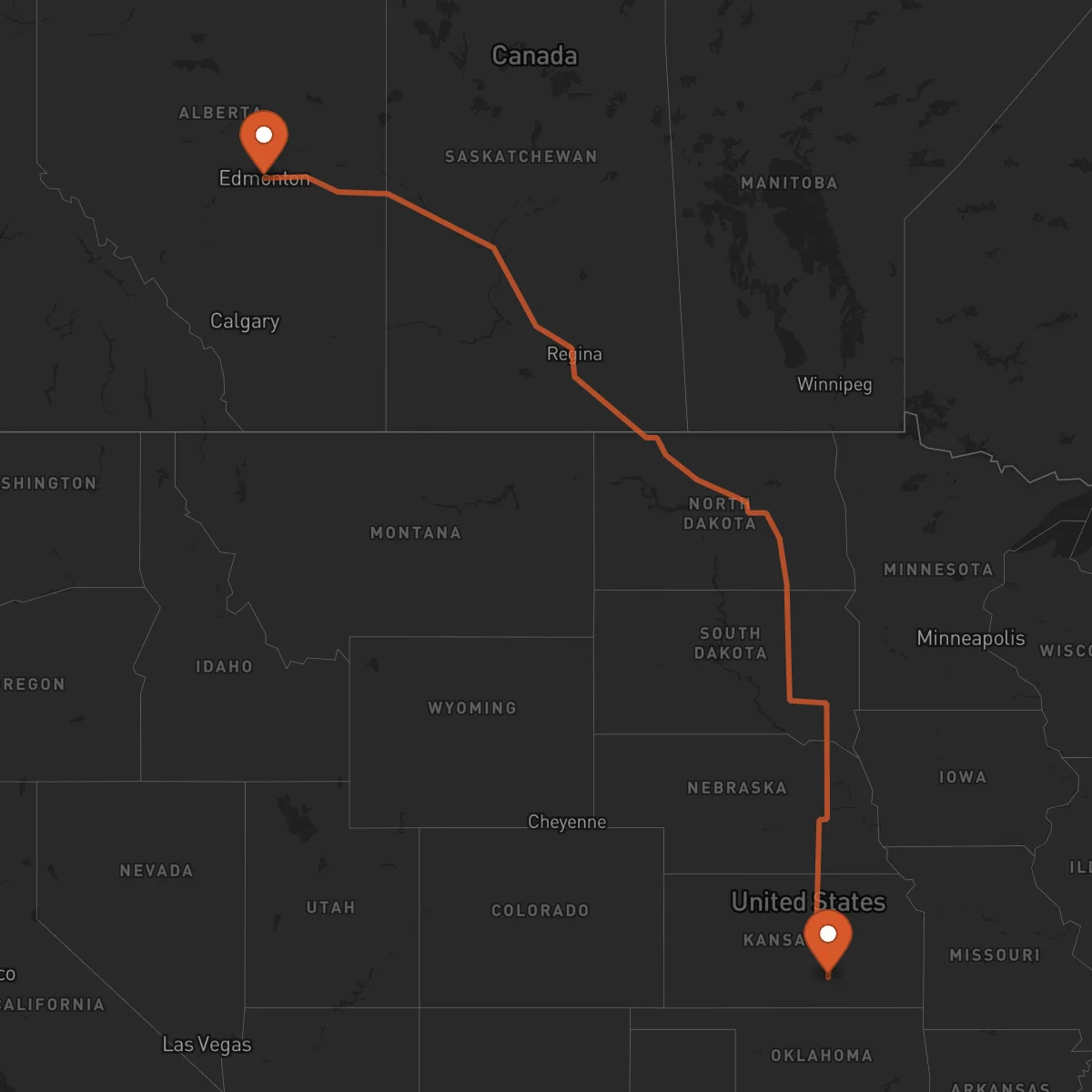
Wichita to Edmonton
Edmonton → WichitaFTL freight transportation service between Wichita and Edmonton. Reliable logistics solutions for your business.
Route Description
Everything you need to know about the corridor Wichita - Edmonton
The logistics corridor between Wichita, Kansas and Edmonton, Alberta represents a vital cross-border freight transportation route connecting the industrial heartland of the United States with Canada's northern economic center. This 2,154 km corridor traverses diverse terrain and crosses international borders, making it essential for companies engaged in North American trade. The route primarily utilizes Interstate 29 and Interstate 35 northbound through the United States, transitioning to Canadian Highway 2 and the Yellowhead Highway as it enters Alberta. This corridor serves as a critical link for industries requiring reliable freight transportation between the central United States and Canada's western provinces.
The economic significance of this corridor is substantial, connecting Wichita's manufacturing and aerospace sectors with Edmonton's energy, petrochemical, and logistics industries. Wichita, known as the "Air Capital of the World," produces aircraft and aerospace components that frequently require transportation to Canadian assembly facilities and maintenance centers. Edmonton, as Alberta's capital and a major distribution hub, serves as a gateway to northern Canada and the oil sands region. The corridor facilitates the movement of specialized equipment, industrial machinery, and raw materials essential to both economies.
Control Terrestre provides comprehensive cross-border freight transportation services along this corridor, managing all aspects of international shipping including customs documentation, border clearance, and regulatory compliance. Our experienced team understands the complexities of US-Canada trade regulations and ensures seamless transit through major border crossings such as Pembina, North Dakota/Emerson, Manitoba. We offer dedicated full truckload (FTL) services with real-time tracking, specialized equipment options including refrigerated units for temperature-sensitive cargo, and expedited shipping for time-critical shipments. Our C-TPAT and FAST-certified carrier network ensures efficient processing at border crossings, reducing transit times and minimizing potential delays.
Services for this Route
Available services for the corridor Wichita - Edmonton
 Origin
Wichita
Wichita, Kansas serves as a strategic logistics hub in the American Midwest, offering exceptional connectivity for freight transportation. Located in south-central Kansas, Wichita provides access to major interstate highways including I-35, I-135, and I-235, creating efficient routes to both coasts and international borders. The city's Dwight D. Eisenhower National Airport and multiple rail connections complement its robust ground transportation infrastructure. Wichita's economy is anchored by the aerospace industry, with major manufacturers like Boeing, Spirit AeroSystems, and Textron Aviation operating extensive facilities. The region also supports manufacturing, healthcare, and agricultural equipment sectors, generating diverse freight transportation needs. Wichita's central location within the continental United States makes it an ideal origin point for cross-border shipments to Canada, with relatively balanced transit times to both eastern and western destinations.
 Destination
Edmonton, Alberta stands as a strategic logistics center in western Canada, offering unique advantages for freight transportation and distribution. Located in central Alberta along the North Saskatchewan River, Edmonton provides access to major transportation routes including the Yellowhead Highway (Highway 16) and Queen Elizabeth II Highway (Highway 2). The city's proximity to the Alberta Industrial Heartland, one of Canada's largest hydrocarbon processing regions, creates substantial freight movement. Edmonton International Airport and the Port Alberta initiative enhance the city's multimodal transportation capabilities. The local economy is dominated by the energy sector, with significant petrochemical, oil and gas, and related industries. Edmonton also serves as a distribution center for northern Canada, with freight often continuing to remote communities via specialized transportation. The city's location approximately 300 km north of the Canada-United States border makes it accessible for cross-border freight while maintaining strategic distance from major US markets.










