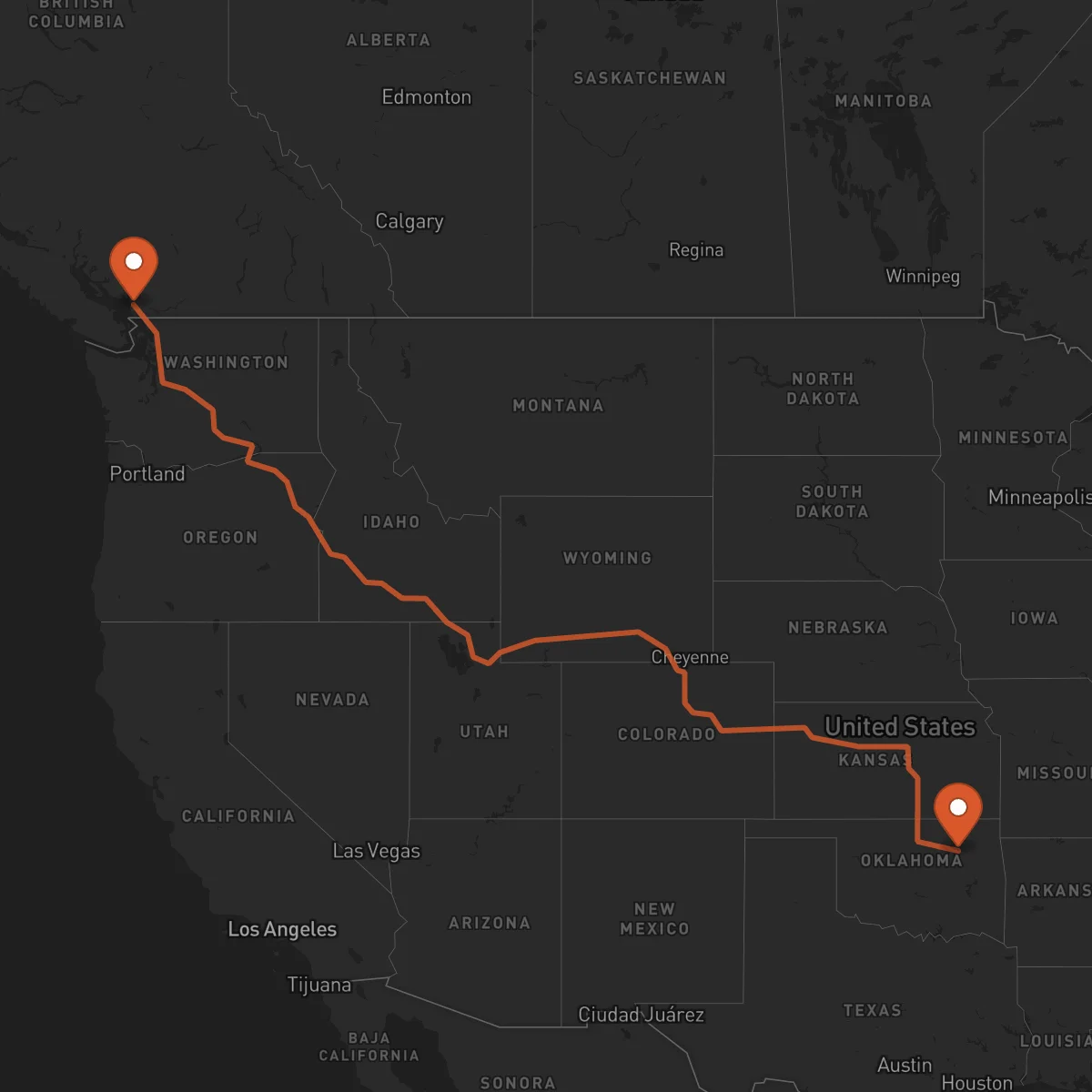
Vancouver to Tulsa
Tulsa → VancouverFTL freight transportation service between Vancouver and Tulsa. Reliable logistics solutions for your business.
Route Description
Everything you need to know about the corridor Vancouver - Tulsa
The Vancouver-Tulsa logistics corridor connects Canada's Pacific coast with the central United States, covering approximately 2,631 kilometers across diverse terrain and economic regions. This cross-border route serves as a vital link between British Columbia's export-oriented economy and Oklahoma's manufacturing and energy sectors. The corridor traverses major urban centers, agricultural regions, and industrial zones, making it essential for North American supply chain operations.
The transportation infrastructure along this route includes major highways such as I-5, I-15, I-70, and I-44, providing multiple routing options for freight carriers. Key border crossings at Blaine-Huntingdon and other points of entry facilitate smooth cross-border movement. The corridor's strategic importance is enhanced by its connection to major ports, rail terminals, and distribution centers throughout the Pacific Northwest and Midwest regions.
Control Terrestre leverages this corridor's full potential through our extensive network of certified transportation providers. Our C-TPAT and FAST-certified partners ensure expedited customs clearance and secure cargo handling throughout the journey. We offer specialized services for various cargo types, including refrigerated freight for perishable goods and dedicated equipment for oversized shipments, making us the ideal partner for companies requiring reliable full truckload service between Vancouver and Tulsa.
Services for this Route
Available services for the corridor Vancouver - Tulsa
 Origin
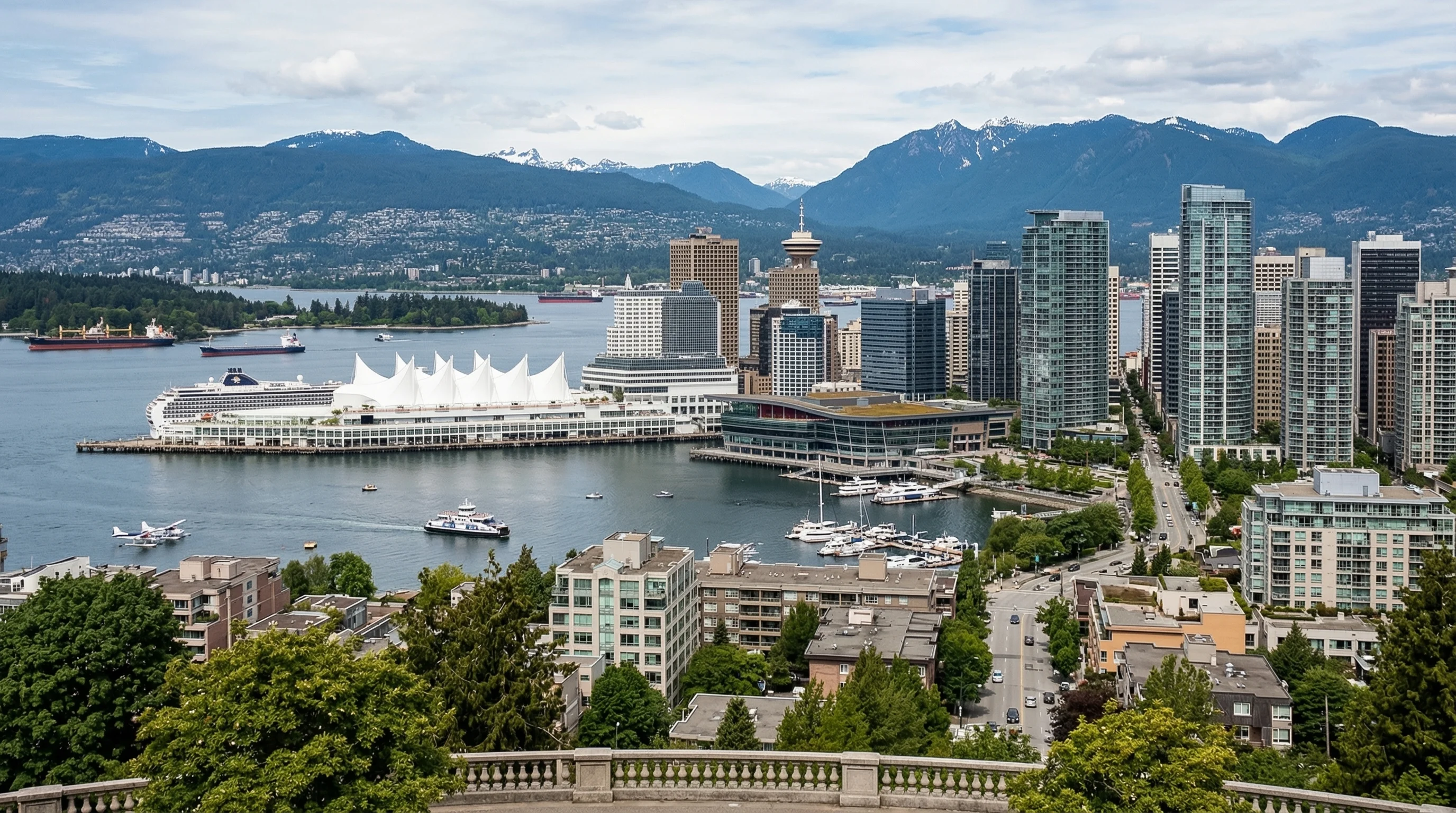
Vancouver
Vancouver stands as a major Pacific gateway for North American trade, featuring Canada's largest and busiest port on the West Coast. The city's strategic location provides direct access to Asian markets and serves as a critical hub for international commerce. Vancouver's economy is driven by diverse sectors including technology, film production, forestry, mining, and natural resources, creating substantial freight movement requirements. The region's advanced transportation infrastructure includes Port Metro Vancouver, extensive rail networks, and modern highway systems connecting to the U.S. border.
 Destination
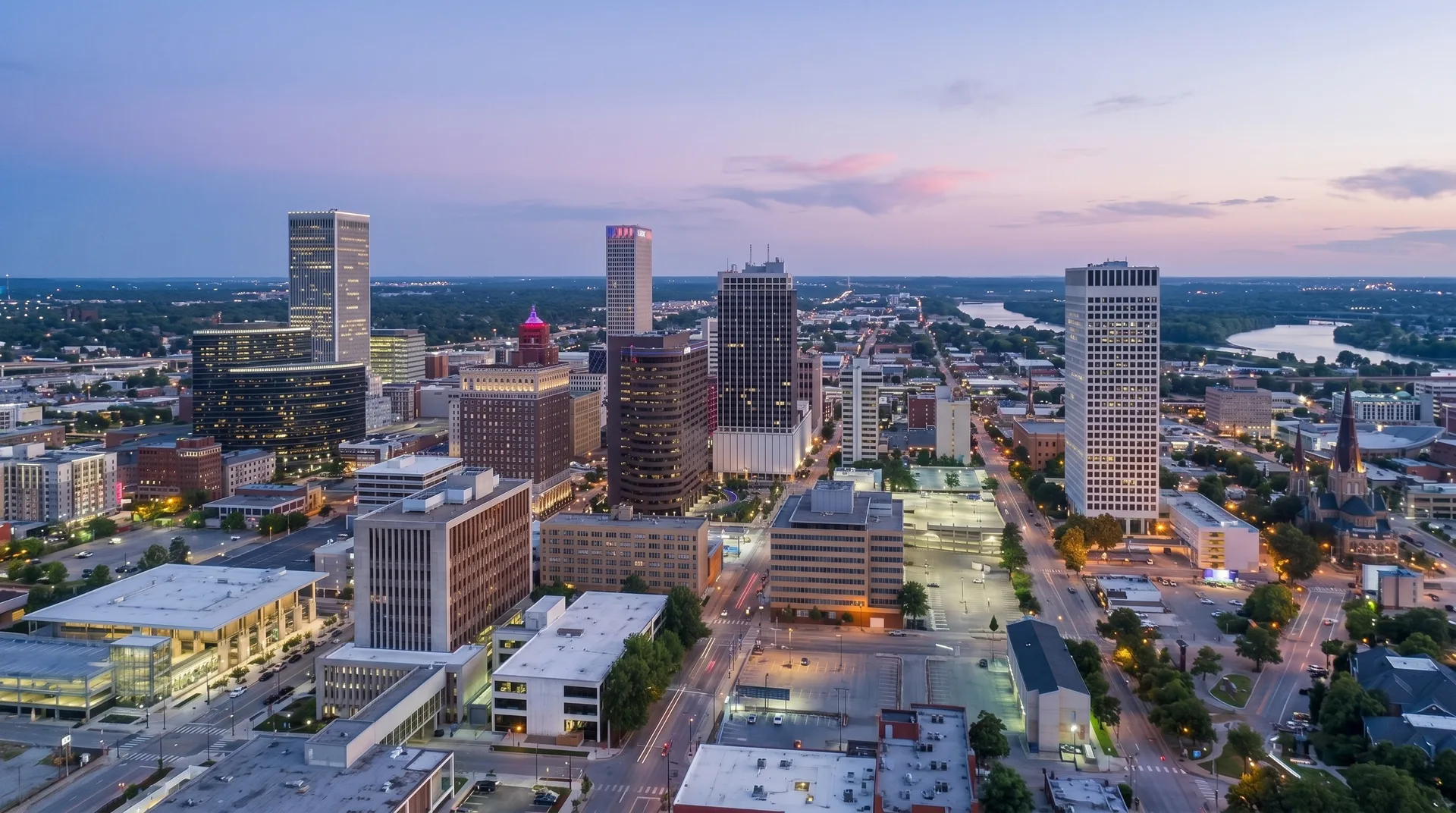
Tulsa
Tulsa serves as a significant logistics and industrial center in the heart of America's Midwest. Known as the "Oil Capital of the World," Tulsa's economy has diversified to include aerospace, telecommunications, and manufacturing sectors. The city benefits from its central location within the United States, providing excellent distribution capabilities to major markets across the country. Tulsa's transportation infrastructure includes the Tulsa Port of Catoosa, a major inland waterway port, extensive rail connections, and proximity to major interstate highways, making it an ideal destination for cross-border freight.










