Vancouver to Savannah
Savannah → VancouverFTL freight transportation service between Vancouver and Savannah. Reliable logistics solutions for your business.
Route Description
Everything you need to know about the corridor Vancouver - Savannah
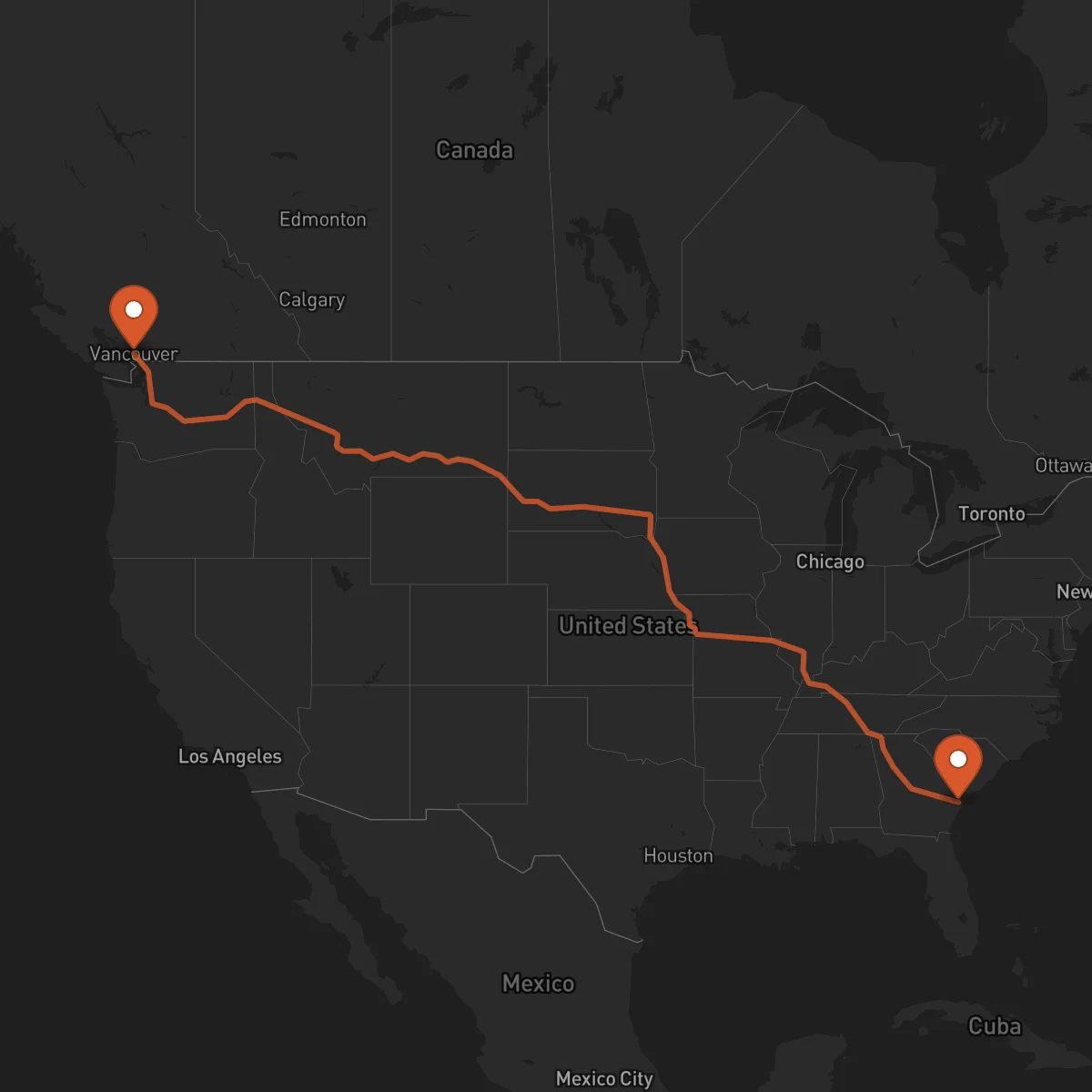
The Vancouver-Savannah corridor represents one of the most strategic logistics connections between Canada and the southeastern United States, spanning approximately 3,958 kilometers through diverse terrain and major industrial regions. This cross-border route connects the Pacific port of Vancouver, British Columbia, with the Atlantic port of Savannah, Georgia, creating a vital north-south freight artery that supports international trade and domestic distribution across North America.
The corridor traverses key economic regions including the Pacific Northwest, the American Midwest, and the southeastern industrial belt. Major transportation infrastructure along this route includes Interstate 5, I-90, I-65, and I-16, providing efficient connectivity through major cities such as Seattle, Portland, Chicago, Nashville, and Atlanta. The route also crosses significant agricultural and manufacturing regions, making it essential for both raw materials and finished goods transportation.
Control Terrestre specializes in managing the complexities of this cross-border corridor, offering comprehensive FTL services that ensure seamless freight movement between Canada and the United States. Our expertise in customs documentation, border procedures, and regulatory compliance eliminates the typical challenges associated with international freight transportation. We provide dedicated equipment options including dry vans and refrigerated units to accommodate various cargo types, while our network of certified carriers ensures reliable service throughout the entire journey.
Services for this Route
Available services for the corridor Vancouver - Savannah
 Origin
Vancouver
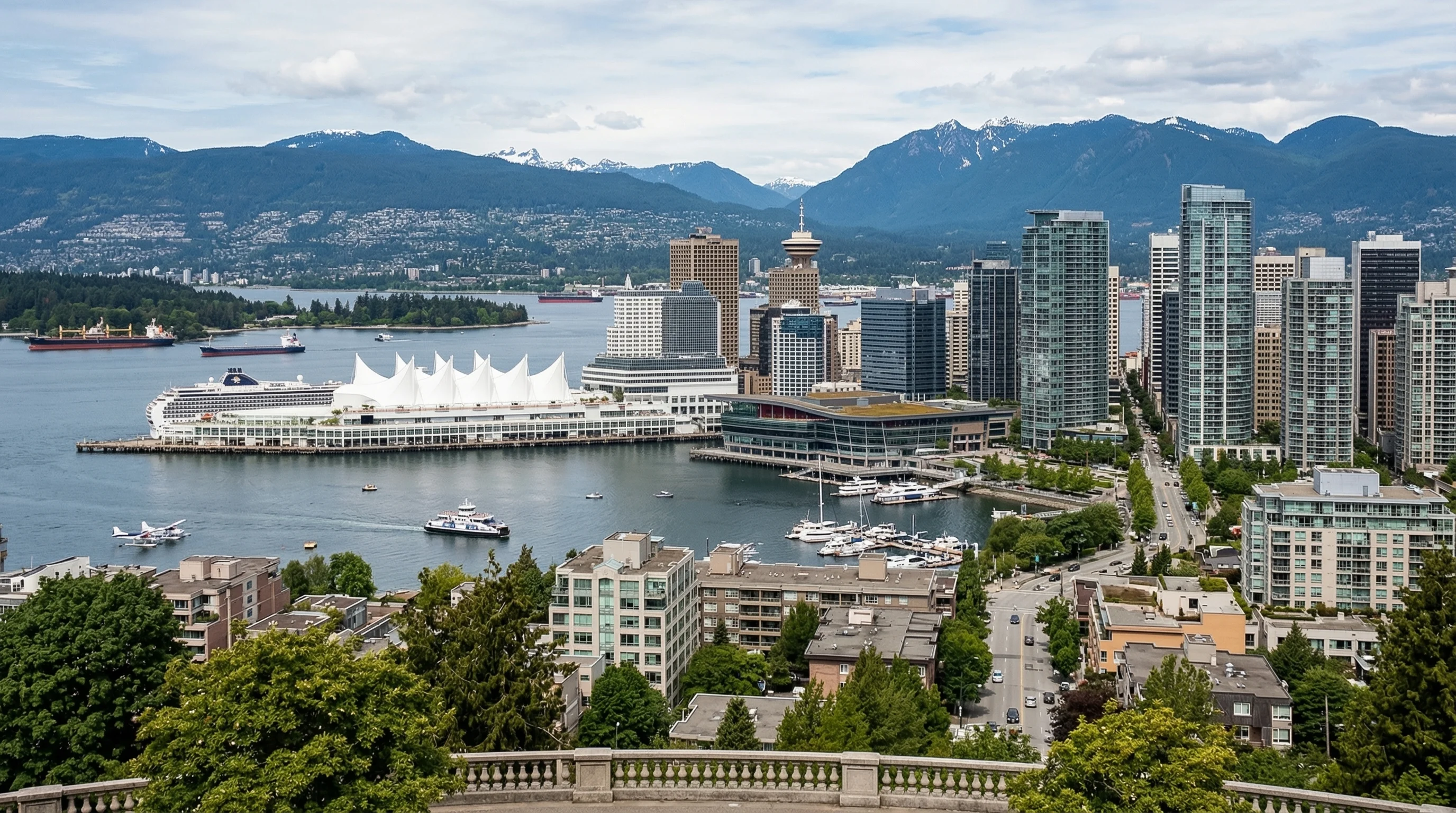
Vancouver serves as a critical logistics hub on Canada's Pacific coast, leveraging its strategic position as the country's largest port for international trade. The city's economy is driven by international commerce, technology, film production, and natural resources including forestry and mining. Vancouver's Port Metro Vancouver handles millions of containers annually and provides direct access to Asian markets, making it an essential gateway for North American imports and exports.
The city boasts extensive transportation infrastructure including the Port of Vancouver, Vancouver International Airport, and comprehensive rail connections through Canadian National Railway and Canadian Pacific Railway. The region's highway network, particularly Highway 1 and connections to the United States via Interstate 5, provides efficient access to major U.S. markets. Vancouver's proximity to the U.S. border at Blaine, Washington, facilitates smooth cross-border operations for freight moving south.
 Destination
Savannah
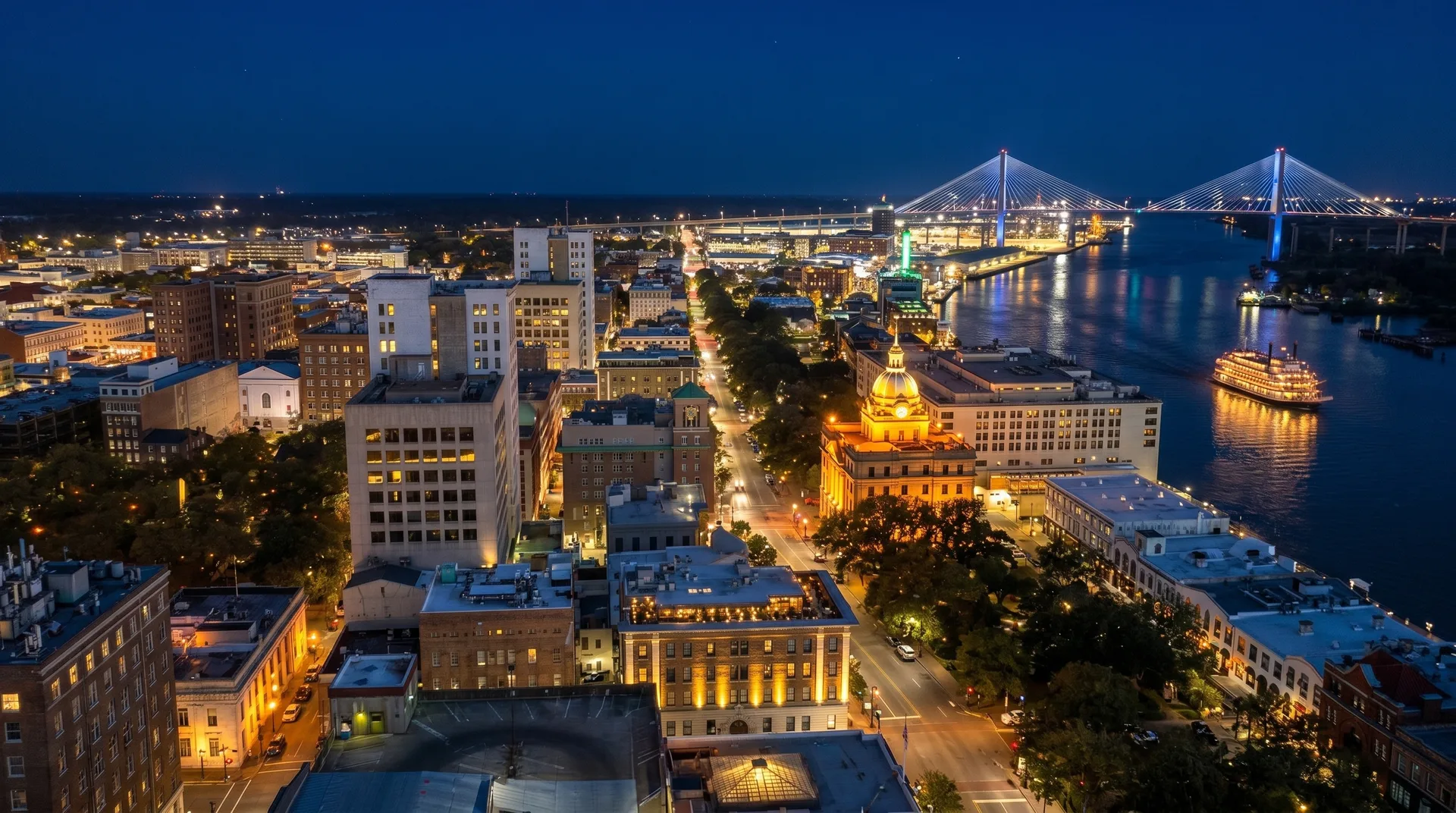
Savannah functions as a major logistics and distribution center on the southeastern U.S. coast, anchored by the Port of Savannah, which is the fourth-largest container port in the United States. The city's economy benefits from international trade, manufacturing, tourism, and military presence, with the port serving as a critical gateway for goods entering the southeastern United States and beyond.
The region features robust transportation infrastructure including the Port of Savannah with its extensive intermodal facilities, Savannah/Hilton Head International Airport, and comprehensive rail connections through Norfolk Southern and CSX Transportation. Interstate 16 provides direct access to Atlanta and connections to major east-west corridors including I-95 and I-75. Savannah's strategic location and logistics capabilities make it an ideal distribution point for reaching major southeastern markets including Atlanta, Charlotte, and Orlando.










