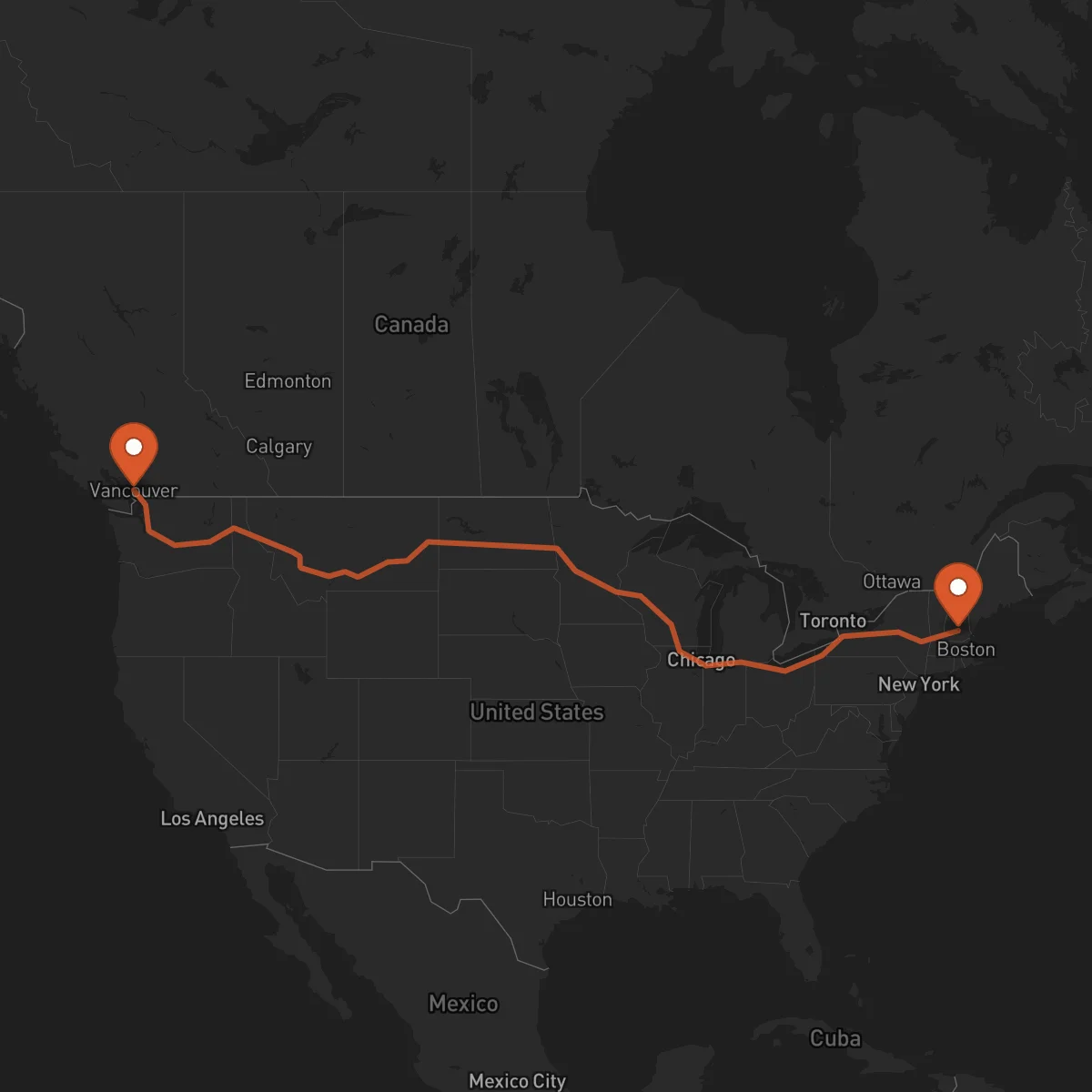
Vancouver to Concord
Concord → VancouverFTL freight transportation service between Vancouver and Concord. Reliable logistics solutions for your business.
Route Description
Everything you need to know about the corridor Vancouver - Concord
The Vancouver to Concord corridor represents a vital cross-border freight transportation route connecting the Pacific coast of Canada with the northeastern United States. This 3,945 km corridor traverses diverse landscapes and economic regions, facilitating the movement of goods between two major North American markets. The route strategically links British Columbia's port facilities and industrial centers with New England's manufacturing and distribution hubs, creating essential supply chain connections across international borders.
The corridor serves numerous industries including automotive, technology, aerospace, and consumer goods. Vancouver's position as Canada's gateway to Asia-Pacific trade complements Concord's role in New England's industrial ecosystem. Major manufacturing centers along the route include Ontario's automotive corridor and Quebec's aerospace industry, making this a multi-modal freight artery that supports both import and export activities between Canada and the United States.
Transportation infrastructure along this corridor includes major highways such as I-5, I-90, and I-93, providing efficient north-south and east-west connectivity. Key border crossings at locations like the Peace Arch and Thousand Islands facilitate smooth customs clearance and cargo movement. Control Terrestre's expertise in cross-border operations ensures seamless transportation across this corridor, with our C-TPAT and FAST certified partners managing customs documentation, regulatory compliance, and efficient cargo handling from origin to destination.
Services for this Route
Available services for the corridor Vancouver - Concord
 Origin
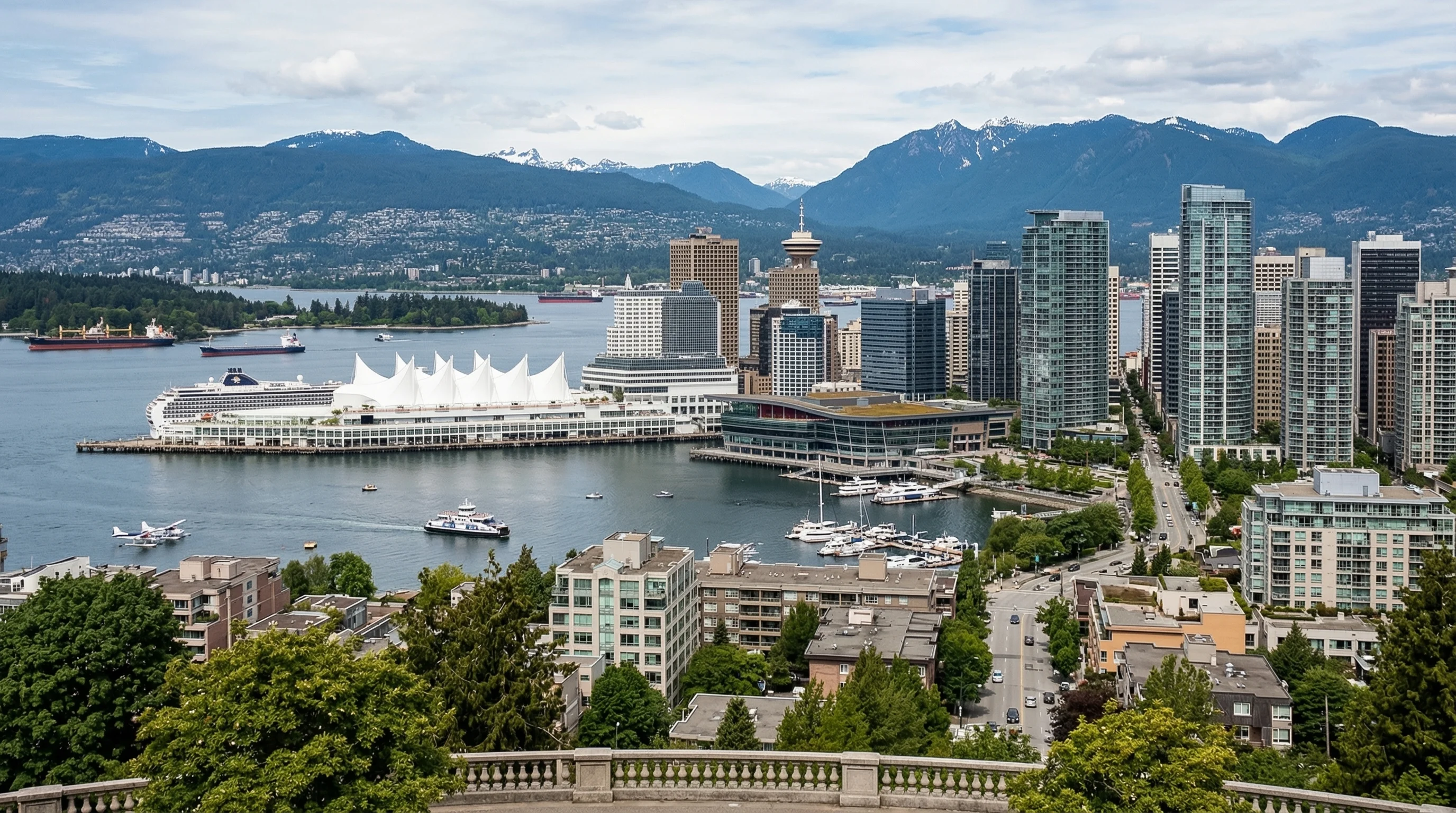
Vancouver
Vancouver, located on Canada's Pacific coast, serves as a critical logistics hub with its deep-water port facilities and strategic position as the country's gateway to Asia-Pacific trade. The city's port handles millions of TEUs annually, connecting Canadian exports and imports with global markets. Vancouver's transportation infrastructure includes extensive highway networks, rail connections, and proximity to major international airports, making it an ideal origin point for cross-border freight operations. The region's economy is driven by technology, film production, tourism, and natural resources, creating diverse freight transportation needs.
 Destination
Concord
Concord, the capital city of New Hampshire, occupies a strategic position in New England's industrial landscape. Located along major transportation corridors, Concord provides excellent access to Boston, Montreal, and other key Northeast markets. The city's economy features strong manufacturing, healthcare, and technology sectors, with numerous distribution centers serving the region. Concord's proximity to major highways and rail networks makes it an efficient destination for cross-border freight, supporting the area's role in New England's supply chain infrastructure and industrial distribution.










