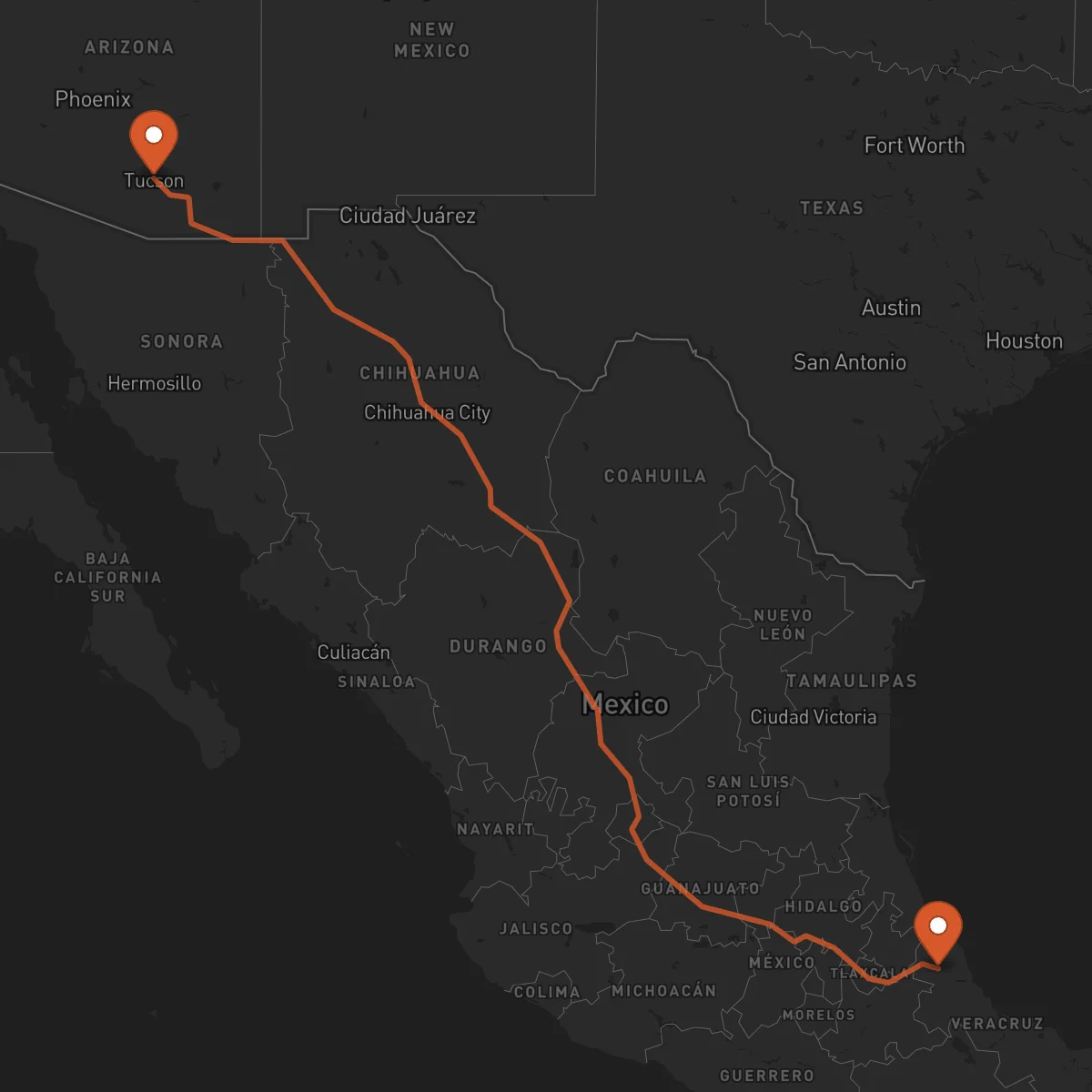
Tucson to Xalapa
Xalapa → TucsonFTL freight transportation service between Tucson and Xalapa. Reliable logistics solutions for your business.
Route Description
Everything you need to know about the corridor Tucson - Xalapa
The Tucson to Xalapa corridor represents a vital cross-border logistics route connecting the industrial heart of Arizona with the thriving commercial center of Veracruz. This strategic corridor spans approximately 1,990 kilometers and serves as a critical link between the United States and Mexico's manufacturing and agricultural sectors. The route traverses diverse terrain and economic zones, facilitating the movement of goods between two major North American markets.
The corridor is particularly significant for industries such as automotive manufacturing, electronics, agricultural products, and consumer goods. Tucson serves as a key logistics hub with its proximity to major highways and rail connections, while Xalapa functions as an important distribution center for eastern Mexico, with strong connections to Veracruz's port facilities and industrial parks.
Transportation infrastructure along this route includes major highways such as I-10 and I-25 in the United States, transitioning to Mexican Federal Highways 2, 15D, and 140D. The primary border crossing utilized is at Nogales, Arizona/Sonora, which offers efficient processing for commercial traffic. Control Terrestre's expertise in cross-border operations ensures seamless customs clearance and compliance with both USMCA regulations and Mexican import requirements, minimizing delays and optimizing transit times for our clients' freight shipments.
Services for this Route
Available services for the corridor Tucson - Xalapa
 Origin
Tucson
Tucson, Arizona serves as a strategic logistics gateway for cross-border freight operations. Located just 100 kilometers from the US-Mexico border, Tucson offers excellent connectivity through Interstate 10, which provides direct access to major markets in both the western and eastern United States. The city's logistics infrastructure includes multiple industrial parks, warehousing facilities, and distribution centers that support efficient freight consolidation and distribution. Tucson's economy is driven by aerospace and defense industries, electronics manufacturing, and agricultural production, particularly winter vegetables and livestock. The city's international airport and rail connections further enhance its role as a multimodal logistics hub, making it an ideal origin point for freight destined for Mexican markets.
 Destination
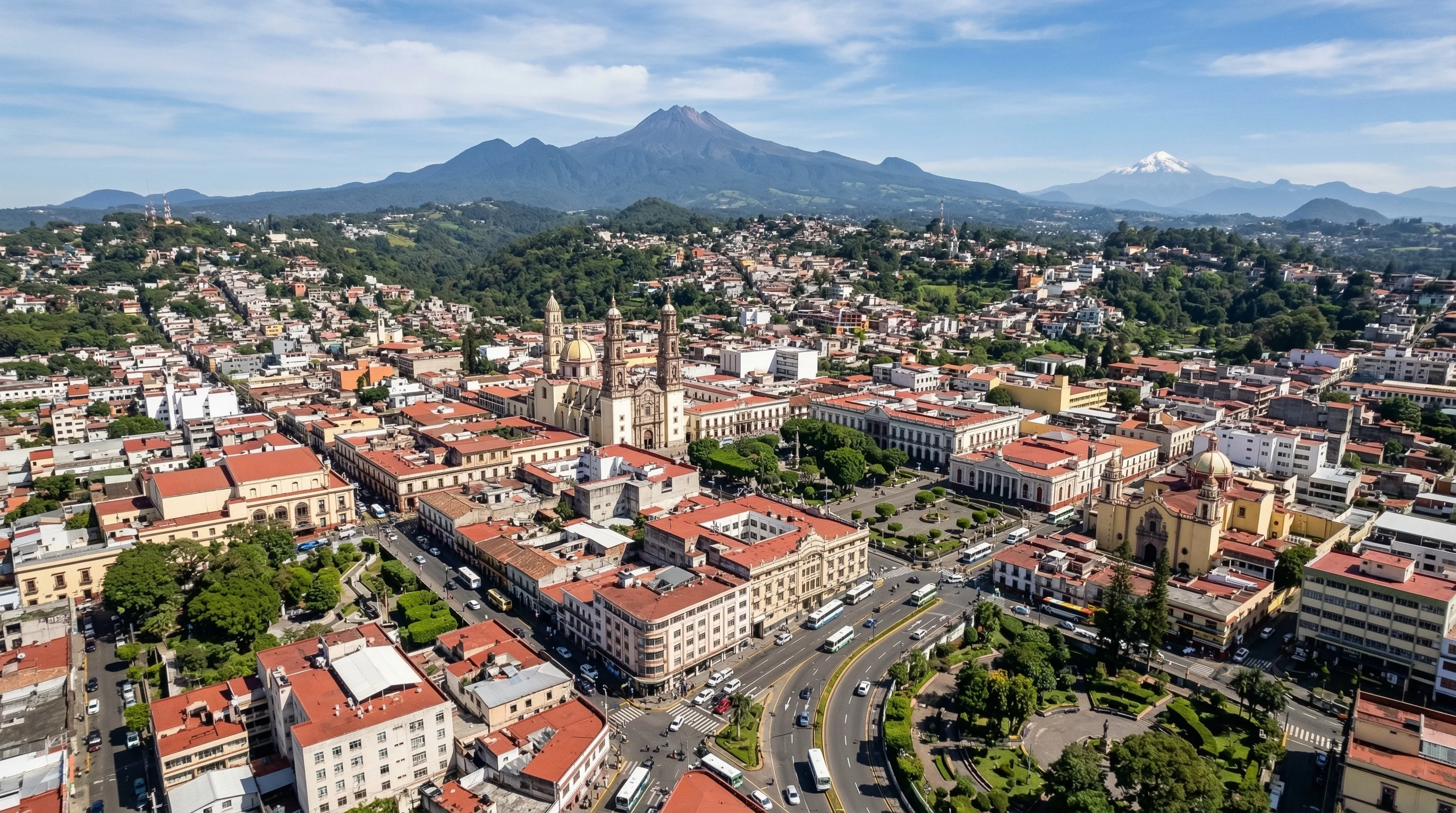
Xalapa, Veracruz stands as a crucial logistics and commercial center in eastern Mexico. Located in the mountainous region of Veracruz state, Xalapa serves as a gateway to Mexico's Gulf Coast ports and industrial zones. The city's strategic position provides access to major transportation routes connecting to Veracruz port, one of Mexico's busiest maritime facilities, and the industrial corridors of Puebla and Mexico City. Xalapa's economy is diverse, with strong sectors in education, services, and manufacturing, particularly in the automotive and electronics industries. The region benefits from well-developed highway infrastructure, including the 140D toll road, which facilitates efficient freight movement. Xalapa's proximity to major industrial parks and its role as a distribution center for agricultural products from Veracruz's fertile regions make it a key destination for cross-border freight operations.










