Tucson to Veracruz
Veracruz → TucsonFTL freight transportation service between Tucson and Veracruz. Reliable logistics solutions for your business.
Route Description
Everything you need to know about the corridor Tucson - Veracruz
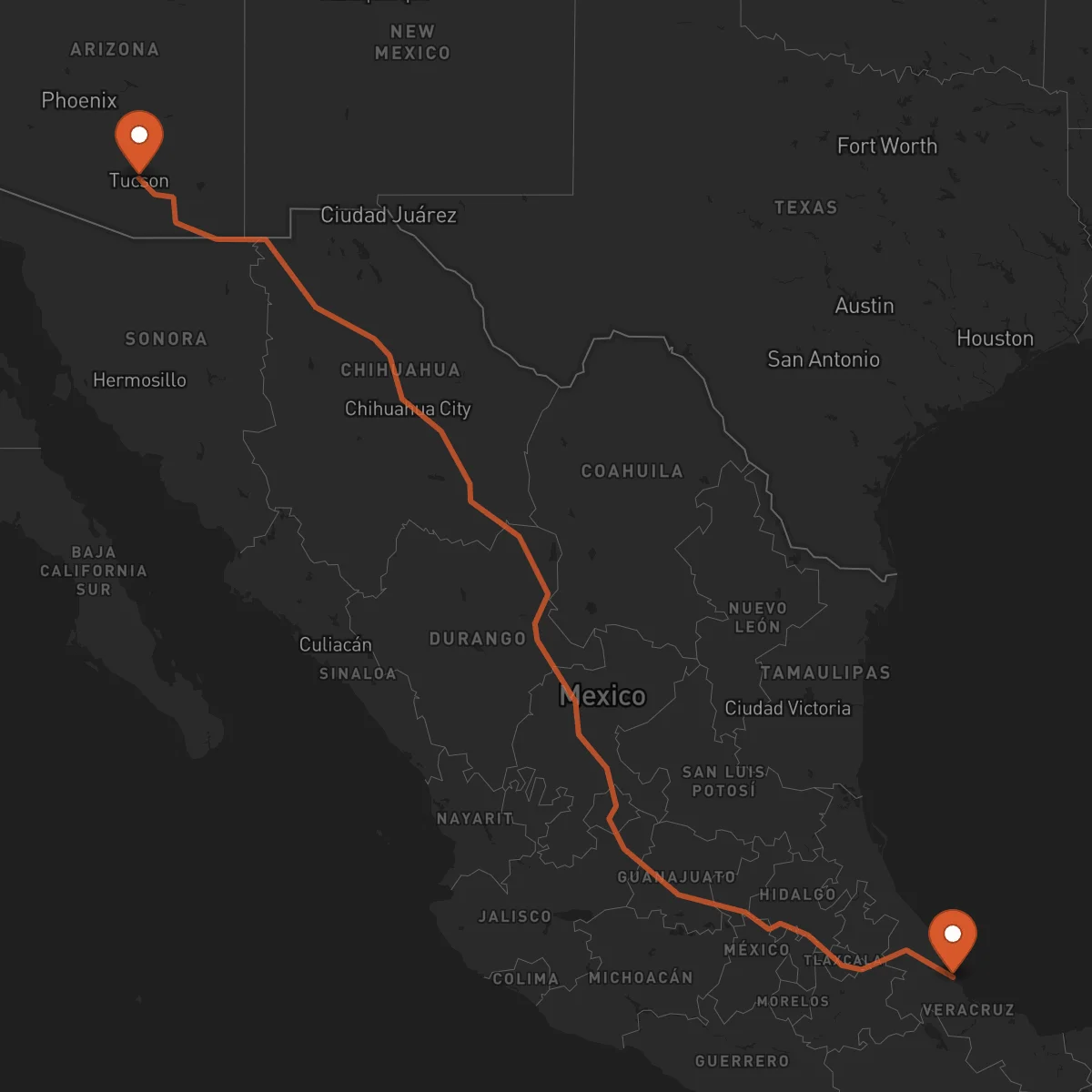
The Tucson-Veracruz corridor represents a vital logistics link connecting the industrial heart of Arizona with one of Mexico's most important port cities. This 2,075 km cross-border route traverses diverse terrain, from the Sonoran Desert through the Sierra Madre Oriental, facilitating the movement of goods between the United States and Mexico's Gulf Coast. The corridor serves as a critical artery for international trade, enabling seamless freight transportation between North American markets.
This route connects Tucson's robust manufacturing and distribution sector with Veracruz's strategic position as Mexico's primary Gulf port. The region's economic activity centers on automotive manufacturing, electronics, agricultural products, and consumer goods. Major industrial parks in both locations drive substantial freight volumes along this corridor, with companies requiring reliable full truckload (FTL) services to maintain their supply chains. The proximity to major trade routes makes this corridor essential for companies engaged in North American commerce.
Transportation infrastructure along the corridor includes Interstate 10 (I-10) from Tucson to the Mexican border, transitioning to Mexican Federal Highway 45 (Carretera Federal 45) southward. Key border crossing points include Nogales, Arizona, providing efficient access into Mexico. The route continues through Monterrey and Puebla before reaching Veracruz, utilizing Mexico's well-developed highway network. Control Terrestre's expertise in cross-border operations ensures smooth customs clearance and regulatory compliance throughout the journey.
Control Terrestre facilitates seamless operations on this corridor through our network of certified carriers and comprehensive logistics solutions. Our C-TPAT and FAST-certified partners ensure expedited border processing, while our specialized team manages documentation, compliance, and real-time tracking. We provide dedicated FTL services that maintain cargo integrity and security from origin to destination, supporting the complex supply chain requirements of companies operating between these strategic locations.
Services for this Route
Available services for the corridor Tucson - Veracruz
 Origin
Tucson
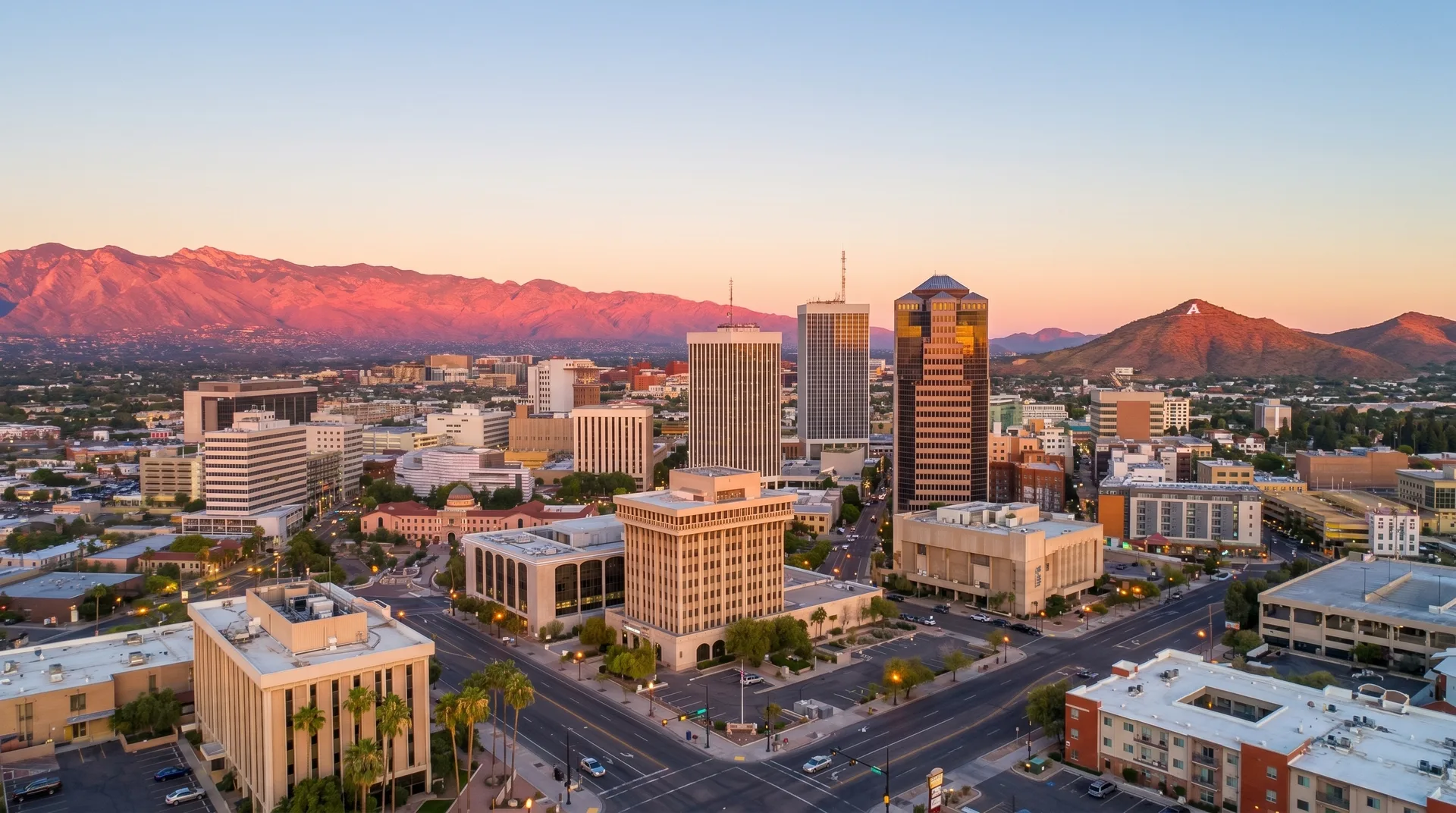
Tucson, Arizona serves as a strategic logistics hub in the southwestern United States, positioned advantageously near major transportation routes and the Mexican border. The city's location along Interstate 10 provides direct access to both coastal markets and cross-border trade opportunities. Tucson's logistics infrastructure includes multiple intermodal facilities, warehousing centers, and distribution hubs that support the region's manufacturing and retail sectors. The city's elevation and climate conditions create favorable circumstances for year-round freight operations without weather-related disruptions.
The Tucson metropolitan area hosts significant aerospace, defense, and technology manufacturing operations, alongside a growing semiconductor industry. Major employers include Raytheon Missiles & Defense, Bombardier Aerospace, and Texas Instruments, generating substantial freight volumes requiring reliable transportation services. The region's agricultural sector, particularly winter produce from Southern Arizona, creates seasonal peaks in freight activity. Tucson's economic diversity, combined with its proximity to the University of Arizona's research facilities, drives consistent demand for full truckload transportation services connecting to both domestic and international markets.
 Destination
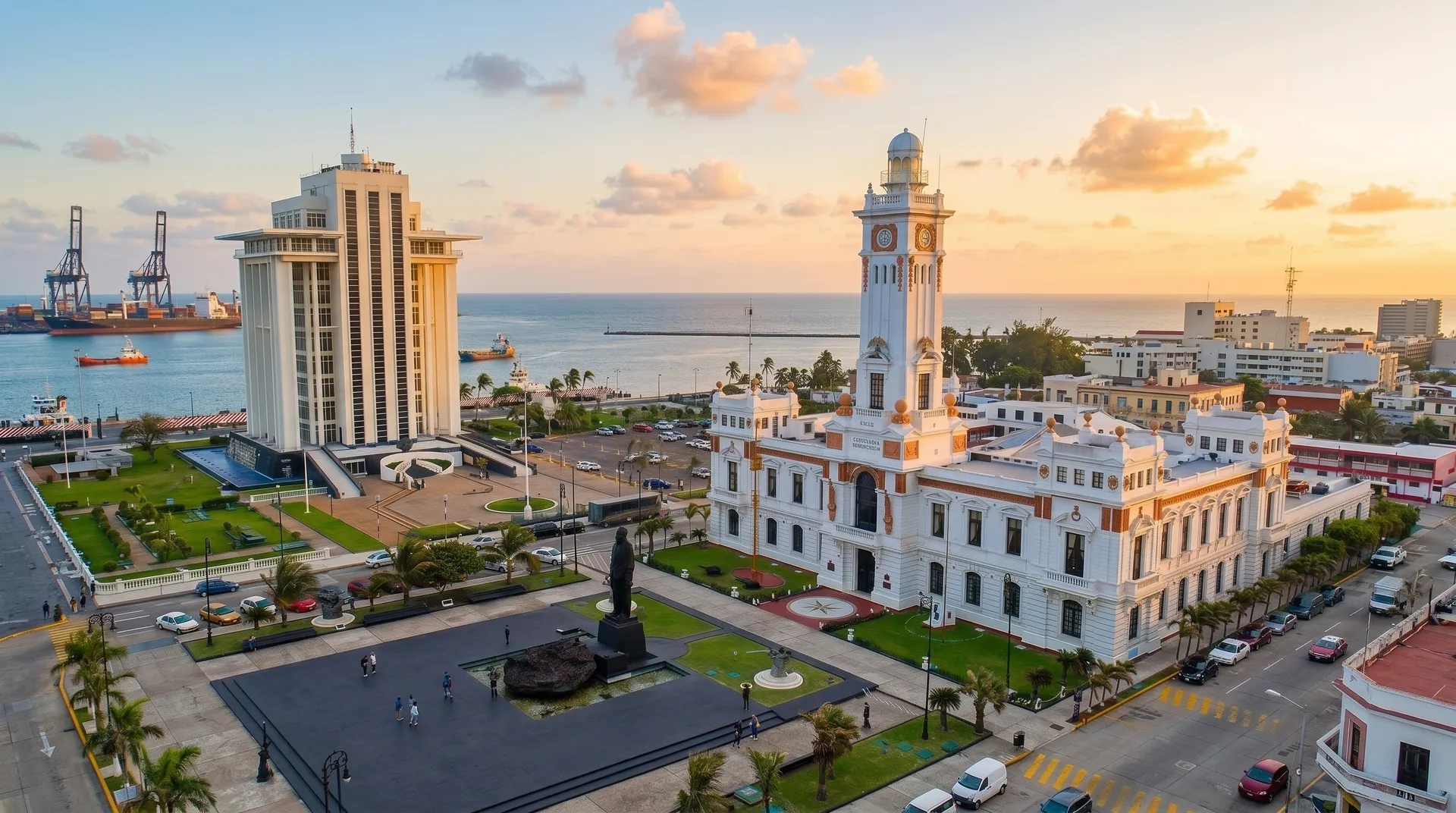
Veracruz stands as Mexico's principal Gulf Coast port city and a critical node in the country's logistics network. The Port of Veracruz, along with the nearby Port of Coatzacoalcos, handles a significant portion of Mexico's maritime cargo, making the city a natural convergence point for freight transportation. The region's extensive highway network, including connections to Mexico City and the U.S. border, provides multiple routing options for efficient cargo movement. Veracruz's infrastructure includes modern warehousing facilities, intermodal yards, and specialized terminals supporting various cargo types.
The city's economy revolves around port activities, oil and gas operations, and agricultural exports. Veracruz is a major exporter of tropical fruits, coffee, and seafood, while also serving as an entry point for imported raw materials and consumer goods. The presence of PEMEX facilities and related petrochemical industries creates substantial freight demand in the region. Veracruz's strategic location enables companies to access both Atlantic markets and Central/South American trade routes, making it an essential destination for cross-border freight operations requiring reliable full truckload services.










