Tucson to Topeka
Topeka → TucsonFTL freight transportation service between Tucson and Topeka. Reliable logistics solutions for your business.
Route Description
Everything you need to know about the corridor Tucson - Topeka
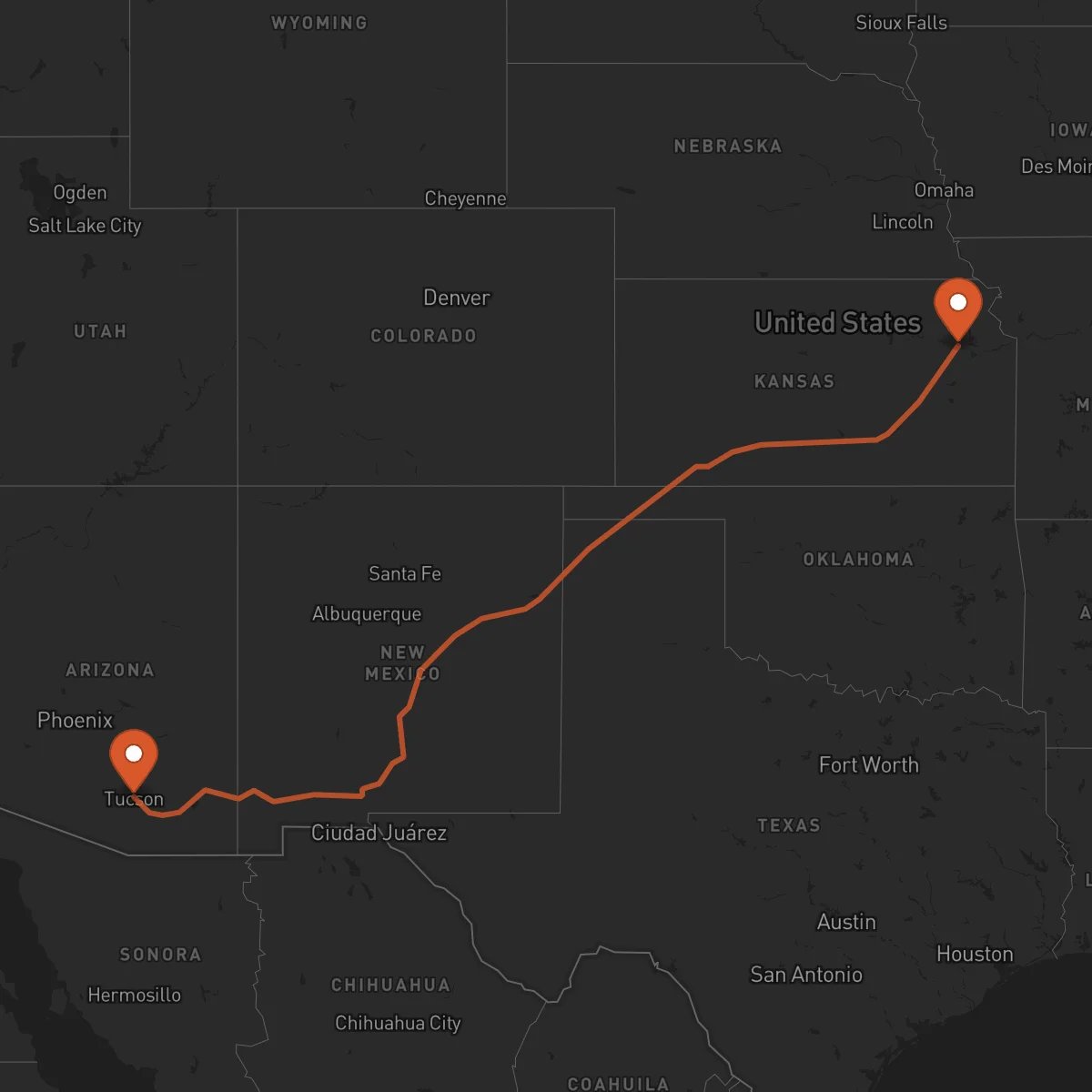
The Tucson to Topeka corridor represents a vital logistics connection linking the Sonoran Desert region with the agricultural heartland of Kansas. This 1,572 km route traverses diverse landscapes and connects two distinct economic regions, facilitating the movement of goods between the southwestern United States and the Midwest. The corridor serves as a critical link in the national supply chain, enabling businesses to transport products efficiently across multiple states and economic zones.
This route passes through major transportation hubs including Phoenix, Albuquerque, and Oklahoma City, providing access to extensive distribution networks. The corridor's strategic importance is amplified by its connection to major interstate highways such as I-10, I-40, and I-335, which form a reliable transportation backbone for freight movement. The region's industrial diversity creates consistent demand for full truckload services, with manufacturing, agriculture, and retail sectors driving significant freight volumes along this path.
Control Terrestre specializes in optimizing operations along this corridor through our network of certified transportation providers. Our expertise in managing cross-regional freight ensures that shipments maintain consistent transit times and arrive in optimal condition. We understand the unique challenges of this route, including varying climate conditions and regulatory requirements across state lines, and have developed specialized protocols to address these factors effectively.
Services for this Route
Available services for the corridor Tucson - Topeka
 Origin
Tucson
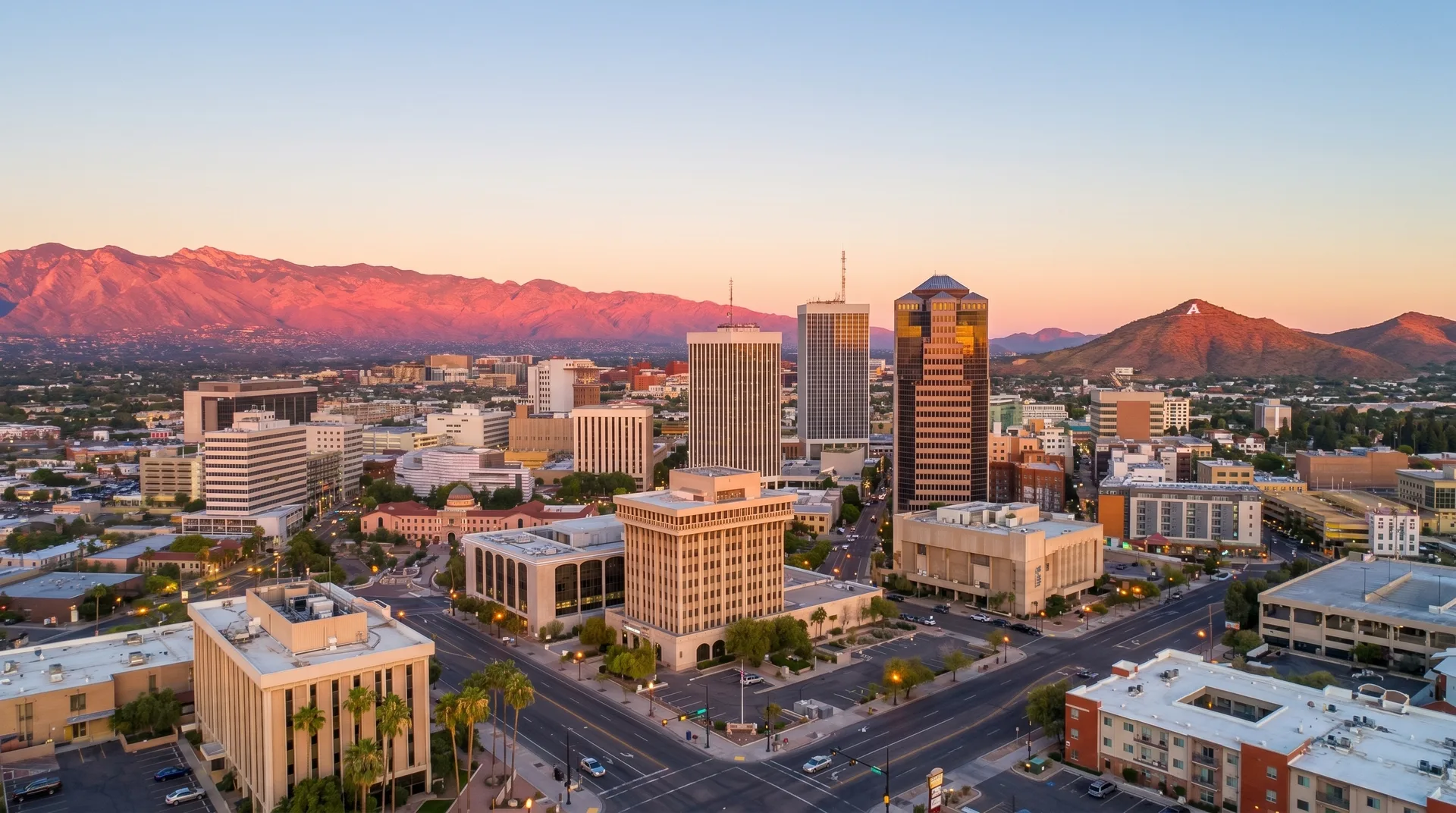
Tucson, located in southern Arizona, serves as a strategic logistics hub for the southwestern United States. Its proximity to the Mexican border and major transportation corridors makes it an ideal origin point for freight distribution. The city's economy is anchored by aerospace and defense industries, with significant contributions from mining, technology, and tourism sectors. Tucson's transportation infrastructure includes the Tucson International Airport, extensive highway networks including I-10, and rail connections through Union Pacific Railroad, providing multiple options for freight movement.
The region's industrial base creates consistent demand for full truckload services, particularly in sectors such as electronics, automotive components, and agricultural products. Tucson's climate-controlled warehousing facilities and specialized handling capabilities make it well-suited for transporting sensitive cargo. The city's strategic location allows for efficient distribution to both coastal markets and inland destinations, making it a key node in regional supply chains.
 Destination
Topeka
Topeka, the capital city of Kansas, occupies a strategic position in the American Midwest's logistics network. Located along the I-70 corridor, Topeka provides excellent connectivity to major markets across the central United States. The city's economy is diverse, with strong presence in government services, healthcare, education, and manufacturing sectors. Topeka's industrial base includes food processing, printing and publishing, and machinery manufacturing, creating substantial freight movement requirements.
The city's transportation infrastructure is well-developed, featuring multiple interstate highways, rail connections through BNSF Railway, and proximity to major air cargo facilities in nearby Kansas City. Topeka's central location makes it an ideal distribution point for goods destined throughout the Midwest and beyond. The region's agricultural heritage also drives significant freight volumes, particularly in grain and food products. Local warehousing and distribution facilities are equipped to handle various cargo types, supporting efficient supply chain operations for businesses operating in the region.










