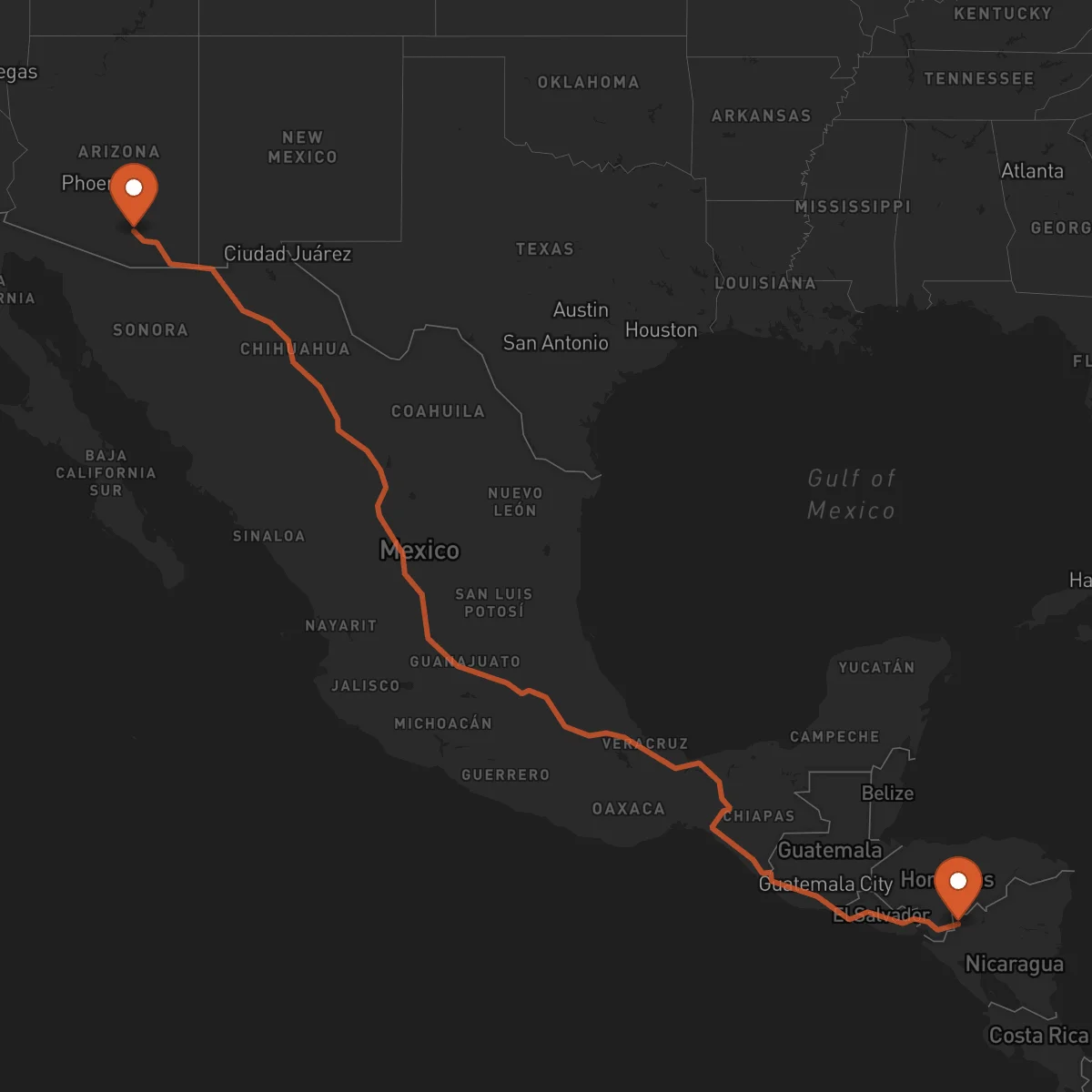
Tucson to Somoto
Somoto → TucsonFTL freight transportation service between Tucson and Somoto. Reliable logistics solutions for your business.
Route Description
Everything you need to know about the corridor Tucson - Somoto
The logistics corridor connecting Tucson, Arizona, to Somoto, Nicaragua, represents a vital cross-border transportation route spanning approximately 3,240 kilometers. This corridor serves as a crucial link between the United States and Central America, facilitating the movement of goods through Mexico and Guatemala before reaching Nicaragua. The route traverses diverse terrains and crosses multiple international borders, making it essential for companies engaged in regional trade and supply chain operations.
The economic significance of this corridor extends across multiple industries, including manufacturing, agriculture, and consumer goods. Tucson's strategic location near the U.S.-Mexico border positions it as a key distribution hub, while Somoto serves as an important commercial center in northern Nicaragua. The corridor supports the growing trade relationship between North and Central America, enabling businesses to optimize their logistics operations and reduce transit times.
Key transportation infrastructure along this route includes major highways such as Interstate 10 from Tucson, Mexican Federal Highways 15 and 190, and the CA-1 Pan-American Highway through Central America. The corridor involves critical border crossings including Nogales-Mexicali and various points along the Mexico-Guatemala and Guatemala-Honduras borders. Control Terrestre's expertise in cross-border operations ensures seamless customs clearance and compliance with all regulatory requirements, providing our clients with reliable and efficient transportation solutions throughout this extensive corridor.
Services for this Route
Available services for the corridor Tucson - Somoto
 Origin
Tucson
Tucson, Arizona, serves as a strategic logistics hub in the southwestern United States, offering exceptional connectivity for cross-border freight operations. Located just 60 miles from the U.S.-Mexico border, Tucson provides immediate access to major transportation networks and serves as a gateway to both Mexican and Central American markets. The city's proximity to key border crossings makes it an ideal origin point for companies seeking efficient distribution throughout the Americas.
The region's economy is diverse, with strong presence in aerospace and defense, optics and photonics, and advanced manufacturing sectors. Tucson also benefits from significant agricultural activity and serves as a distribution center for various consumer goods. The city's transportation infrastructure includes multiple interstate highways, rail connections, and Tucson International Airport, providing multimodal shipping options. The Union Pacific Railroad and Burlington Northern Santa Fe Railway serve the area, offering robust rail freight capabilities to complement road transportation.
 Destination
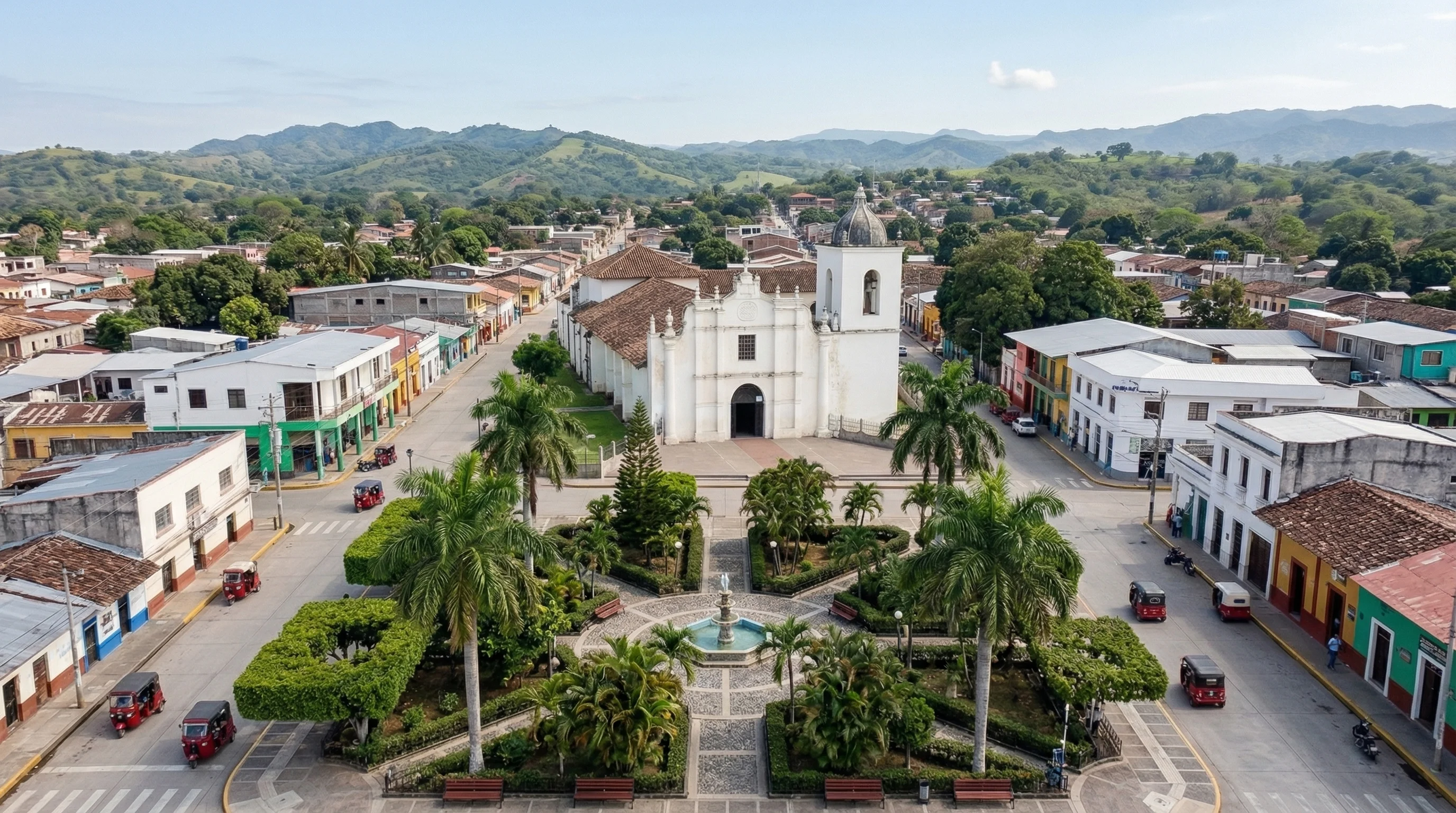
Somoto, located in the Madriz department of northern Nicaragua, represents an important commercial and agricultural center in the region. While smaller than the capital Managua, Somoto's strategic position near the Honduran border makes it a valuable destination for cross-border trade and logistics operations. The city serves as a distribution point for goods throughout northern Nicaragua and provides access to the broader Central American market.
The local economy is primarily based on agriculture, including coffee, tobacco, and various tropical fruits, along with growing commercial and retail sectors. Somoto's infrastructure includes access to the Pan-American Highway and connections to Nicaragua's road network, facilitating distribution to other parts of the country. The region's proximity to the Honduran border also makes it a key point for international trade between Nicaragua and its northern neighbor, supporting import and export activities for businesses operating in the area.










