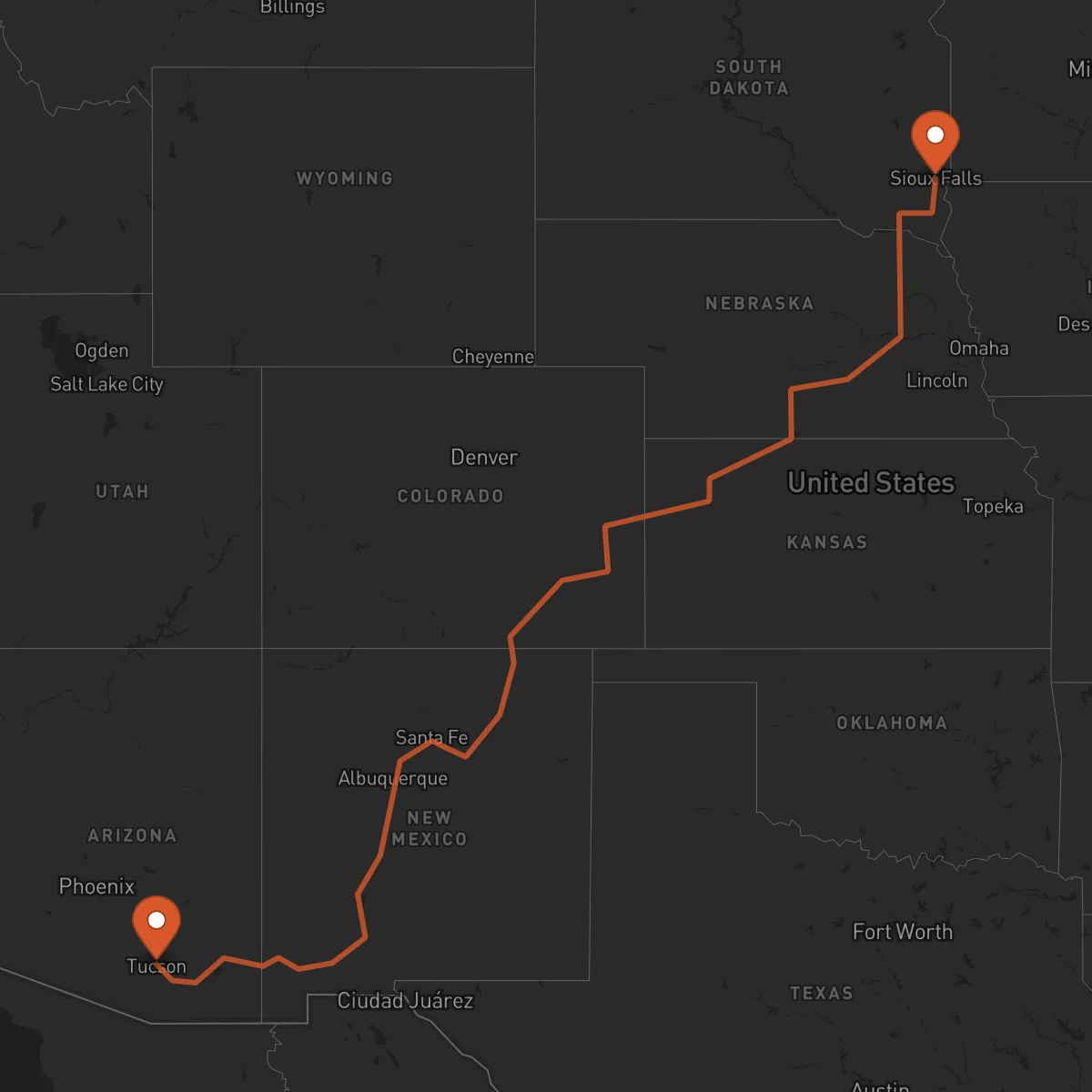
Tucson to Sioux Falls
Sioux Falls → TucsonFTL freight transportation service between Tucson and Sioux Falls. Reliable logistics solutions for your business.
Route Description
Everything you need to know about the corridor Tucson - Sioux Falls
The logistics corridor connecting Tucson, Arizona to Sioux Falls, South Dakota represents a vital transportation route across the American Midwest. This 1,767 km domestic corridor links the Sonoran Desert region with the Great Plains, traversing diverse landscapes and connecting key economic hubs. The route primarily follows Interstate 10 East to Interstate 25 North, then Interstate 90 East, providing reliable access through major metropolitan areas including Phoenix, Denver, and Omaha.
This corridor serves as a critical link for industries requiring cross-country freight movement between the Southwest and Upper Midwest. The region's economic significance stems from its connection between Arizona's manufacturing and agricultural sectors with South Dakota's food processing, financial services, and healthcare industries. Companies in aerospace, electronics, and agricultural technology particularly benefit from this transportation link, as it enables efficient distribution of specialized equipment and components.
Control Terrestre optimizes operations along this corridor through our extensive network of certified carriers and strategic partnerships. Our dedicated FTL services ensure that your cargo moves directly from origin to destination without intermediate stops or transfers. We leverage real-time tracking technology and experienced logistics professionals to maintain consistent transit times and provide proactive communication throughout the journey, ensuring your freight arrives safely and on schedule.
Services for this Route
Available services for the corridor Tucson - Sioux Falls
 Origin
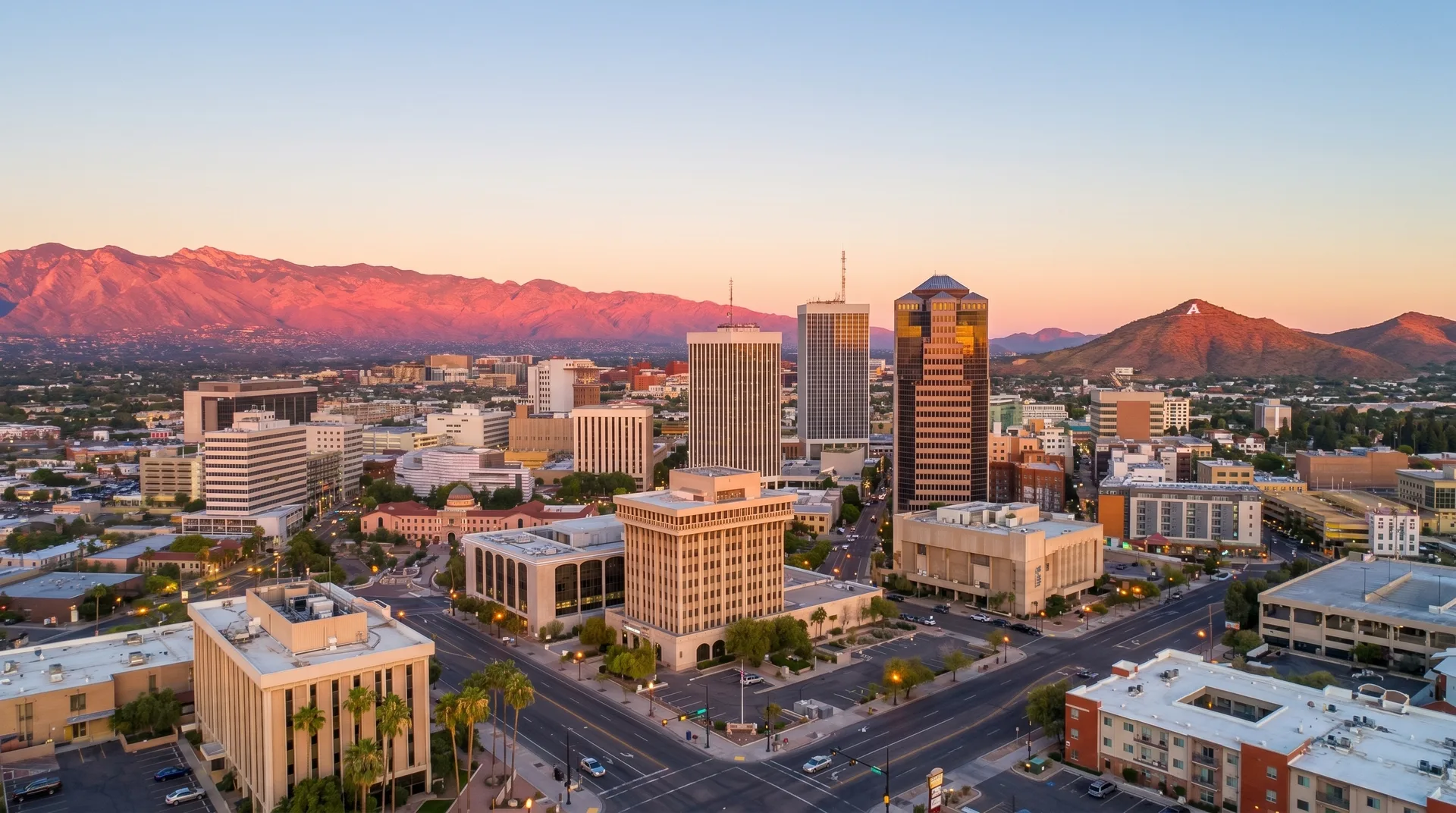
Tucson
Tucson serves as a strategic logistics hub in southern Arizona, benefiting from its proximity to the U.S.-Mexico border and major transportation infrastructure. The city's location along Interstate 10 provides direct access to Phoenix, Los Angeles, and the Mexican border at Nogales. Tucson's economy is driven by aerospace and defense, optics and photonics, healthcare, and mining industries, creating consistent demand for freight transportation services. The city's multimodal capabilities include Tucson International Airport, Union Pacific rail connections, and extensive highway networks, making it an ideal origin point for cross-country shipments to the Midwest and beyond.
 Destination
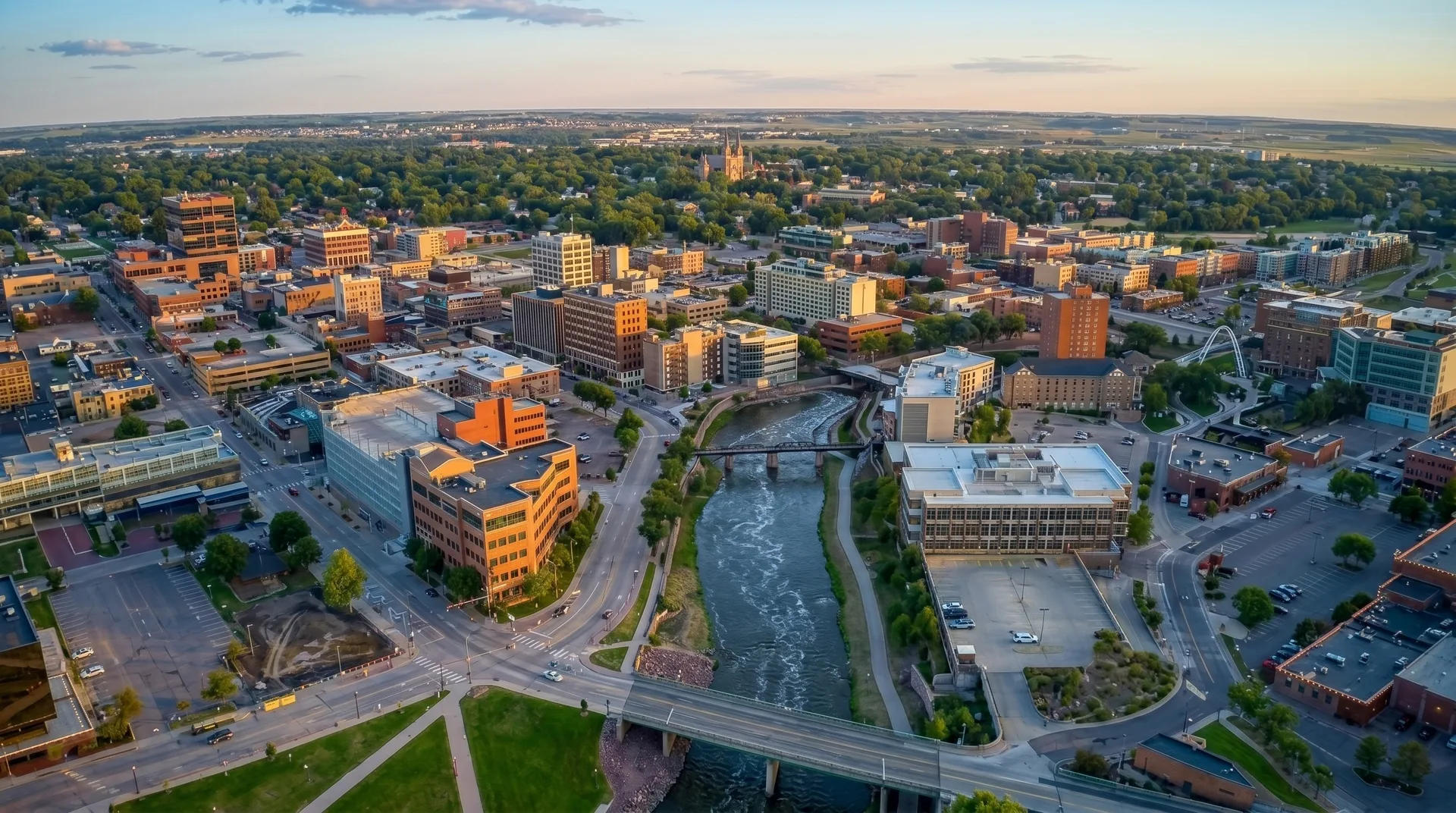
Sioux Falls
Sioux Falls stands as a key logistics center in the Upper Midwest, strategically positioned at the intersection of Interstate 90 and Interstate 29. The city's central location provides efficient access to major markets across the northern United States within a one-day drive. Sioux Falls' economy is anchored by financial services, healthcare, retail, and food processing industries, with companies like Citibank, Sanford Health, and Smithfield Foods maintaining significant operations. The city's transportation infrastructure includes the Sioux Falls Regional Airport, Class I rail service from BNSF and Union Pacific, and well-maintained highway systems, facilitating seamless distribution throughout the region.










