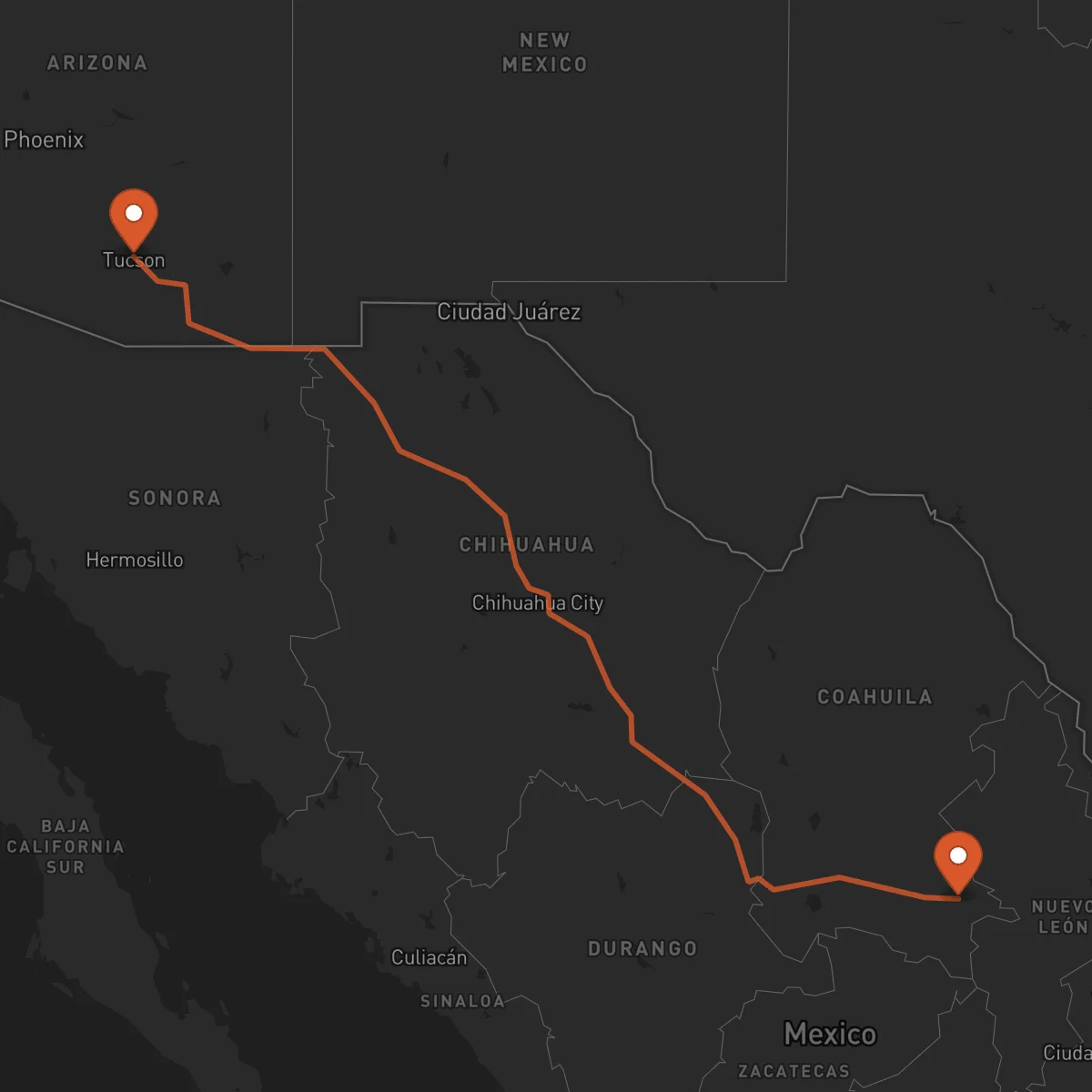
Tucson to Saltillo
Saltillo → TucsonFTL freight transportation service between Tucson and Saltillo. Reliable logistics solutions for your business.
Route Description
Everything you need to know about the corridor Tucson - Saltillo
The Tucson-Saltillo logistics corridor represents a vital link in the North American supply chain, connecting the industrial heart of Arizona with one of Mexico's most important manufacturing hubs. This strategic route spans approximately 1,233 kilometers and serves as a crucial artery for cross-border freight movement between the United States and Mexico.
The corridor traverses diverse terrain and crosses the international border at key points, facilitating the movement of goods between two major economic regions. Tucson, located in southern Arizona, serves as a gateway to Mexico, while Saltillo, the capital of Coahuila, stands as a major industrial center in northern Mexico known for its automotive and aerospace manufacturing sectors.
This route primarily serves industries such as automotive manufacturing, aerospace components, electronics, and general manufacturing. The main transportation infrastructure includes Interstate 10 and Interstate 19 in the United States, connecting to Mexican Federal Highway 45D, a modern toll road that provides efficient transit to Saltillo. The corridor's efficiency is enhanced by established border crossing facilities and streamlined customs procedures.
Control Terrestre specializes in managing cross-border operations along this corridor, offering full truckload (FTL) services with experienced drivers familiar with both U.S. and Mexican customs requirements. Our expertise in handling cross-border documentation, compliance with both countries' regulations, and our network of certified carriers ensures reliable and efficient transportation solutions for businesses operating between these two important economic centers.
Services for this Route
Available services for the corridor Tucson - Saltillo
 Origin
Tucson
Tucson, Arizona serves as a strategic logistics hub in the southwestern United States, offering excellent connectivity to major markets in the western U.S. and Mexico. Located just 100 kilometers from the U.S.-Mexico border, Tucson provides convenient access to key border crossings and serves as an important distribution point for goods destined for both domestic and international markets. The city's economy is diverse, with strong sectors in aerospace and defense, optics and photonics, and technology manufacturing. Tucson's transportation infrastructure includes Interstate 10, which connects to Los Angeles and Phoenix, and Interstate 19, which leads directly to the Mexican border. The city is also served by Tucson International Airport and the Tucson International Airport's Foreign Trade Zone, making it an ideal origin point for cross-border freight operations.
 Destination
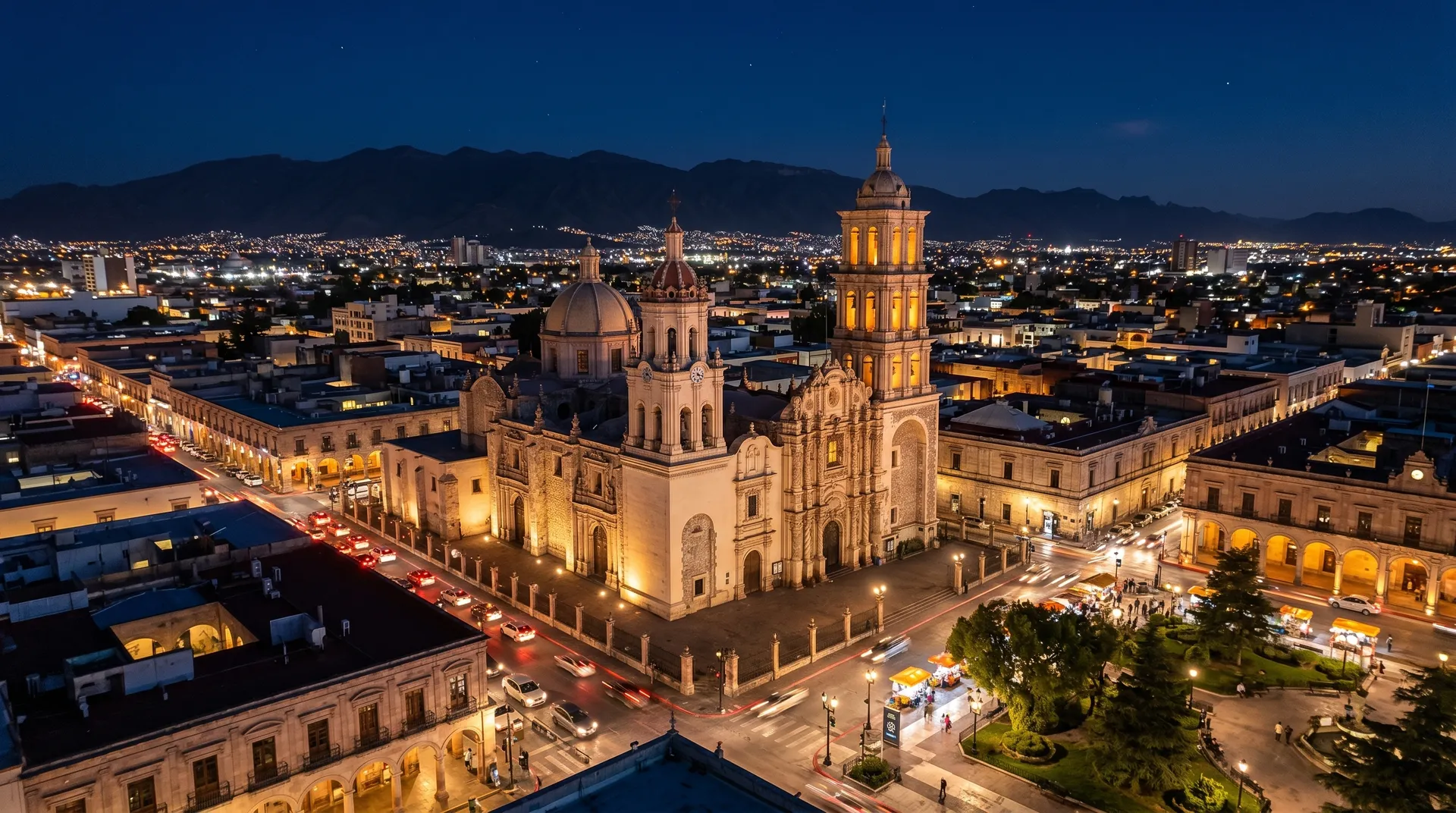
Saltillo, the capital city of Coahuila, Mexico, stands as one of the country's most important industrial centers, particularly renowned for its automotive manufacturing cluster. Often referred to as the "Detroit of Mexico," Saltillo hosts major automotive assembly plants and a robust network of suppliers, making it a critical node in the North American automotive supply chain. The city's economy extends beyond automotive to include aerospace, machinery manufacturing, and electronics. Saltillo's strategic location in northern Mexico provides excellent connectivity to both U.S. markets and other Mexican industrial centers. The city is served by Federal Highway 54 and the Saltillo Airport, while its proximity to the U.S. border facilitates efficient cross-border trade. The region's skilled workforce and established industrial parks make Saltillo an attractive destination for manufacturing and distribution operations.










