Tucson to Phoenix
Phoenix → TucsonFTL freight transportation service between Tucson and Phoenix. Reliable logistics solutions for your business.
Route Description
Everything you need to know about the corridor Tucson - Phoenix
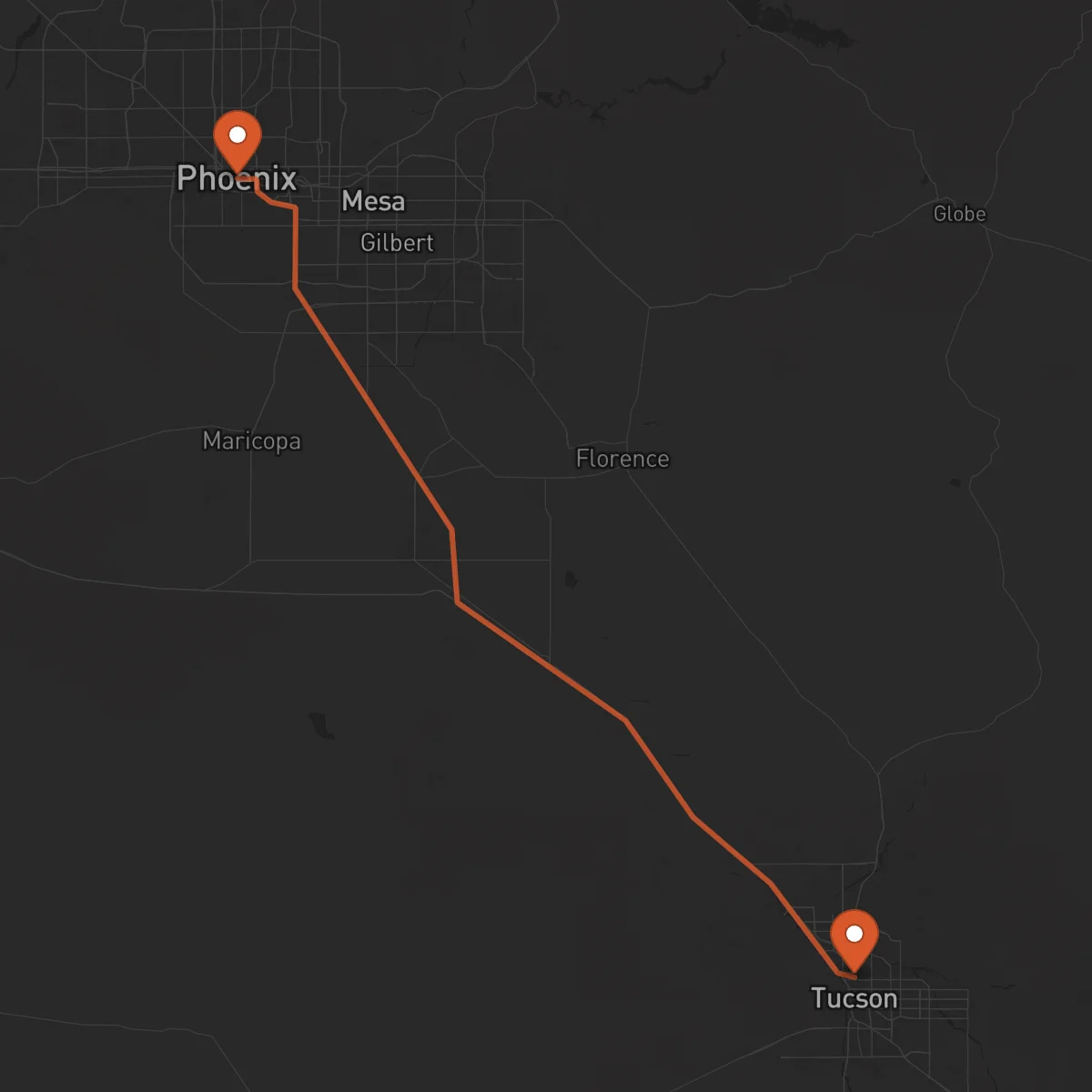
The Tucson-Phoenix corridor represents one of the most vital freight transportation routes in Arizona, connecting two of the state's most important economic centers. This 168-kilometer route traverses the heart of the Sonoran Desert, linking the southern and central regions of Arizona through a well-developed transportation network. The corridor serves as a critical artery for commerce, facilitating the movement of goods between Tucson's international trade connections and Phoenix's vast consumer market and industrial base.
The economic significance of this route extends beyond simple geography. Tucson serves as a major logistics hub for cross-border trade with Mexico, while Phoenix functions as the state capital and a key distribution center for the entire Southwest region. This creates a continuous flow of freight moving in both directions, with manufacturers, retailers, and agricultural producers relying on efficient transportation to maintain their supply chains. The corridor supports a diverse range of industries including electronics, aerospace, automotive, and food and beverage distribution.
Transportation infrastructure along this route is robust, with Interstate 10 serving as the primary freight corridor connecting both cities. This highway offers multiple lanes, rest areas, and fueling stations designed to accommodate heavy truck traffic. Control Terrestre leverages this infrastructure through our network of certified carriers, providing full truckload (FTL) services that ensure your cargo moves efficiently between Tucson and Phoenix. Our team understands the specific requirements of this corridor, including seasonal weather considerations and peak traffic patterns, allowing us to optimize routing and delivery schedules for maximum reliability.
Services for this Route
Available services for the corridor Tucson - Phoenix
 Origin
Tucson
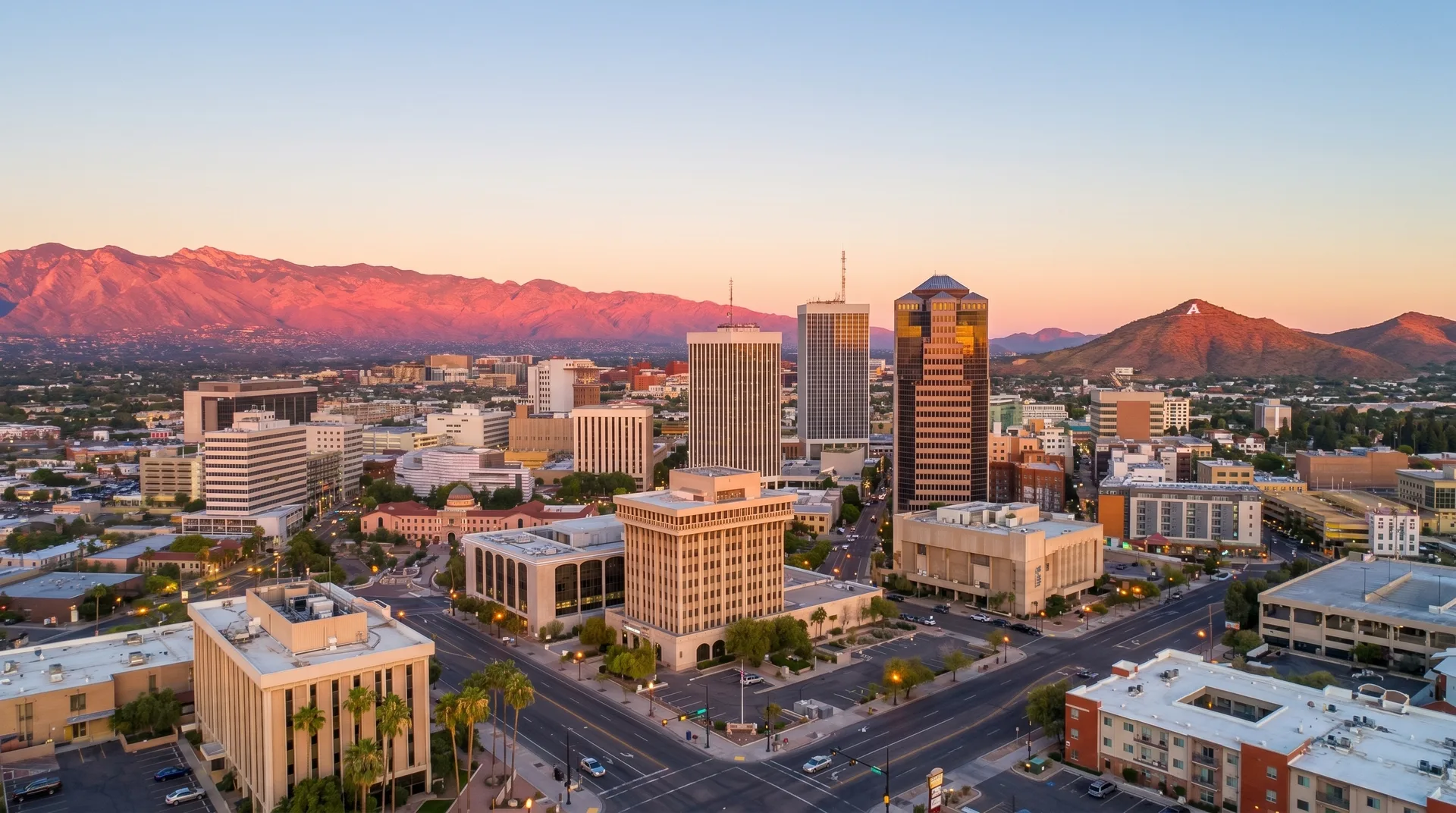
Tucson stands as a strategic logistics gateway in southern Arizona, positioned just 100 kilometers from the U.S.-Mexico border. This location makes it a crucial point for international trade, with the city's transportation infrastructure supporting both domestic and cross-border freight movements. Tucson International Airport and the Union Pacific Railroad provide multimodal connectivity, while Interstate 10 offers direct access to Phoenix and beyond. The city's proximity to major ports of entry creates opportunities for efficient freight consolidation and distribution, particularly for companies engaged in North American supply chains.
The economic landscape of Tucson is diverse, with strong representation from aerospace and defense industries, healthcare technology, optics and photonics, and agriculture. The University of Arizona drives innovation in these sectors, creating a knowledge-based economy that demands reliable freight transportation. Tucson's growing e-commerce sector and expanding retail distribution centers require consistent, full truckload capacity to move products efficiently. The city's infrastructure includes modern warehousing facilities, cold storage options for agricultural products, and specialized handling capabilities for high-tech equipment and sensitive cargo.
 Destination
Phoenix
Phoenix serves as the economic powerhouse of Arizona, offering unparalleled logistics advantages in the Southwest region. As the state capital and largest city, Phoenix provides access to a vast consumer market and serves as a major distribution hub for the entire region. The city's location at the intersection of multiple interstate highways, including I-10, I-17, and Loop 101, creates a multimodal transportation network that facilitates efficient freight movement. Phoenix Sky Harbor International Airport and the Union Pacific Railroad intermodal facility further enhance the city's connectivity to national and international markets.
The Phoenix metropolitan area hosts a diverse industrial base, including semiconductor manufacturing, aerospace and defense, automotive assembly, and food processing. The region's rapid population growth and expanding retail sector create consistent demand for freight transportation services. Phoenix's infrastructure includes extensive warehousing and distribution centers, with specialized facilities for high-tech manufacturing, cold storage for perishable goods, and bulk handling capabilities for industrial materials. The city's business-friendly environment and strategic location make it an ideal destination for companies seeking to establish distribution networks throughout the Southwest and beyond.










