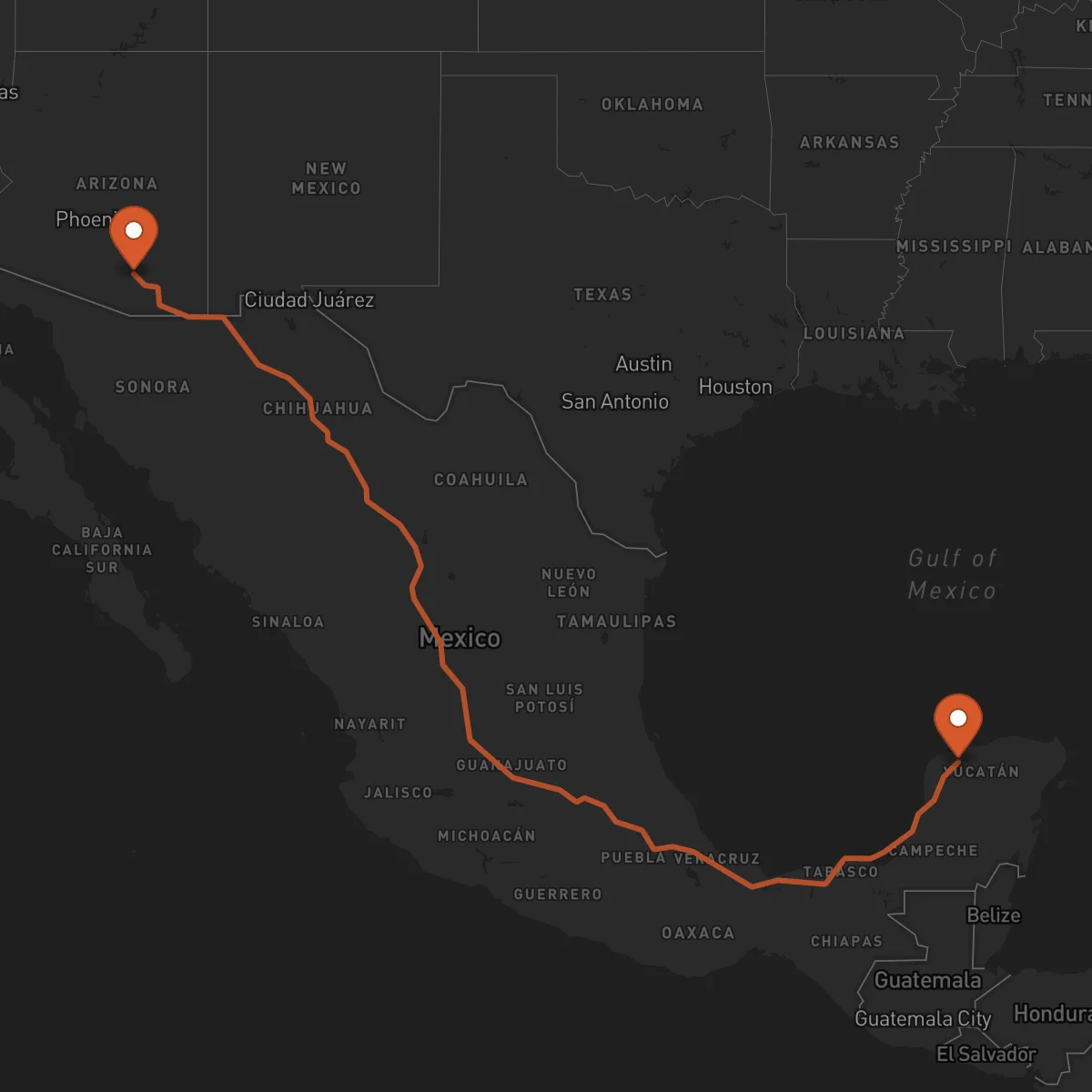
Tucson to Mérida
Mérida → TucsonFTL freight transportation service between Tucson and Mérida. Reliable logistics solutions for your business.
Route Description
Everything you need to know about the corridor Tucson - Mérida
The Tucson-Mérida logistics corridor represents a vital commercial artery connecting the industrial heart of southern Arizona with the vibrant economic center of the Yucatan Peninsula. This 2,461 km cross-border route traverses diverse landscapes and economic zones, facilitating the movement of goods between two strategically important regions. The corridor serves as a critical link in North American supply chains, enabling efficient transportation of goods from the United States to Mexico's southeastern markets.
The economic significance of this corridor is underscored by the complementary industrial profiles of both regions. Tucson serves as a major distribution hub for aerospace, defense, and high-tech manufacturing, while Mérida has emerged as a key center for tourism, agriculture, and light manufacturing in the Yucatan region. The corridor particularly benefits industries such as automotive parts, electronics, agricultural products, and consumer goods that require reliable cross-border transportation solutions.
Transportation along this route is facilitated by major highways including I-10, which provides seamless connectivity from Tucson to the Mexican border at Nogales. From there, Mexican Federal Highway 15 continues south through Sonora and Sinaloa before connecting to the broader Mexican highway network leading to Mérida. The Nogales border crossing, one of the busiest commercial ports of entry, offers efficient customs processing for freight shipments. Control Terrestre's expertise in cross-border operations ensures smooth transit through customs procedures, leveraging our C-TPAT certification and established relationships with customs authorities to minimize delays and optimize transit times for our clients' freight.
Services for this Route
Available services for the corridor Tucson - Mérida
 Origin
Tucson
Tucson, Arizona serves as a strategic logistics hub in the southwestern United States, offering exceptional connectivity and infrastructure for freight transportation. Located just 96 km from the Mexican border, Tucson provides immediate access to major cross-border routes and serves as a gateway to both U.S. and Mexican markets. The city's economy is anchored by aerospace and defense industries, with major employers including Raytheon Missiles & Defense and the Davis-Monthan Air Force Base. Tucson also hosts a growing technology sector and serves as a distribution center for agricultural products from southern Arizona.
The city's transportation infrastructure is robust and well-developed, featuring the Port of Tucson - a major inland port facility that facilitates international trade. Tucson International Airport supports air cargo operations, while the Union Pacific Railroad provides intermodal connectivity. The city's extensive highway network, centered around Interstate 10, offers direct routes to major markets across the western United States and provides efficient access to Mexican border crossings at Nogales and Douglas.
 Destination
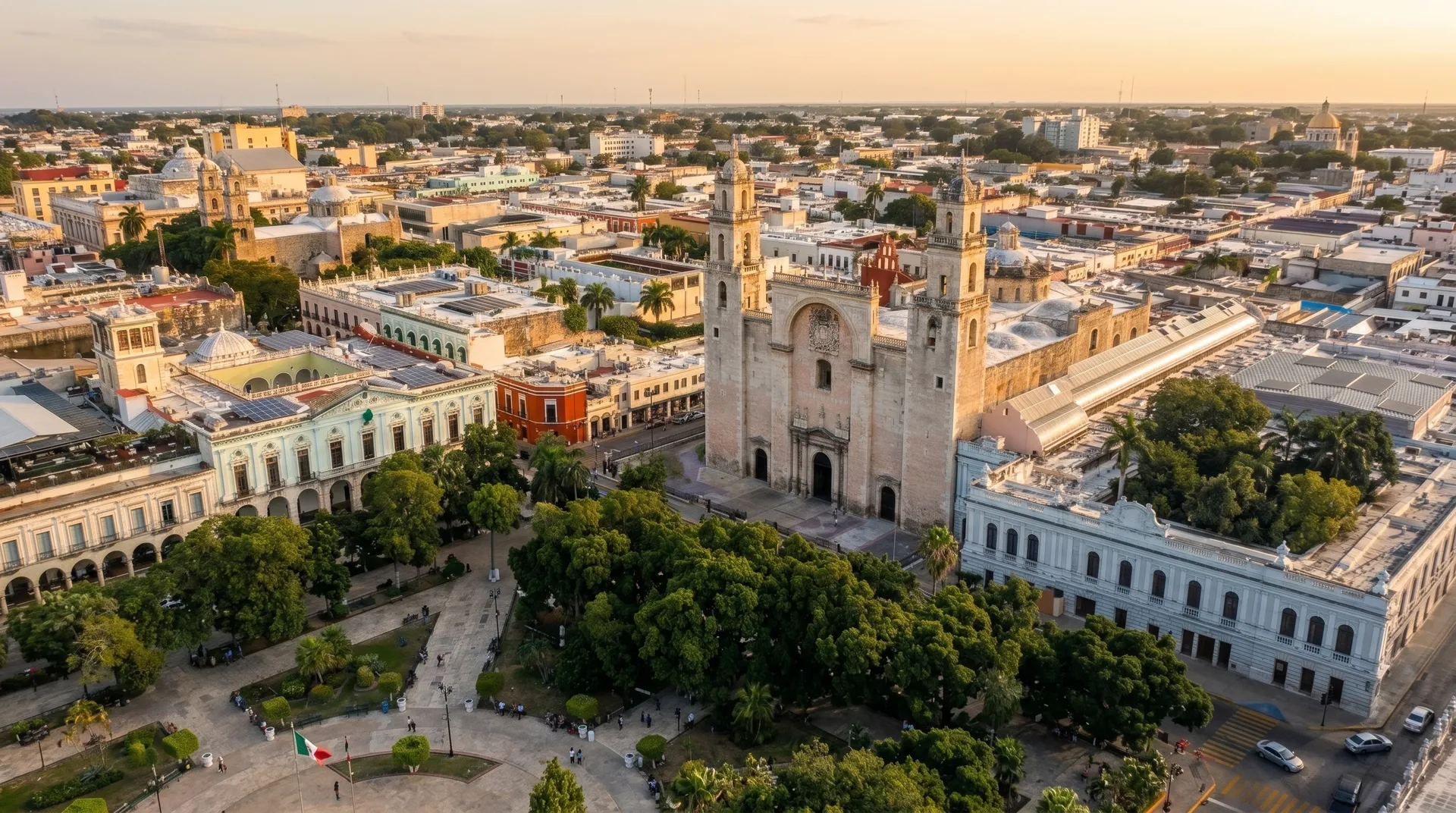
Mérida, the capital of Yucatán, stands as a strategic logistics center in southeastern Mexico, offering unique advantages for regional distribution and international trade. Located in the heart of the Yucatan Peninsula, Mérida serves as the economic and cultural hub of the region, with a diverse economy that includes tourism, agriculture, manufacturing, and services. The city's strategic position makes it an ideal gateway to the entire Yucatan Peninsula and a key connection point for trade with Central America.
The city boasts modern transportation infrastructure that supports efficient logistics operations. Manuel Crescencio Rejón International Airport facilitates air cargo services, while the nearby port of Progreso, located just 36 km north of Mérida, provides maritime shipping capabilities for international trade. The city is well-connected by modern highways, including the Campeche-Mérida and Mérida-Valladolid toll roads, which link Mérida to other major cities in the region and to the broader Mexican highway network. This infrastructure, combined with Mérida's growing industrial parks and free trade zone developments, positions the city as an increasingly important logistics hub for southeastern Mexico.










