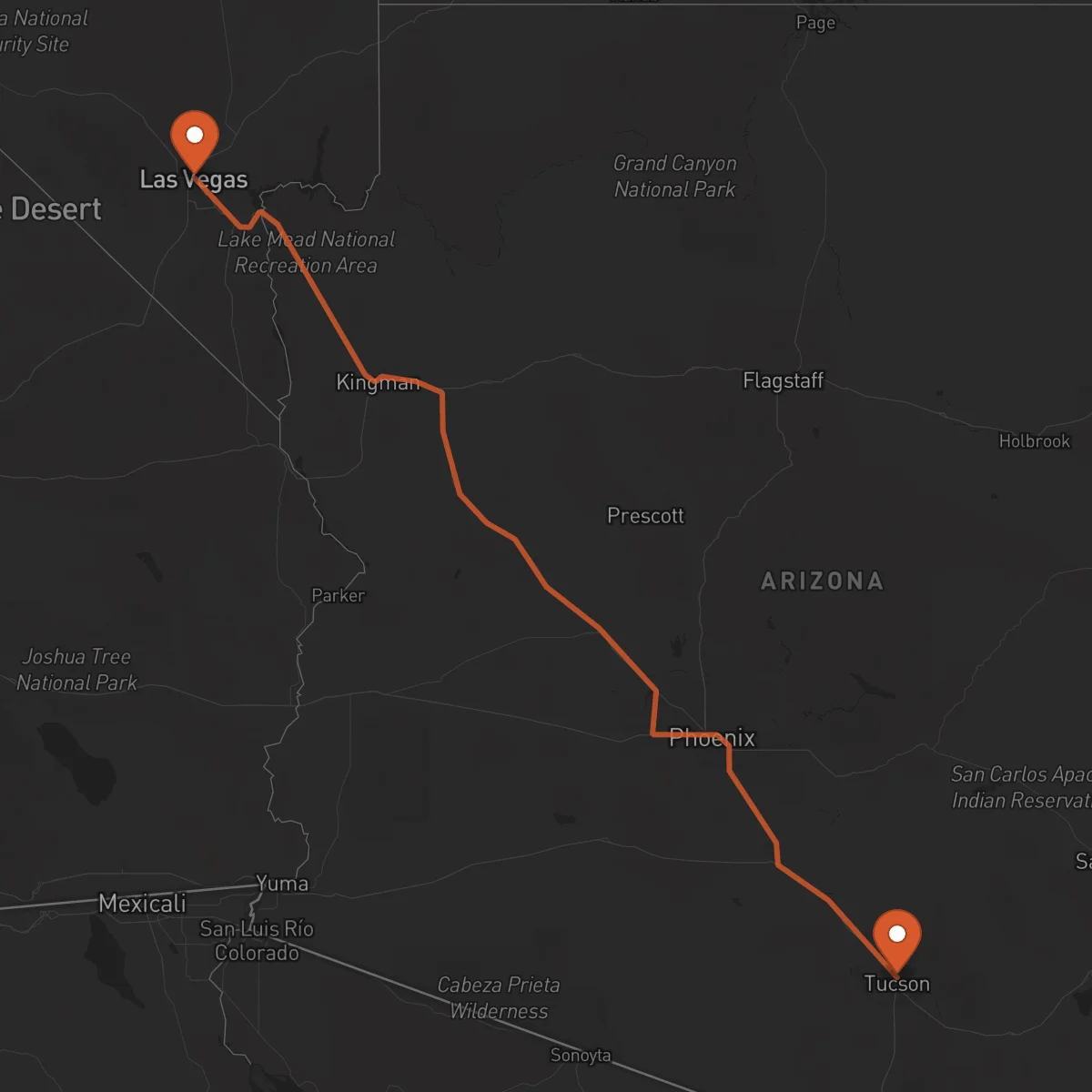
Tucson to Las Vegas
Las Vegas → TucsonFTL freight transportation service between Tucson and Las Vegas. Reliable logistics solutions for your business.
Route Description
Everything you need to know about the corridor Tucson - Las Vegas
The Tucson-Las Vegas corridor represents a vital logistics connection in the southwestern United States, spanning approximately 360 miles through Arizona and Nevada. This strategic route links two major economic hubs, facilitating the movement of goods between the Sonoran Desert region and the Mojave Desert area. The corridor primarily utilizes Interstate 11 (under development) and Interstate 40, providing reliable transportation infrastructure for freight movement across state lines.
This route serves as a critical artery for commerce between Arizona's second-largest metropolitan area and Nevada's entertainment capital. The corridor connects diverse economic activities, from Tucson's aerospace and defense industries to Las Vegas's tourism and convention sectors. The transportation network supports both regional distribution needs and cross-country freight movements, making it an essential component of southwestern logistics operations.
Key industries utilizing this corridor include manufacturing, retail distribution, electronics, and specialized cargo movements. The route particularly benefits companies requiring temperature-controlled transportation, given the significant temperature variations between the two cities. Control Terrestre's expertise in full truckload (FTL) services ensures efficient, dedicated transportation solutions for businesses operating along this corridor, with our strategic alliances providing reliable equipment and experienced drivers familiar with the region's unique transportation challenges.
Services for this Route
Available services for the corridor Tucson - Las Vegas
 Origin
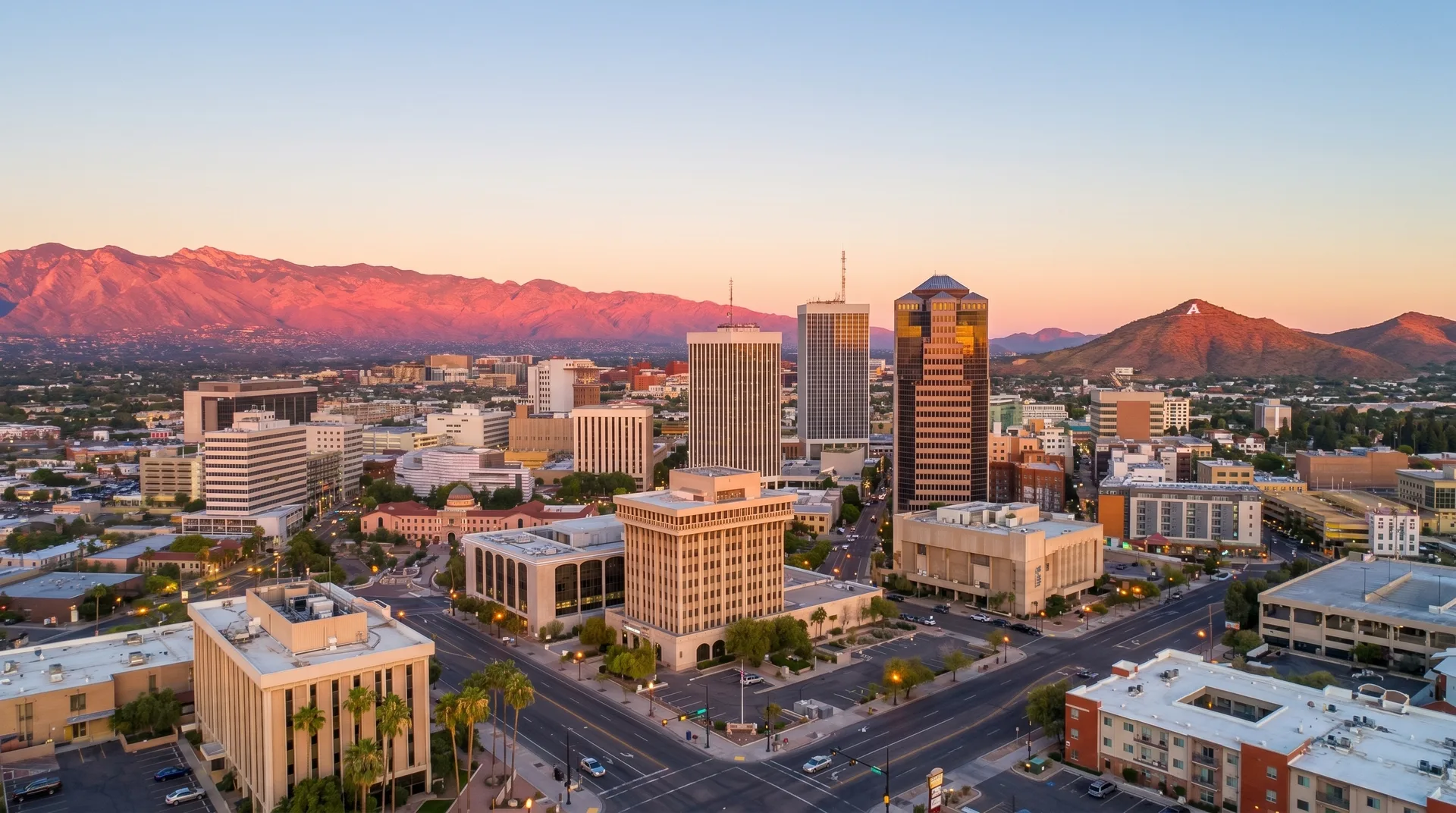
Tucson
Tucson serves as a strategic logistics hub in southern Arizona, offering excellent connectivity to major markets in the southwestern United States. The city's location provides direct access to Interstate 10, facilitating east-west freight movements across the Sunbelt region. Tucson's transportation infrastructure includes Tucson International Airport, the Union Pacific Railroad intermodal facility, and the Port of Tucson, creating multiple options for freight consolidation and distribution. The city's proximity to the U.S.-Mexico border, approximately 60 miles south, enhances its role in cross-border logistics operations.
The region's economy is anchored by aerospace and defense industries, with major employers including Raytheon Missiles & Defense and Davis-Monthan Air Force Base. Tucson also hosts significant manufacturing operations in optics and photonics, biotechnology, and renewable energy sectors. The presence of the University of Arizona contributes to a skilled workforce and research-driven industries. These economic activities generate substantial freight volumes, particularly in specialized and high-value cargo requiring dedicated transportation solutions.
 Destination
Las Vegas
Las Vegas functions as a major logistics and distribution center in the western United States, strategically positioned at the intersection of several key transportation routes. The city's infrastructure includes McCarran International Airport, extensive highway networks including I-15 and I-515, and rail connections through the Union Pacific Railroad. Las Vegas's location provides three-hour access to the Los Angeles market and serves as a gateway to the broader southwestern region, making it an ideal distribution point for national and international freight movements.
The Las Vegas economy extends far beyond its famous entertainment industry, encompassing significant warehousing and distribution operations, manufacturing, and construction sectors. The city serves as a major convention and trade show destination, generating consistent demand for logistics services, particularly for time-sensitive and specialized cargo. The region's rapid population growth and ongoing development projects create steady demand for construction materials and equipment transportation. Las Vegas's status as a tourism hub also drives retail distribution needs, supporting a robust logistics ecosystem that benefits from Control Terrestre's full truckload transportation expertise.










