Tucson to Jackson
Jackson → TucsonFTL freight transportation service between Tucson and Jackson. Reliable logistics solutions for your business.
Route Description
Everything you need to know about the corridor Tucson - Jackson
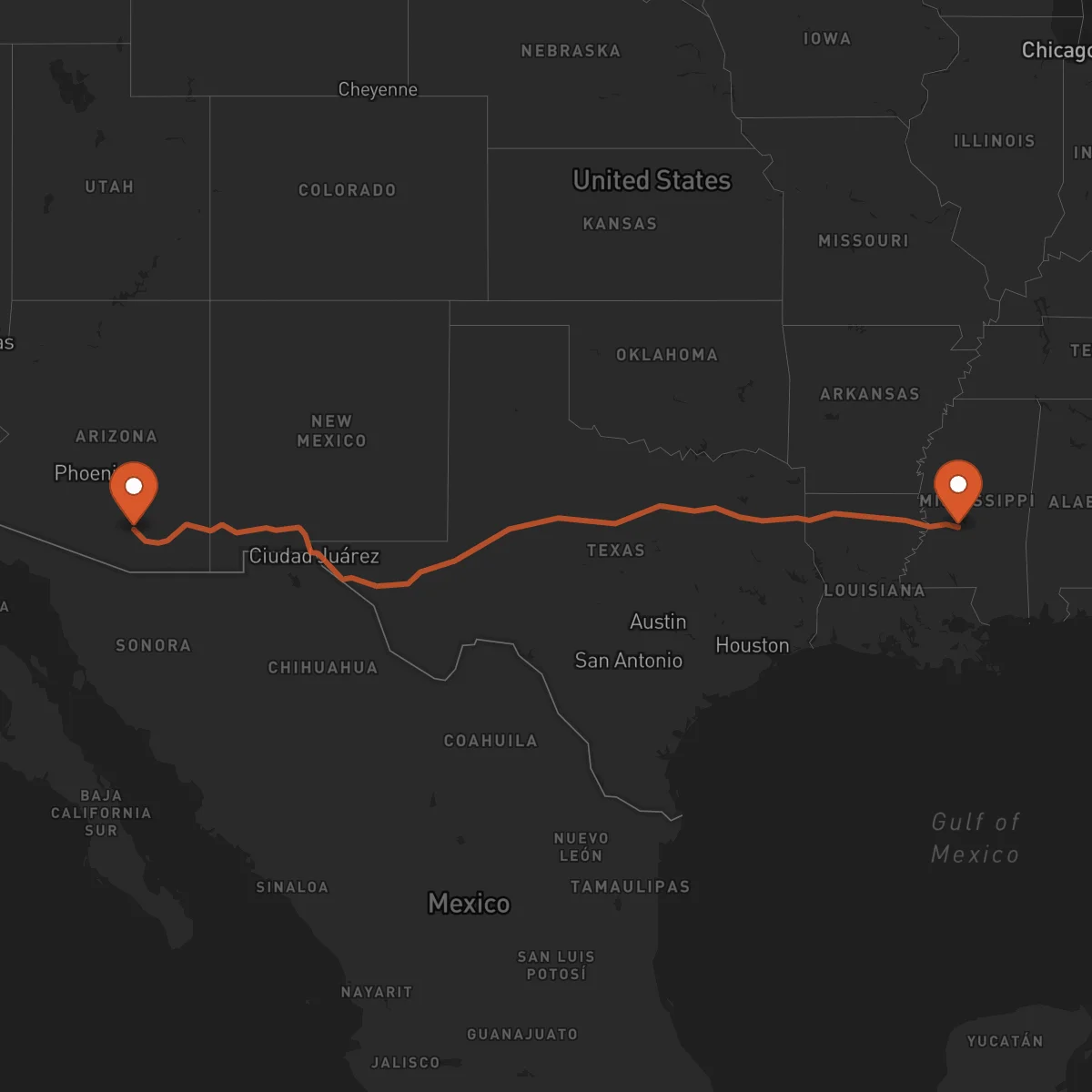
The Tucson to Jackson corridor is a vital freight transportation route connecting the southwestern United States with the southeastern region. Spanning approximately 1,952 kilometers, this corridor traverses diverse landscapes and economic zones, making it a strategic artery for domestic freight movement. The route primarily follows Interstate 10, a major east-west highway that facilitates efficient cargo transport between these two important cities.
This corridor serves as a crucial link for numerous industries, particularly those involved in manufacturing, agriculture, and distribution. Tucson, with its proximity to the Mexican border and major ports, serves as a gateway for goods entering the United States. As freight moves eastward towards Jackson, it passes through key economic centers such as Phoenix, Houston, and New Orleans, each contributing to the corridor's significance in the national supply chain.
Control Terrestre specializes in providing Full Truckload (FTL) services along this route, ensuring reliable and efficient transportation for our clients' cargo. Our extensive network of certified carriers and strategic partnerships allows us to offer tailored solutions that meet the specific needs of businesses operating along this corridor. We understand the unique challenges of this route, including varying terrain and weather conditions, and are equipped to handle them with our diverse fleet and experienced drivers.
Services for this Route
Available services for the corridor Tucson - Jackson
 Origin
Tucson
Tucson, Arizona, is a strategic logistics hub in the southwestern United States. Its location near the Mexican border and major interstate highways makes it an ideal starting point for freight transportation. The city's economy is diverse, with strong sectors in aerospace and defense, technology, and tourism. Tucson is home to several major employers in these industries, creating a consistent demand for freight services.
The city boasts excellent transportation infrastructure, including Tucson International Airport and the Union Pacific Railroad. However, its road network, particularly Interstate 10, is the primary mode for freight movement. Tucson's proximity to the Port of Guaymas in Mexico further enhances its importance in cross-border logistics. The city's dry climate and relatively flat terrain make it suitable for year-round freight operations, although summer temperatures can be extreme.
 Destination
Jackson
Jackson, Mississippi, serves as a crucial logistics center in the southeastern United States. Its central location in Mississippi and proximity to major transportation routes make it an important destination for freight. The city's economy is diverse, with significant contributions from manufacturing, healthcare, and government sectors. Jackson's strategic position along Interstate 20, which connects the East and West coasts, enhances its role in national freight movement.
The city is well-equipped with transportation infrastructure, including Jackson-Medgar Wiley Evers International Airport and the Canadian National Railway. However, its road network, particularly Interstate 55 and Interstate 20, is the primary mode for freight transportation. Jackson's location in the heart of the Mississippi Delta region, known for its agricultural production, creates a steady demand for both inbound and outbound freight services. The city's humid subtropical climate can present challenges during the summer months, but its infrastructure is designed to handle these conditions effectively.










