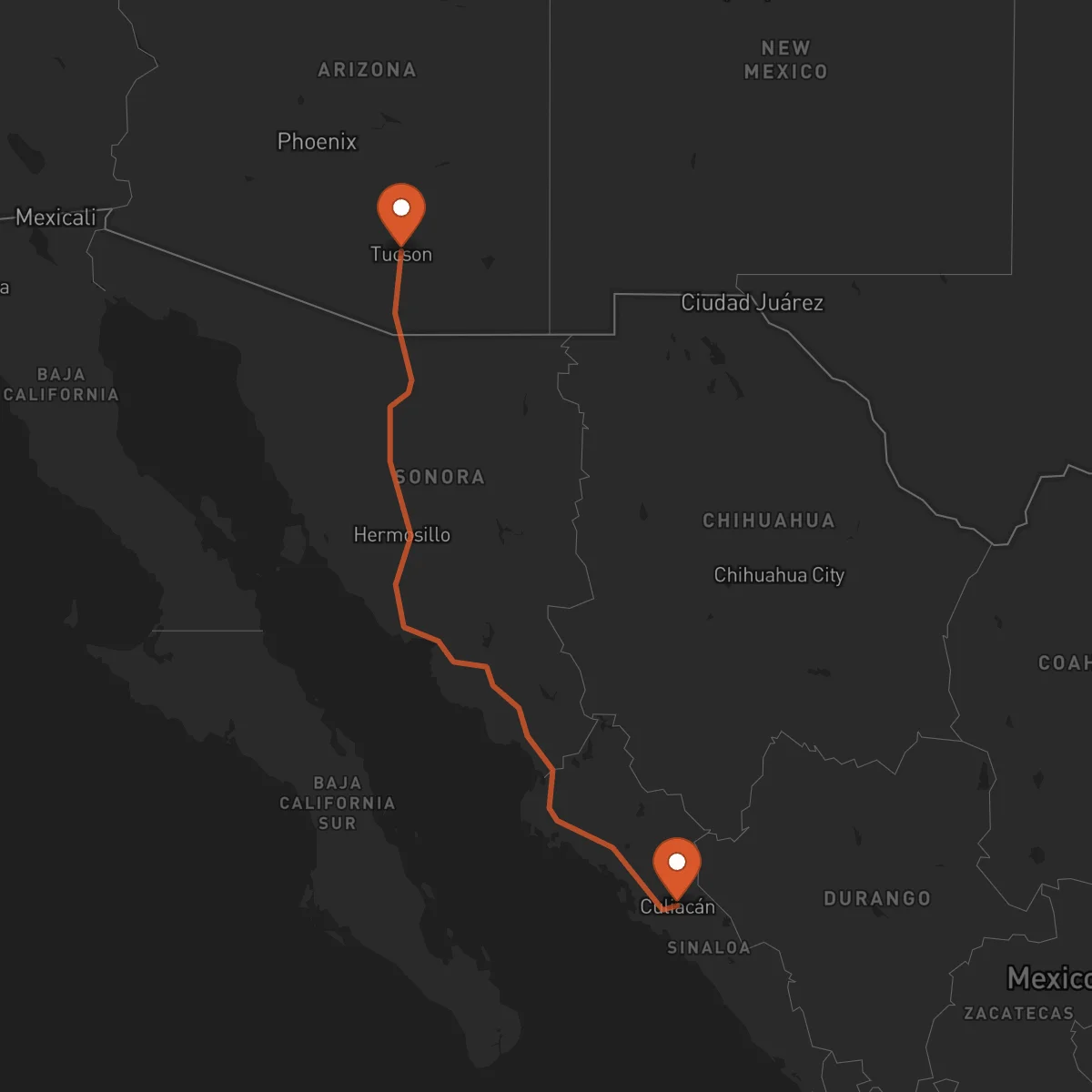
Tucson to Culiacán Rosales
Culiacán Rosales → TucsonFTL freight transportation service between Tucson and Culiacán Rosales. Reliable logistics solutions for your business.
Route Description
Everything you need to know about the corridor Tucson - Culiacán Rosales
The Tucson-Culiacán corridor represents a vital logistics connection between the United States and Mexico, spanning approximately 899 kilometers across the Sonoran Desert and the Sierra Madre Occidental. This cross-border route serves as a critical artery for trade between Arizona and Sinaloa, facilitating the movement of goods between two major economic regions. The corridor connects the industrial and commercial hub of Tucson with Culiacán, the capital city of Sinaloa and a key agricultural and manufacturing center in northwestern Mexico.
This route is particularly significant due to the strong economic ties between Arizona and Sinaloa, with numerous companies operating on both sides of the border. The main industries utilizing this corridor include agricultural products, electronics, automotive parts, and manufactured goods. The transportation infrastructure along this route is well-developed, primarily utilizing Interstate 10 (I-10) in the United States, which connects to Mexican Federal Highway 15D (La Entrada al Pacífico) in Nogales, continuing south to Culiacán. The Nogales border crossing serves as the primary point of entry, offering efficient customs processing for freight transportation.
Control Terrestre specializes in managing cross-border operations along this corridor, ensuring seamless cargo movement through our expertise in customs documentation, regulatory compliance, and strategic partnerships with certified carriers. Our team handles all aspects of the cross-border process, from pre-clearance documentation to final delivery in Culiacán, providing our clients with reliable and efficient transportation solutions that optimize their supply chain operations between the United States and Mexico.
Services for this Route
Available services for the corridor Tucson - Culiacán Rosales
 Origin
Tucson
Tucson, Arizona serves as a strategic logistics hub in the southwestern United States, benefiting from its proximity to the U.S.-Mexico border and its position along major transportation routes. The city is home to a diverse industrial base, including aerospace and defense manufacturing, electronics, optics and photonics (earning it the nickname "Optics Valley"), and a growing technology sector. Tucson's economy is also supported by its role as a distribution center for goods moving between the U.S. and Mexico, with numerous warehouses and logistics facilities located in and around the city.
The transportation infrastructure in Tucson is robust, featuring excellent connectivity through Interstate 10, which runs east-west across the southern United States, and Interstate 19, which connects to the Mexican border at Nogales. The city is served by Tucson International Airport and the Union Pacific Railroad, providing multiple options for freight movement. Tucson's strategic location makes it an ideal origin point for cross-border shipments to Mexico, with the Nogales port of entry located just 70 miles south, facilitating quick and efficient border crossings for commercial cargo.
 Destination
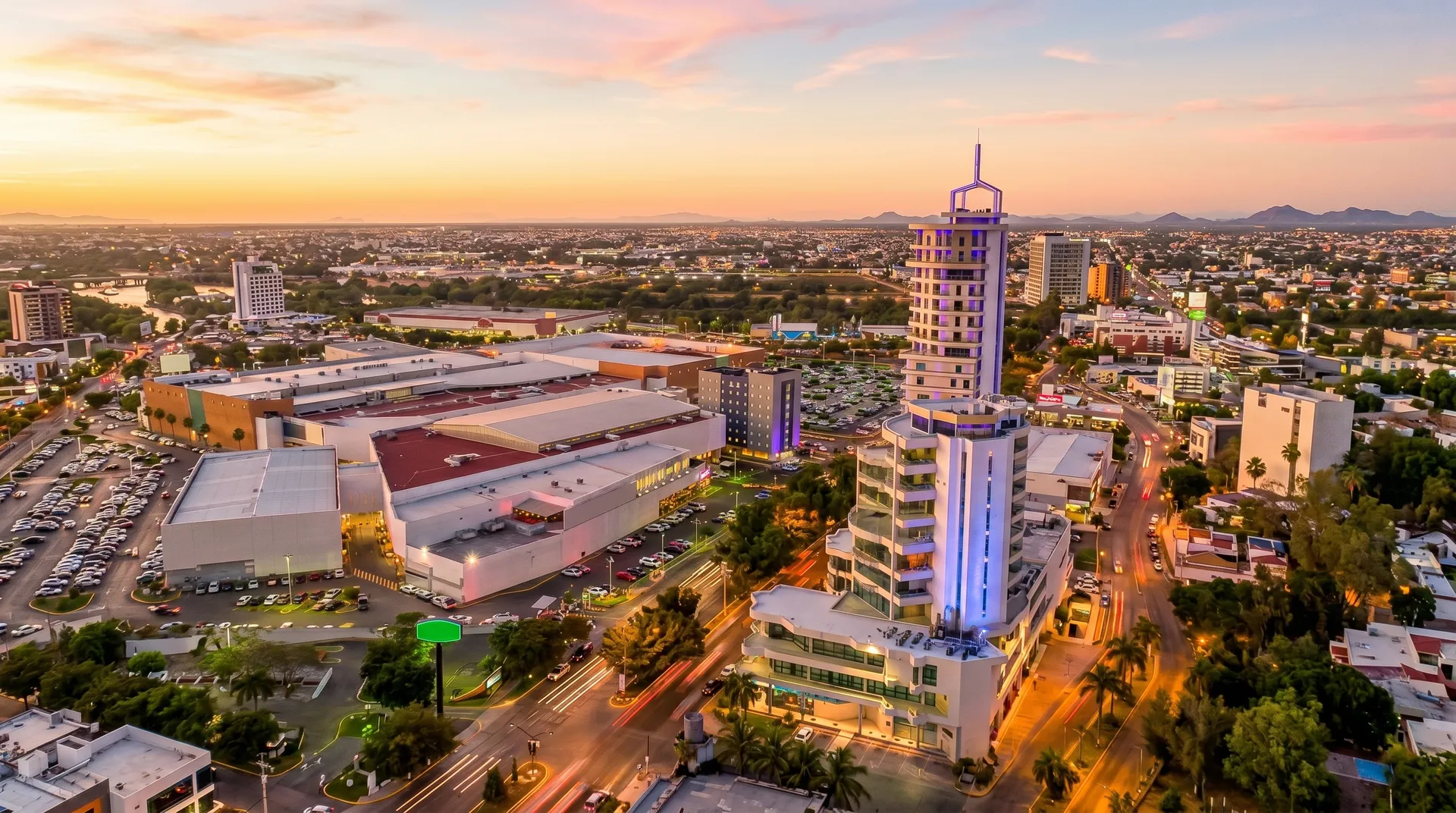
Culiacán Rosales, the capital city of Sinaloa, Mexico, is a strategic logistics destination in northwestern Mexico, serving as a major commercial and industrial center for the region. The city's economy is diverse, with strong agricultural, manufacturing, and services sectors. Culiacán is particularly known for its agricultural industry, being a key producer of tomatoes, cucumbers, and other vegetables that are exported to the United States. The city also has a growing automotive parts manufacturing sector, food processing industry, and is home to several maquiladora operations.
The transportation infrastructure in Culiacán is well-developed, with the city being connected to the rest of Mexico via Federal Highway 15D (La Entrada al Pacífico), a major toll highway that runs from Nogales to Mexico City. This highway provides excellent connectivity to the U.S. border and other major Mexican cities. Culiacán also benefits from Federal Highway 180, which connects it to the port city of Mazatlán, facilitating international trade through maritime routes. The city is served by Bachoco International Airport, which handles both passenger and cargo flights, and the Ferromex railroad, providing multiple options for freight movement and distribution throughout the region.


Ready to ship your cargo?
Get a personalized quote for your freight.
Quote Now Tucson - Culiacán Rosales








