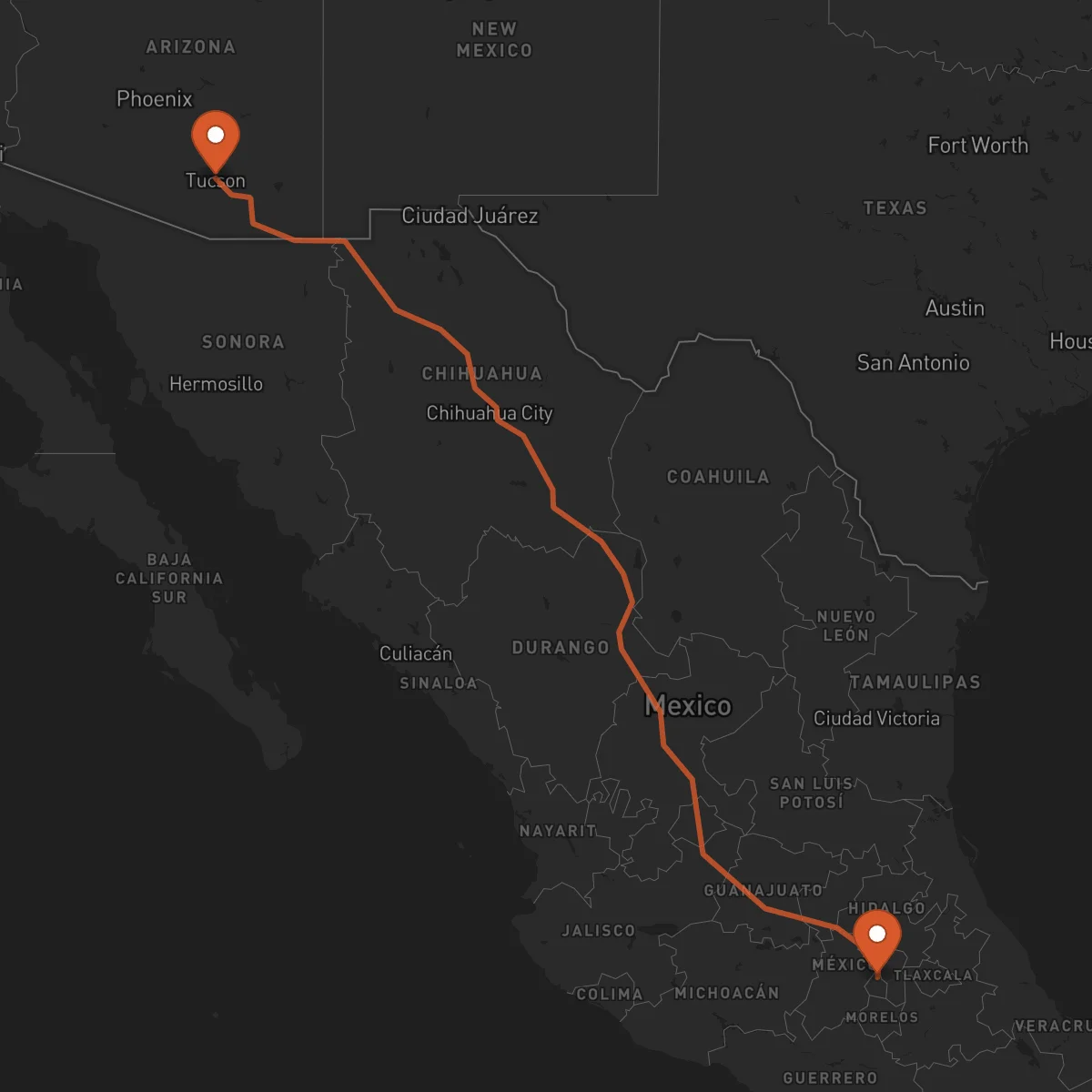
Tucson to Mexico City
Mexico City → TucsonFTL freight transportation service between Tucson and Mexico City. Reliable logistics solutions for your business.
Route Description
Everything you need to know about the corridor Tucson - Mexico City
The Tucson to Ciudad de México corridor represents one of the most important logistics connections between the United States and Mexico. This cross-border route spans approximately 1,851 kilometers, connecting Arizona's second-largest city with Mexico's capital and economic center. The corridor serves as a vital artery for trade between two major economies, facilitating the movement of goods that drive industrial growth and commercial development on both sides of the border.
The region's economic significance is underscored by its diverse industrial base. Tucson serves as a major logistics hub for aerospace, defense, and high-tech manufacturing, while Ciudad de México anchors Mexico's financial services, telecommunications, and advanced manufacturing sectors. This complementary economic relationship creates substantial freight demand, particularly for time-sensitive and high-value shipments that require the reliability of full truckload (FTL) service.
Transportation infrastructure along this corridor includes major highways such as I-10 connecting Tucson to the Mexican border, and Mexican Federal Highways 2 and 150D providing efficient routes south. The Mariposa Port of Entry in Nogales serves as the primary border crossing, offering modern facilities and dedicated FAST lanes for expedited processing. Control Terrestre's expertise in cross-border operations ensures seamless transit through customs procedures, with certified carriers who understand the documentation requirements and regulatory compliance necessary for efficient border crossing.
Control Terrestre facilitates operations on this corridor through our network of C-TPAT-certified carriers and experienced logistics professionals who manage every aspect of the journey. Our dedicated FTL service ensures that shipments move directly from origin to destination without intermediate handling, maintaining cargo integrity and reducing transit times. We provide real-time tracking and proactive communication throughout the journey, giving our clients complete visibility of their freight as it moves between these two important economic centers.
Services for this Route
Available services for the corridor Tucson - Mexico City
 Origin
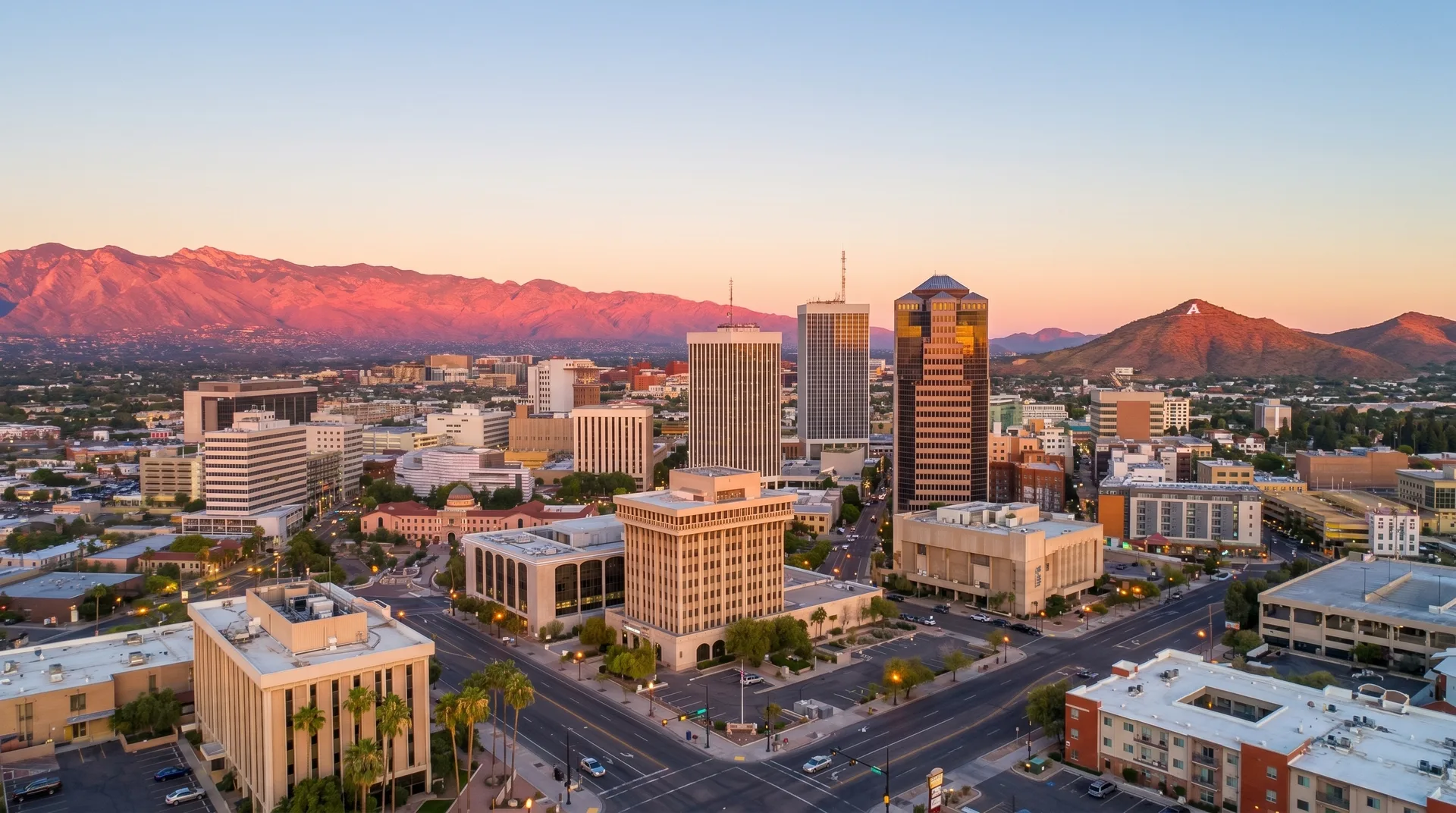
Tucson
Tucson, Arizona serves as a strategic logistics hub in the southwestern United States, offering excellent connectivity to major markets across North America. Located just 100 kilometers from the Mexican border, Tucson provides immediate access to cross-border trade routes and serves as a gateway for freight moving between the U.S. and Mexico. The city's logistics infrastructure includes the Tucson International Airport, Union Pacific rail facilities, and proximity to major interstate highways that facilitate efficient distribution throughout the region.
The region's economy is anchored by aerospace and defense industries, with major employers including Raytheon Missiles & Defense and the Davis-Monthan Air Force Base. Tucson also hosts significant operations in semiconductor manufacturing, renewable energy technology, and medical device production. These industries generate substantial freight volumes requiring specialized transportation solutions, particularly for high-value, sensitive, or time-critical shipments that benefit from dedicated truckload service.
 Destination
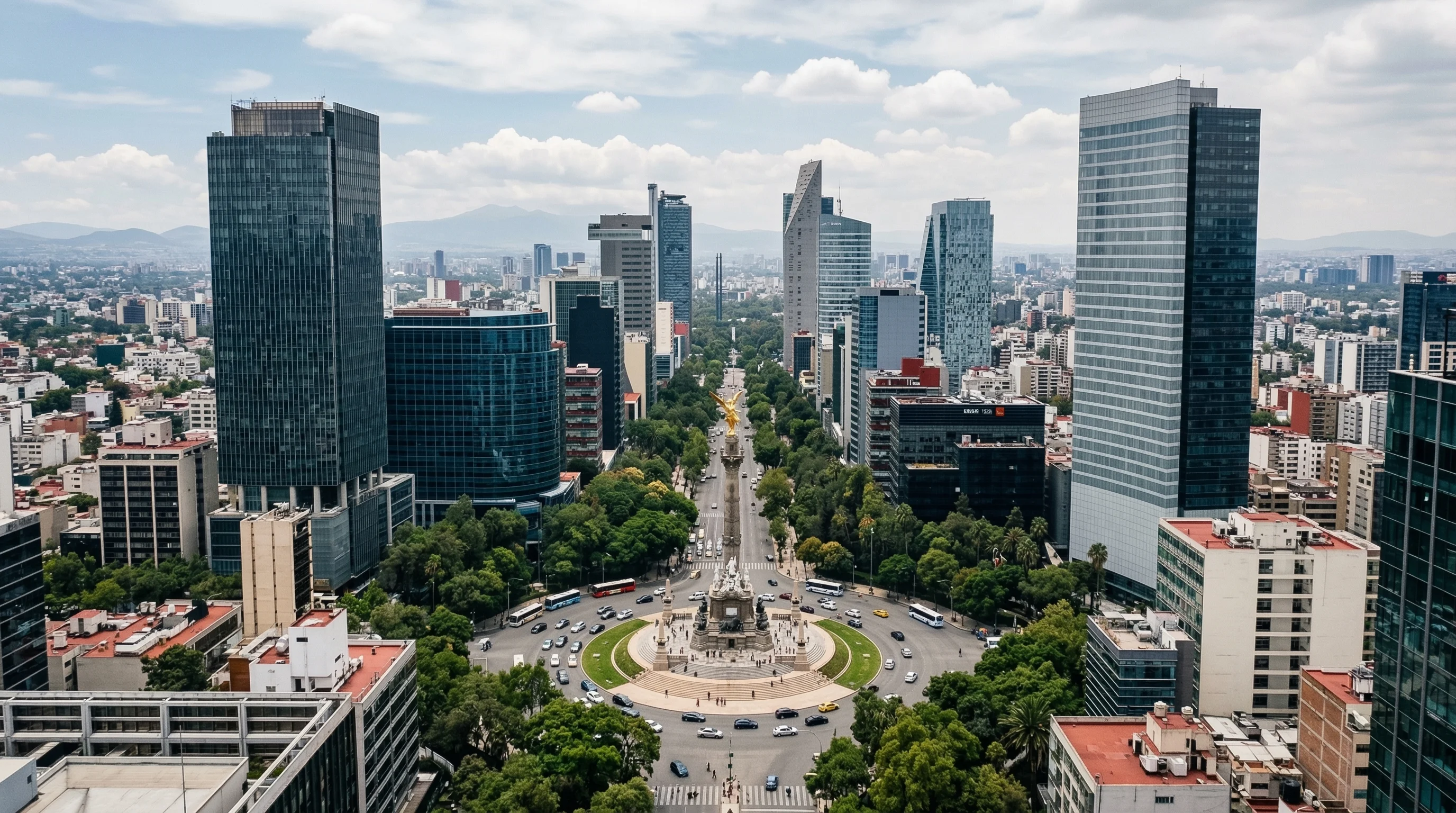
Mexico City
Ciudad de México stands as Mexico's primary economic engine and one of the most important logistics hubs in Latin America. The metropolitan area's strategic location in the country's geographic center provides excellent distribution capabilities to all regions of Mexico. The city is served by multiple transportation modes, including the Mexico City International Airport (AICM), extensive rail connections through Ferrocarril Mexicano (Ferromex), and a comprehensive highway network that radiates to all parts of the country.
The capital's economy is characterized by its diversity, encompassing financial services, telecommunications, media, manufacturing, and technology sectors. Major industrial parks in and around the city host operations for global companies in automotive, electronics, pharmaceuticals, and consumer goods manufacturing. These industries create significant demand for reliable freight transportation, particularly for just-in-time inventory systems and supply chain operations that require the consistency and capacity of full truckload services to maintain production schedules and distribution networks.










