Tucson to Charleston
Charleston → TucsonFTL freight transportation service between Tucson and Charleston. Reliable logistics solutions for your business.
Route Description
Everything you need to know about the corridor Tucson - Charleston
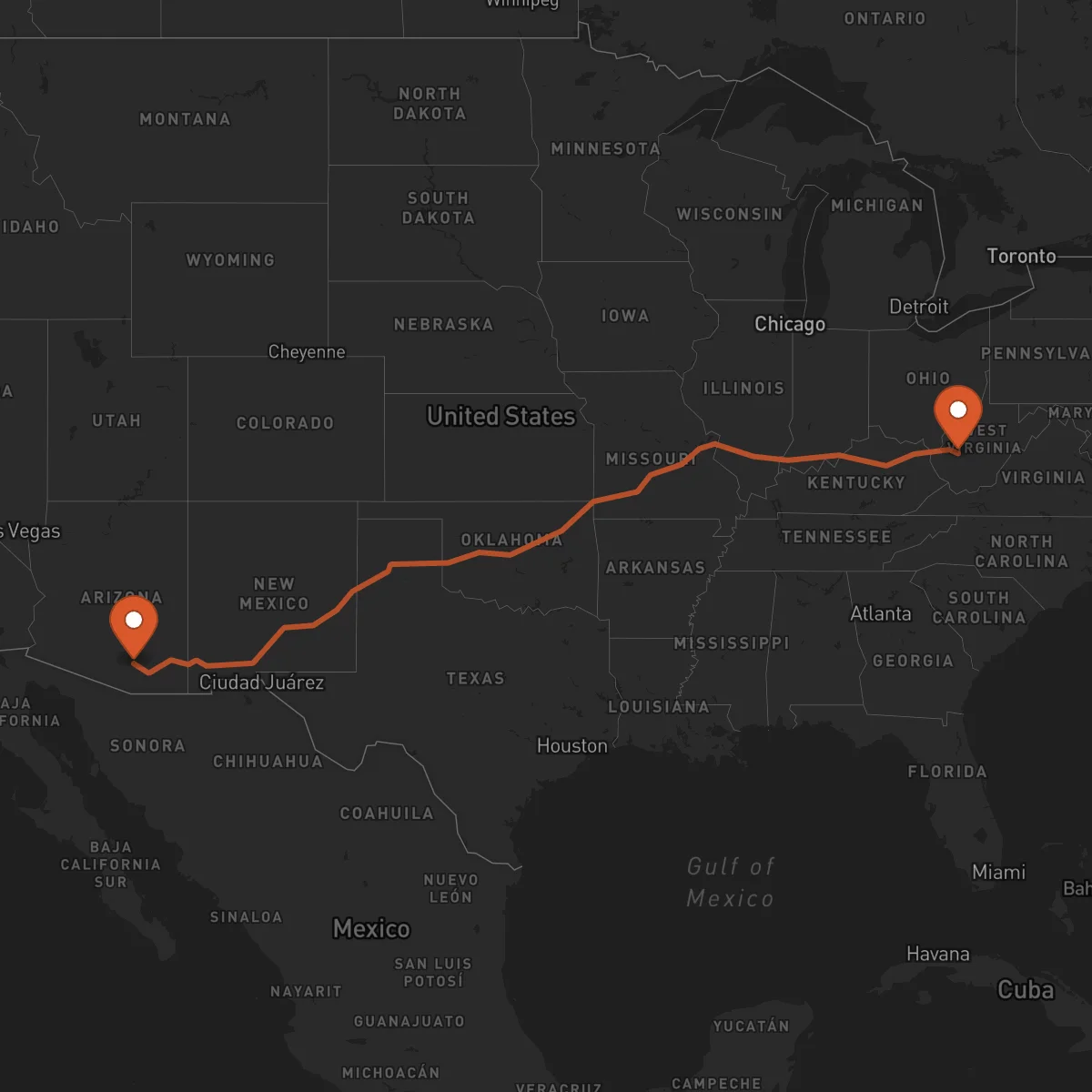
The Tucson to Charleston corridor represents a vital freight transportation link across the United States, spanning approximately 2,735 kilometers through diverse terrain and multiple states. This east-west route connects the southwestern United States with the Appalachian region, facilitating the movement of goods between major industrial centers and distribution hubs. The corridor traverses Arizona, New Mexico, Texas, Oklahoma, Missouri, Illinois, Indiana, Ohio, and West Virginia, crossing through key transportation nodes and economic regions.
The economic significance of this corridor lies in its ability to connect the manufacturing and agricultural powerhouse of the Southwest with the industrial and energy sectors of the Appalachian region. Tucson serves as a gateway for goods entering from Mexico and the Pacific coast, while Charleston represents access to the eastern markets and the Ohio River Valley industrial complex. This route supports the movement of automotive parts, agricultural products, industrial equipment, and consumer goods between these complementary economic regions.
Control Terrestre provides specialized FTL (Full Truckload) transportation services along this corridor, leveraging our network of certified carriers and strategic partnerships. Our expertise in managing long-haul domestic freight ensures reliable transit times and optimized logistics solutions for companies moving high-volume shipments between Tucson and Charleston. We offer dedicated equipment options including dry vans, refrigerated units, and specialized trailers to meet diverse cargo requirements, with real-time tracking and dedicated customer support throughout the journey.
Services for this Route
Available services for the corridor Tucson - Charleston
 Origin
Tucson
Tucson, Arizona serves as a strategic logistics hub in the southwestern United States, offering unique advantages for freight transportation. Located just 100 kilometers from the Mexican border and connected to major interstate highways (I-10), Tucson provides seamless access to cross-border trade and Pacific coast ports. The city's logistics infrastructure includes multiple warehousing facilities, cross-dock operations, and proximity to Tucson International Airport, creating a comprehensive transportation ecosystem.
The region's economy is driven by aerospace and defense manufacturing, optics and photonics industries, and agricultural production including winter vegetables and cattle. Tucson's position as a logistics gateway is enhanced by its role in the CANAMEX Corridor, which facilitates trade between Canada, the United States, and Mexico. The city's transportation network includes rail connections through Union Pacific and Burlington Northern Santa Fe, complementing the extensive trucking operations that move goods throughout the Southwest and beyond.
 Destination
Charleston
Charleston, West Virginia, strategically positioned at the confluence of the Elk and Kanawha Rivers, serves as a crucial logistics center for the Appalachian region. The city's location provides access to the Ohio River system and major interstate highways (I-64, I-77, I-79), creating multiple transportation options for freight movement. Charleston's Yeager Airport and extensive rail connections through Norfolk Southern and CSX further enhance its role as a regional distribution hub.
The Charleston metropolitan area is the center of West Virginia's chemical, energy, and manufacturing industries. The region is known for its natural gas production, coal mining support services, and chemical manufacturing, particularly in the Kanawha Valley, often called the "Chemical Valley." The city's logistics infrastructure supports these industries with specialized handling capabilities for bulk materials, hazardous substances, and heavy equipment. Charleston's strategic position provides efficient access to eastern U.S. markets, making it a vital endpoint for freight originating from the western states.










