Tucson to Boston
Boston → TucsonFTL freight transportation service between Tucson and Boston. Reliable logistics solutions for your business.
Route Description
Everything you need to know about the corridor Tucson - Boston
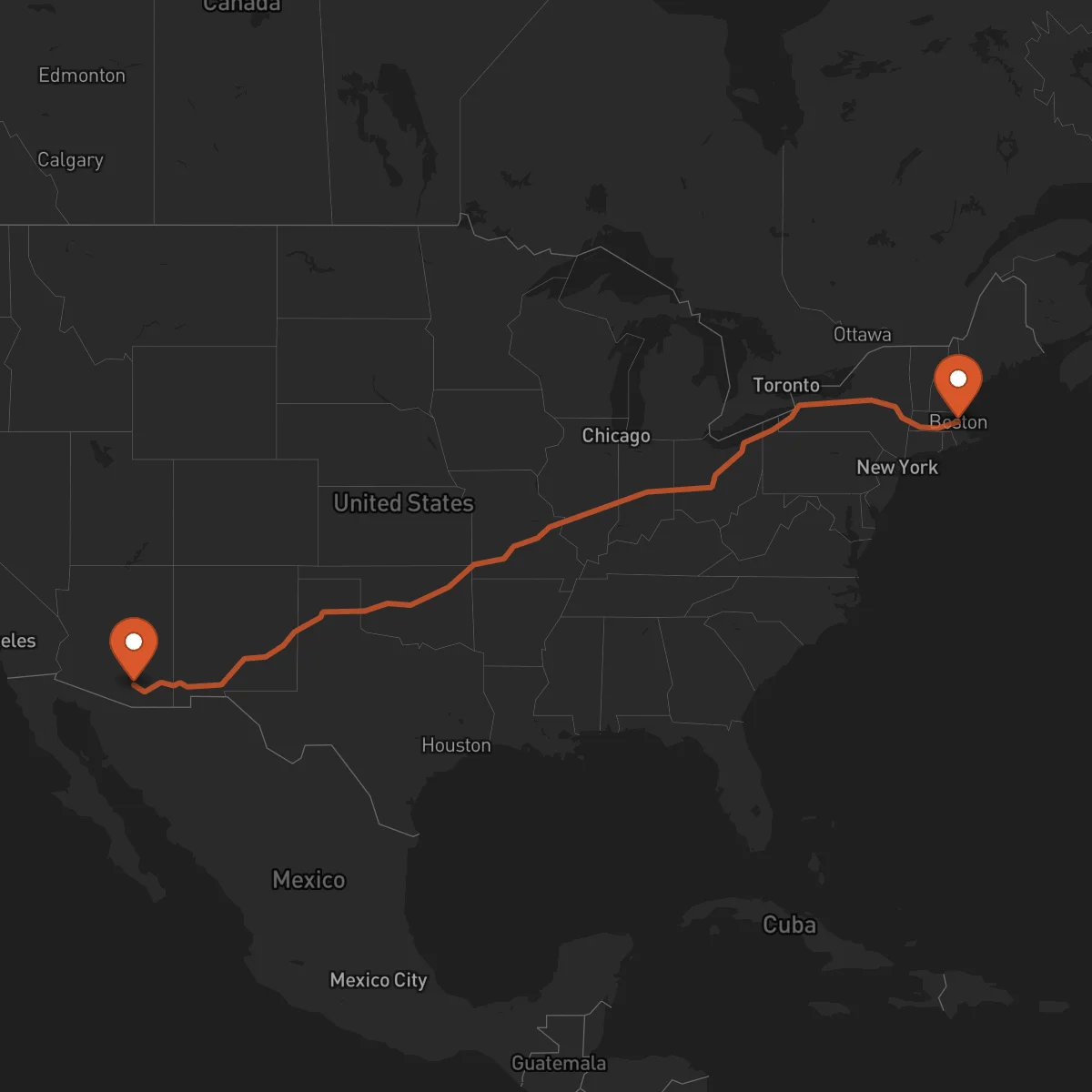
The Tucson-Boston corridor represents one of the most important freight transportation routes in the United States, connecting the southwestern region with the northeastern economic hub. This 3,667 km route crosses diverse geographic and economic zones, facilitating the movement of goods between the industrial and agricultural heartlands of America. The corridor is vital for maintaining supply chains that support both regional and national commerce.
This route traverses key economic regions, from Arizona's manufacturing and technology sectors to the industrial Northeast. Major industries utilizing this corridor include automotive, electronics, pharmaceuticals, and agricultural products. The transportation infrastructure along this route is robust, primarily utilizing Interstate 10 eastbound to connect with Interstate 40 and then Interstate 90, providing reliable access across the country's transportation network.
Control Terrestre optimizes operations on this corridor through our specialized FTL services. Our strategic alliances with certified carriers ensure consistent capacity and reliable service across all segments of this long-haul route. We understand the unique challenges of cross-country transportation and provide dedicated solutions that maintain cargo integrity and delivery reliability from origin to destination.
Services for this Route
Available services for the corridor Tucson - Boston
 Origin
Tucson
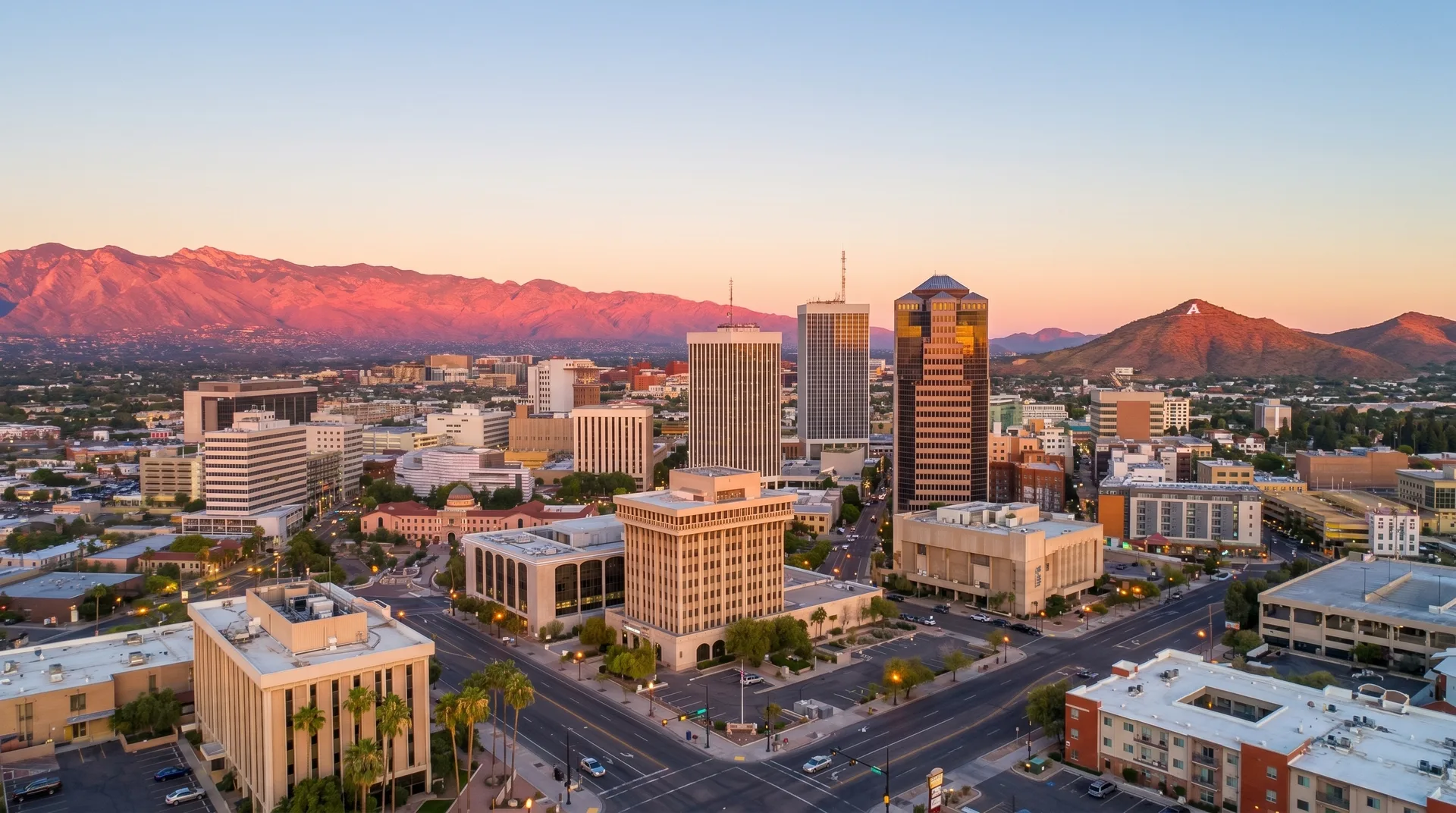
Tucson, Arizona serves as a strategic logistics hub in the southwestern United States, offering excellent connectivity to major markets. The city's location provides access to both Mexican trade routes and domestic western markets. Tucson's economy is diverse, with strong sectors in aerospace and defense, technology, and agriculture. The region's proximity to the U.S.-Mexico border enhances its role in international trade and logistics operations.
The transportation infrastructure in Tucson is well-developed, featuring multiple interstate highways including I-10, which runs east-west across the southern United States. The city is served by Tucson International Airport and the Port of Tucson, providing multimodal transportation options. The region's dry climate also offers advantages for certain types of freight that require stable environmental conditions during storage and transit.
 Destination
Boston
Boston, Massachusetts stands as a major economic and logistics center in the northeastern United States, offering unparalleled access to New England markets and beyond. The city's strategic coastal location provides connections to international shipping routes via the Port of Boston, one of the oldest and most significant ports in the country. Boston's economy is characterized by education, healthcare, finance, and technology sectors, with a growing biotechnology industry that demands reliable freight transportation.
The transportation infrastructure in Boston is comprehensive, featuring extensive highway networks including I-90 and I-93, as well as rail connections through the MBTA and freight rail services. Logan International Airport provides air cargo capabilities, while the Port of Boston handles significant maritime freight. The region's dense population and industrial base create consistent demand for freight services, making it a crucial endpoint for cross-country logistics operations.










