Torreón to Tepic
Tepic → TorreónFTL freight transportation service between Torreón and Tepic. Reliable logistics solutions for your business.
Route Description
Everything you need to know about the corridor Torreón - Tepic
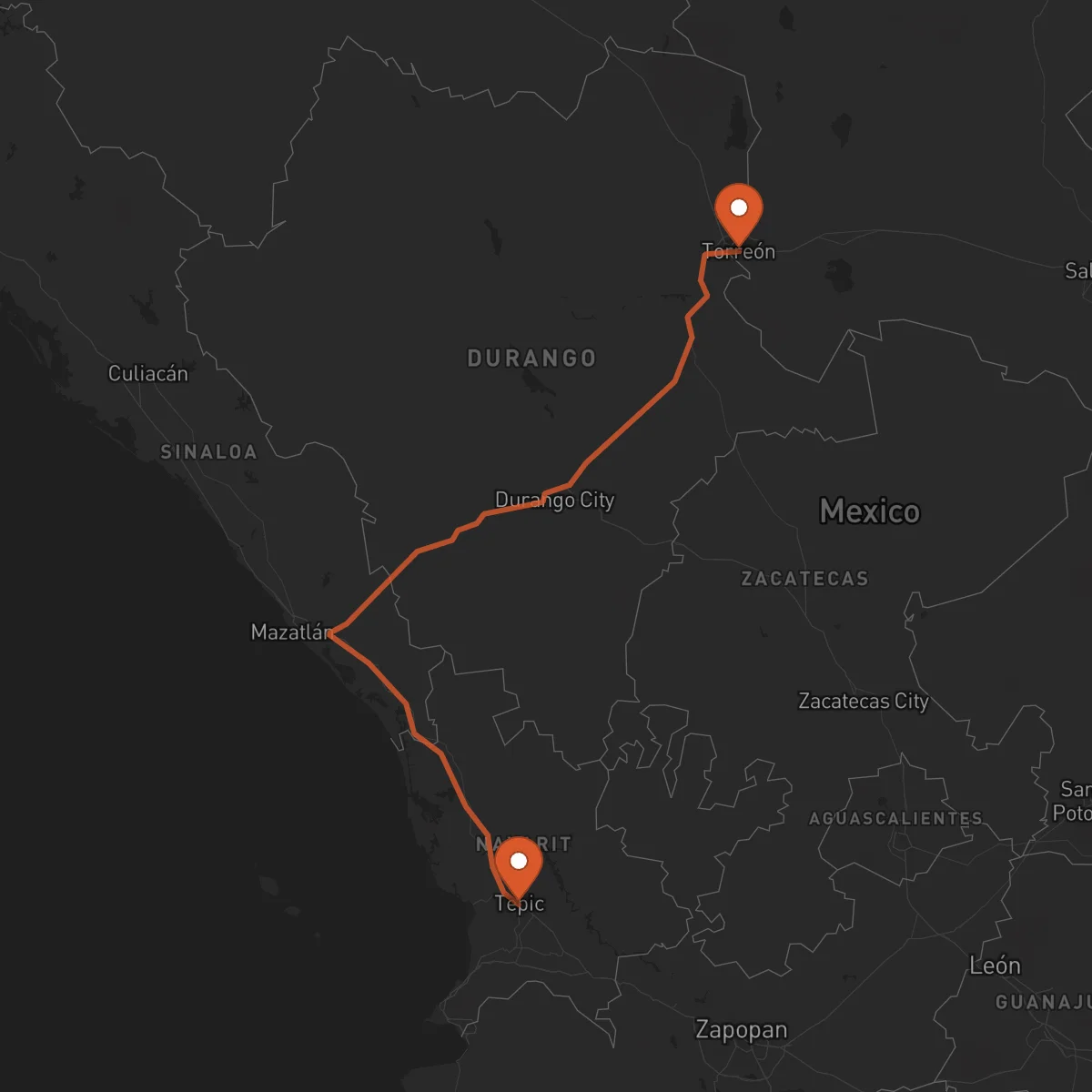
The Torreón-Tepic corridor connects two important industrial hubs in northern and western Mexico, covering approximately 474 kilometers. This route traverses the states of Coahuila, Durango, and Nayarit, linking the Laguna region's industrial strength with the emerging economic center of Tepic. The corridor is strategically positioned to facilitate commerce between the central-northern industrial corridor and the Pacific coast, making it a vital artery for national freight transportation.
The region's economy is characterized by a diverse industrial base. Torreón serves as a manufacturing powerhouse with strong automotive, aerospace, and metallurgical sectors, while Tepic has developed as a growing industrial center with strengths in agribusiness, electronics, and light manufacturing. This complementarity creates a steady flow of goods in both directions, from raw materials and components to finished products and agricultural goods.
Transportation along this corridor is primarily conducted via Federal Highway 40D (the Durango-Mazatlán highway) and Federal Highway 15, which provide modern, safe, and efficient connections. These toll roads feature multiple lanes, rest areas, and weigh stations that ensure cargo security and regulatory compliance. The infrastructure supports the movement of diverse freight types, from temperature-sensitive products to heavy machinery.
At Control Terrestre, we optimize operations on this corridor through our network of certified carriers and specialized equipment. Our full truckload (FTL) services ensure dedicated transportation for your cargo, minimizing handling and reducing transit risks. With real-time tracking, experienced drivers familiar with the route, and our commitment to safety and punctuality, we provide reliable freight solutions that keep your supply chain moving efficiently between Torreón and Tepic.
Services for this Route
Available services for the corridor Torreón - Tepic
 Origin
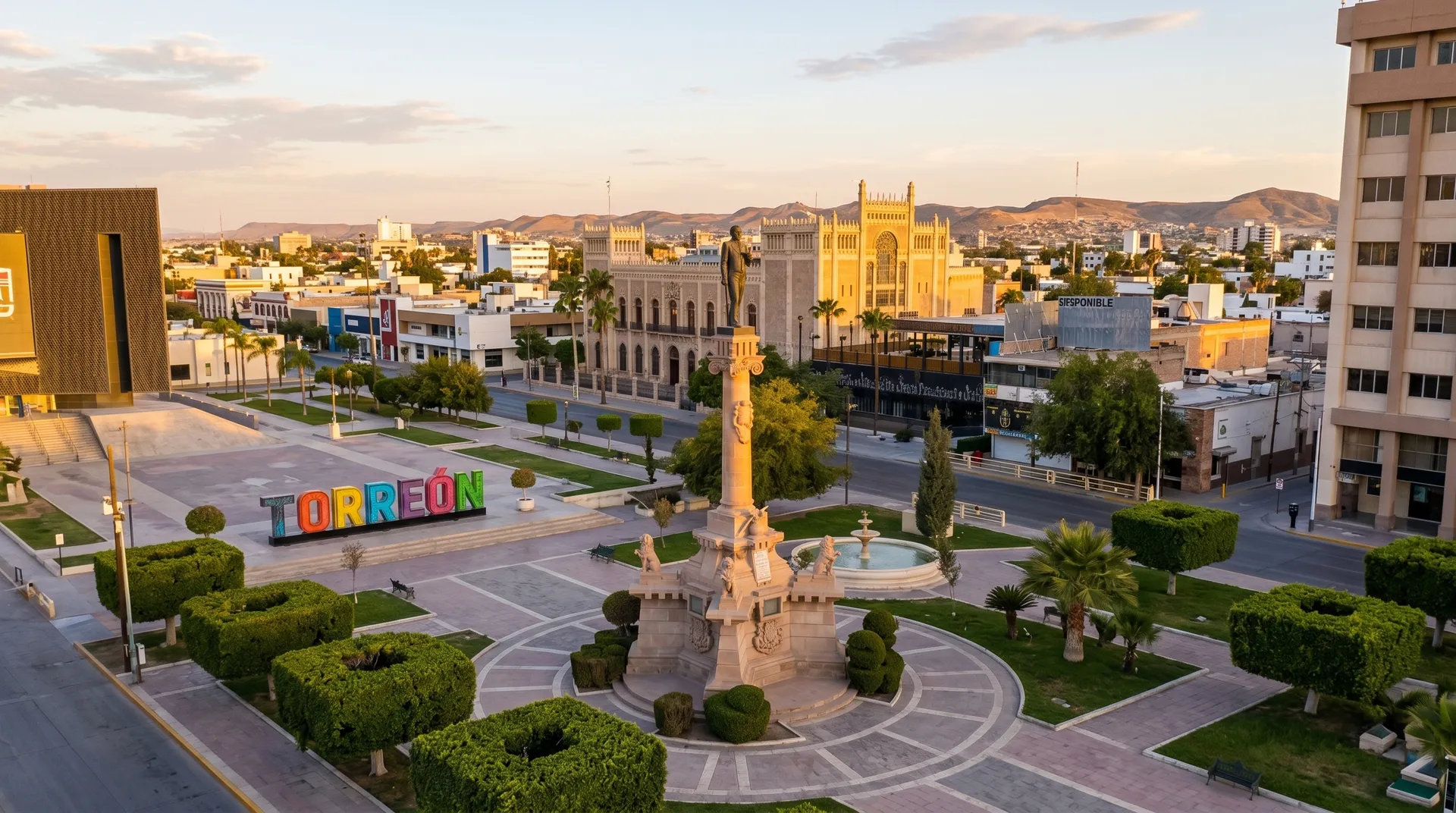
Torreón, located in the Laguna region of Coahuila, is a strategic logistics hub in northern Mexico. Its position at the intersection of major transportation routes connects it to key industrial centers in the north and central regions of the country. The city benefits from excellent ground transportation infrastructure, including direct access to Federal Highways 40, 45, and 49, as well as the Torreón Airport for air cargo operations. The presence of the Torreón Railway Station further enhances its multimodal connectivity.
The economic base of Torreón is robust and diverse, with strong automotive manufacturing, aerospace production, metal-mechanical industry, and food processing sectors. The city hosts numerous maquiladoras and industrial parks that generate significant freight traffic. Additionally, Torreón serves as a distribution center for agricultural products from the Laguna region, including cotton, wheat, and sorghum, making it a crucial point for both industrial and agricultural logistics operations.
 Destination
Tepic, the capital of Nayarit, occupies a strategic position in western Mexico, serving as a gateway to the Pacific coast and the Bajío region. The city is well-connected through Federal Highway 15, which links it to major ports and industrial centers, and Federal Highway 200, providing coastal access. Tepic International Airport offers air cargo services, complementing the ground transportation network and facilitating multimodal logistics solutions.
The economy of Tepic is characterized by growing industrial development alongside traditional agricultural activities. The city has experienced significant growth in electronics manufacturing, agribusiness processing, and light industrial production. Tepic serves as a crucial distribution point for agricultural products from Nayarit, including sugarcane, mango, and other tropical fruits. The city's industrial parks and manufacturing facilities generate consistent freight demand, while its proximity to coastal areas makes it an important node for import-export operations, particularly for companies seeking efficient connections between the Pacific and central-northern Mexico.










