Torreón to Wilmington
Wilmington → TorreónFTL freight transportation service between Torreón and Wilmington. Reliable logistics solutions for your business.
Route Description
Everything you need to know about the corridor Torreón - Wilmington
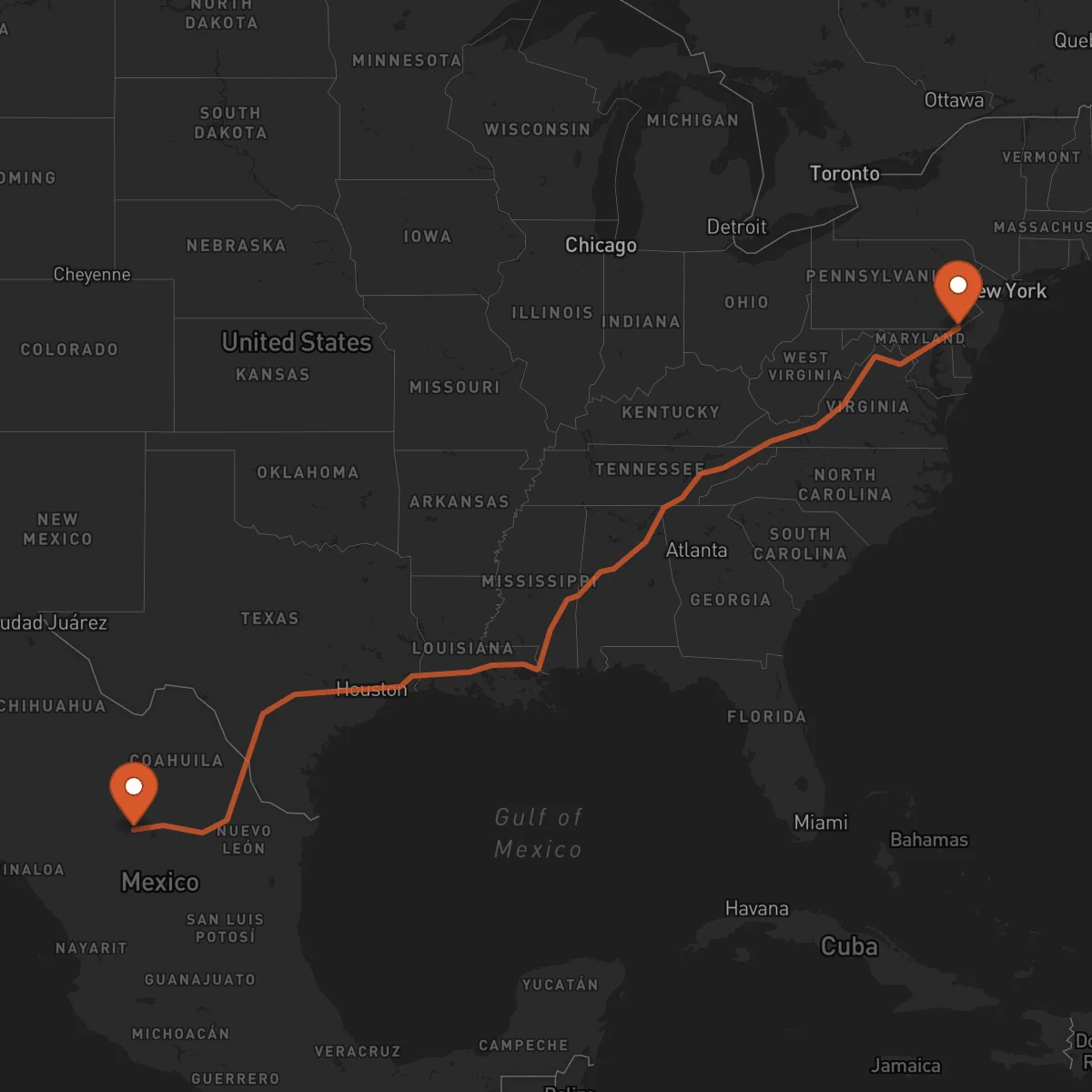
The logistics corridor between Torreón, Coahuila, and Wilmington, Delaware, represents a vital cross-border connection between Mexico's industrial heartland and one of the United States' most important port cities. This 3,030 km route facilitates the movement of goods between Mexico's growing manufacturing sector and the international markets accessible through the Port of Wilmington. The corridor traverses diverse terrain and crosses multiple state lines, requiring expert knowledge of cross-border regulations and efficient route planning.
This transportation route serves as a crucial link for industries on both sides of the border. Torreón, with its strong manufacturing base in automotive, aerospace, and electronics sectors, depends on reliable connections to U.S. markets where many of these products find their final destination. Wilmington, strategically located near Philadelphia and with direct access to the Atlantic coast, serves as a major distribution hub for both domestic and international freight. The corridor benefits from Mexico's expanding logistics infrastructure and the United States' extensive highway network.
Key transportation infrastructure includes Mexico's Federal Highway 40D connecting Torreón to the U.S. border, and major U.S. interstates such as I-40 and I-95 that provide direct access to Wilmington. The corridor typically crosses at Laredo or El Paso, both of which offer efficient customs processing for qualified carriers. Control Terrestre facilitates seamless operations along this corridor through our certified carriers, C-TPAT compliance, and expertise in cross-border documentation, ensuring your freight moves efficiently between these two important industrial centers.
Services for this Route
Available services for the corridor Torreón - Wilmington
 Origin
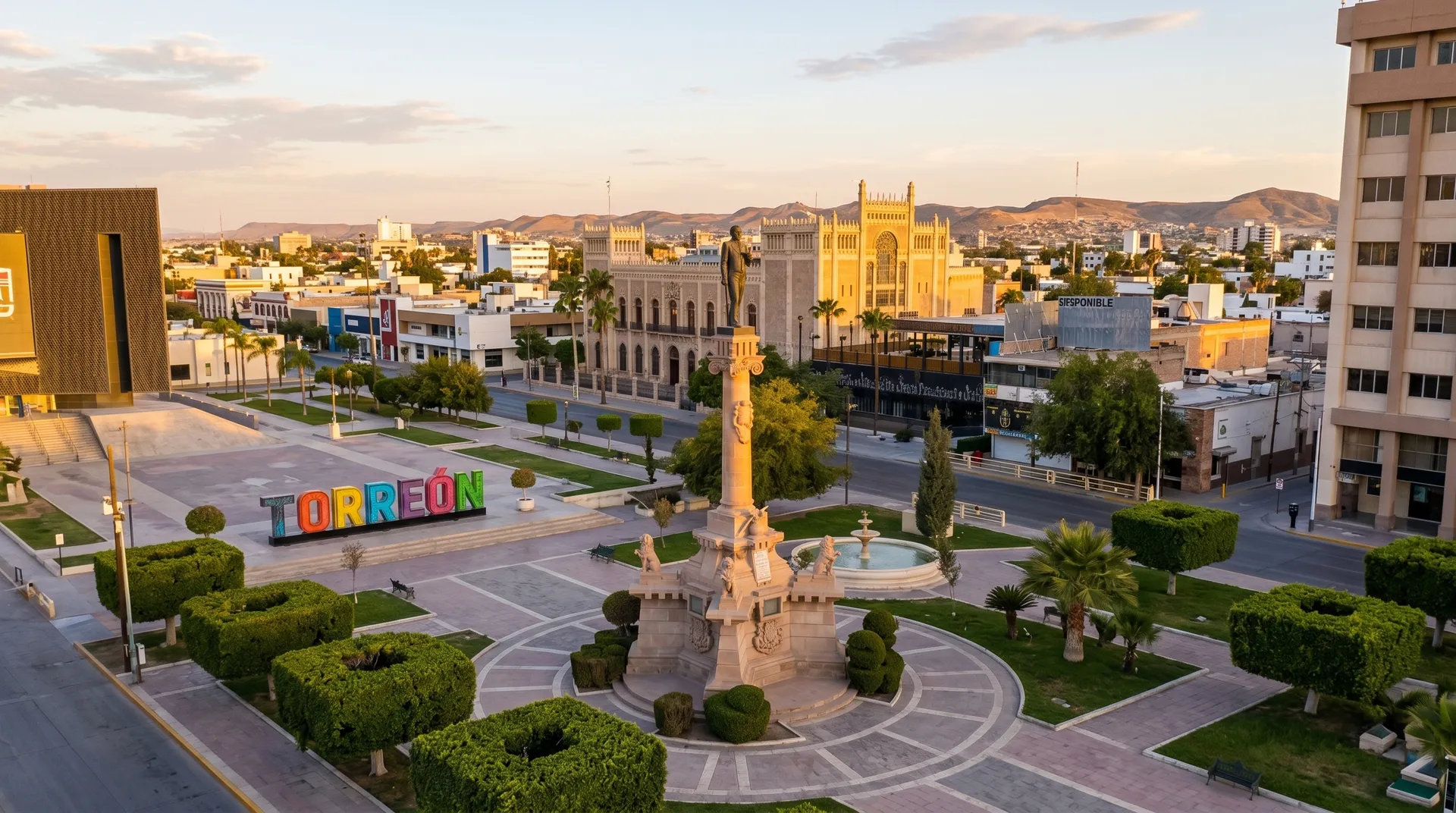
Torreón, located in the Laguna Region of Coahuila, stands as a strategic logistics hub in northern Mexico. Its position at the intersection of major industrial corridors and proximity to the U.S. border make it ideal for manufacturing and distribution operations. The city serves as the commercial center for a metropolitan area that includes Gómez Palacio and Lerdo, creating a significant industrial zone with access to a large labor pool and supporting services.
The region's economy is diversified across several key sectors, with particular strength in automotive manufacturing, aerospace components, electronics, and agricultural processing. Torreón hosts numerous maquiladora operations and has developed specialized industrial parks catering to these industries. The city's transportation infrastructure includes the Torreón International Airport, extensive rail connections through Ferromex, and highway access via Federal Highway 40, which provides direct connections to the U.S. border and other major Mexican cities.
 Destination
Wilmington
Wilmington, Delaware, occupies a strategic position on the eastern seaboard of the United States, offering exceptional access to major East Coast markets. Located between Philadelphia and Baltimore, and with direct connections to Interstate 95, Wilmington provides efficient distribution capabilities for reaching over 30% of the U.S. population within a day's drive. The city's proximity to the Port of Wilmington enhances its value as a logistics hub, facilitating both import and export activities.
The region's economy encompasses diverse industries including chemical manufacturing (with DuPont's historical presence), financial services, healthcare, and logistics. Wilmington has developed significant warehousing and distribution infrastructure to support these sectors, with modern facilities strategically located near major transportation arteries. The area benefits from Delaware's business-friendly regulatory environment and excellent connectivity through multiple interstate highways, rail services via Amtrak and freight carriers, and the nearby Philadelphia International Airport for air cargo needs.










