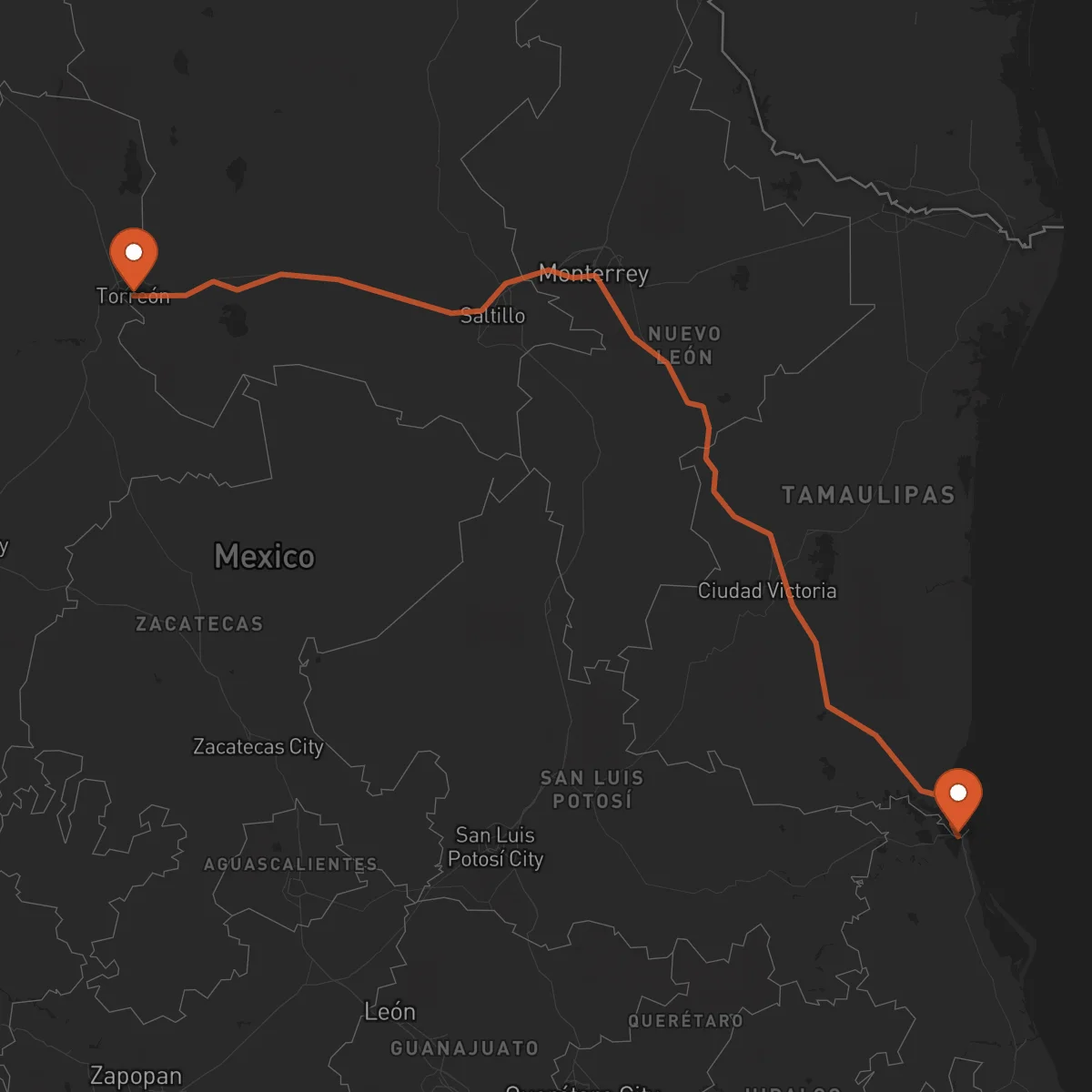
Torreón to Tampico
Tampico → TorreónFTL freight transportation service between Torreón and Tampico. Reliable logistics solutions for your business.
Route Description
Everything you need to know about the corridor Torreón - Tampico
The logistics corridor between Torreón, Coahuila and Tampico, Tamaulipas represents a vital connection in Mexico's industrial and commercial network. This 674-kilometer route links the central-northern industrial hub of La Laguna with the important port and petrochemical center of Tampico, facilitating the flow of goods between the interior of the country and the Gulf of Mexico. The corridor traverses a strategic axis that connects key economic regions, optimizing the supply chain for companies operating in both areas.
The region's economic context is characterized by the complementarity of its industrial activities. Torreón stands out as a center for manufacturing, automotive, and mining industries, while Tampico is recognized for its port operations, petrochemical industry, and food processing. This corridor enables the efficient transportation of raw materials, finished products, and specialized cargo between these complementary economic zones. The main highway infrastructure includes the Carretera Federal 40 and Carretera Federal 180, which provide reliable connectivity with adequate rest areas and service points.
Control Terrestre facilitates operations on this corridor through our specialized full truckload (FTL) services. Our strategic alliance with certified transportation providers ensures cargo integrity and timely delivery along this route. We offer dedicated services with real-time tracking, specialized equipment for different cargo types, and drivers trained in handling various freight classifications. Our experience in managing cross-regional shipments between these industrial centers allows us to optimize routes, coordinate loading and unloading schedules, and provide customized solutions that meet the specific needs of each client.
Services for this Route
Available services for the corridor Torreón - Tampico
 Origin
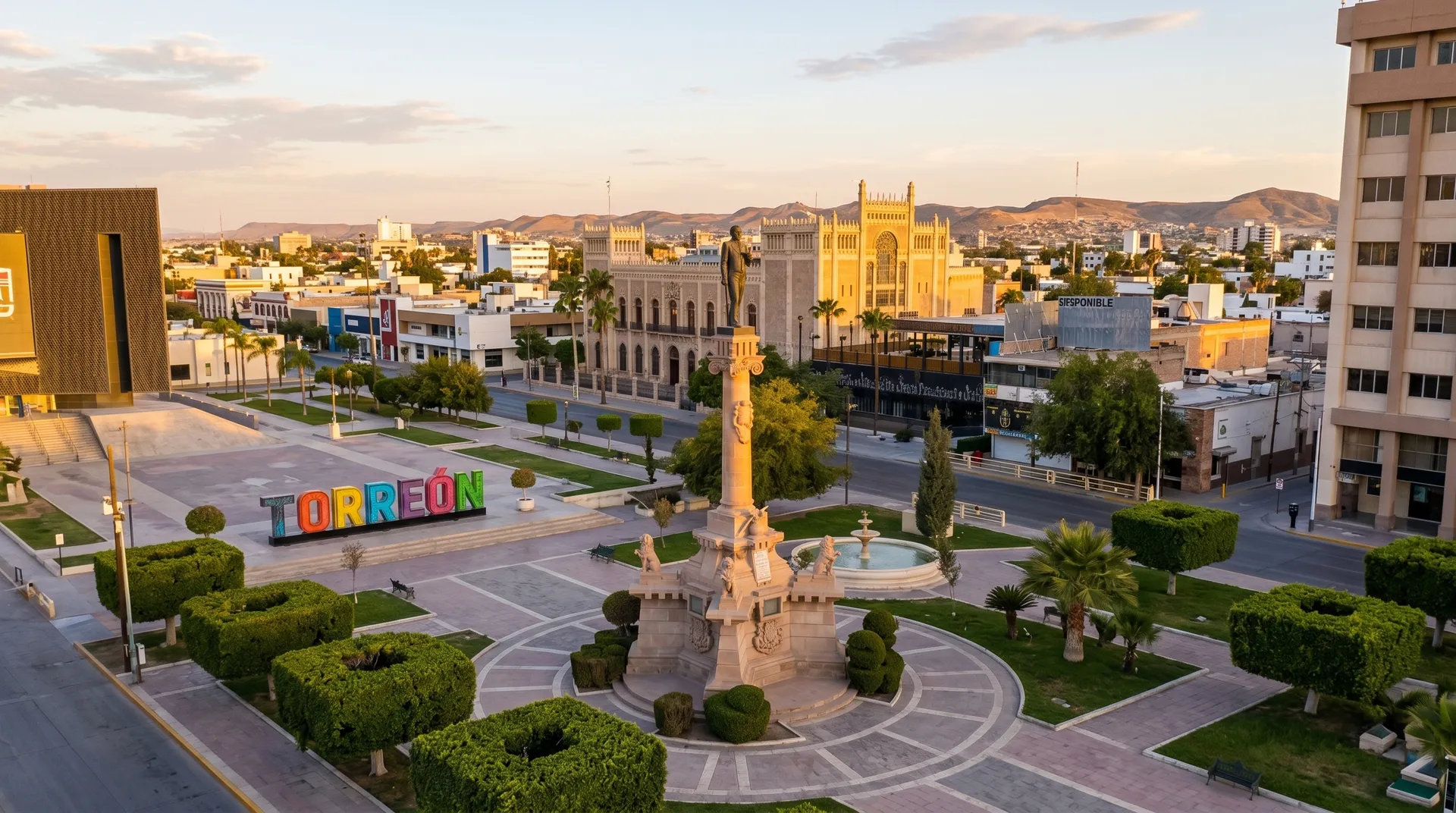
Torreón, located in the La Laguna region of Coahuila, occupies a strategic position in northern Mexico's logistics network. Its geographic location provides access to key industrial centers in Coahuila, Durango, and Zacatecas, making it an important node for freight distribution. The city benefits from its proximity to major industrial corridors and its connection to the central and northern regions of the country through a well-developed road network.
The main industries in Torreón include manufacturing, automotive, mining, and metalworking sectors. The city hosts numerous maquiladoras and industrial parks that require efficient transportation solutions for both raw materials and finished products. Its economic infrastructure includes industrial zones with specialized facilities, warehouses, and distribution centers. The transportation infrastructure comprises access to major highways including the Carretera Federal 40 and connections to the railway network, facilitating multimodal transportation options for companies operating in the region.
 Destination
Tampico
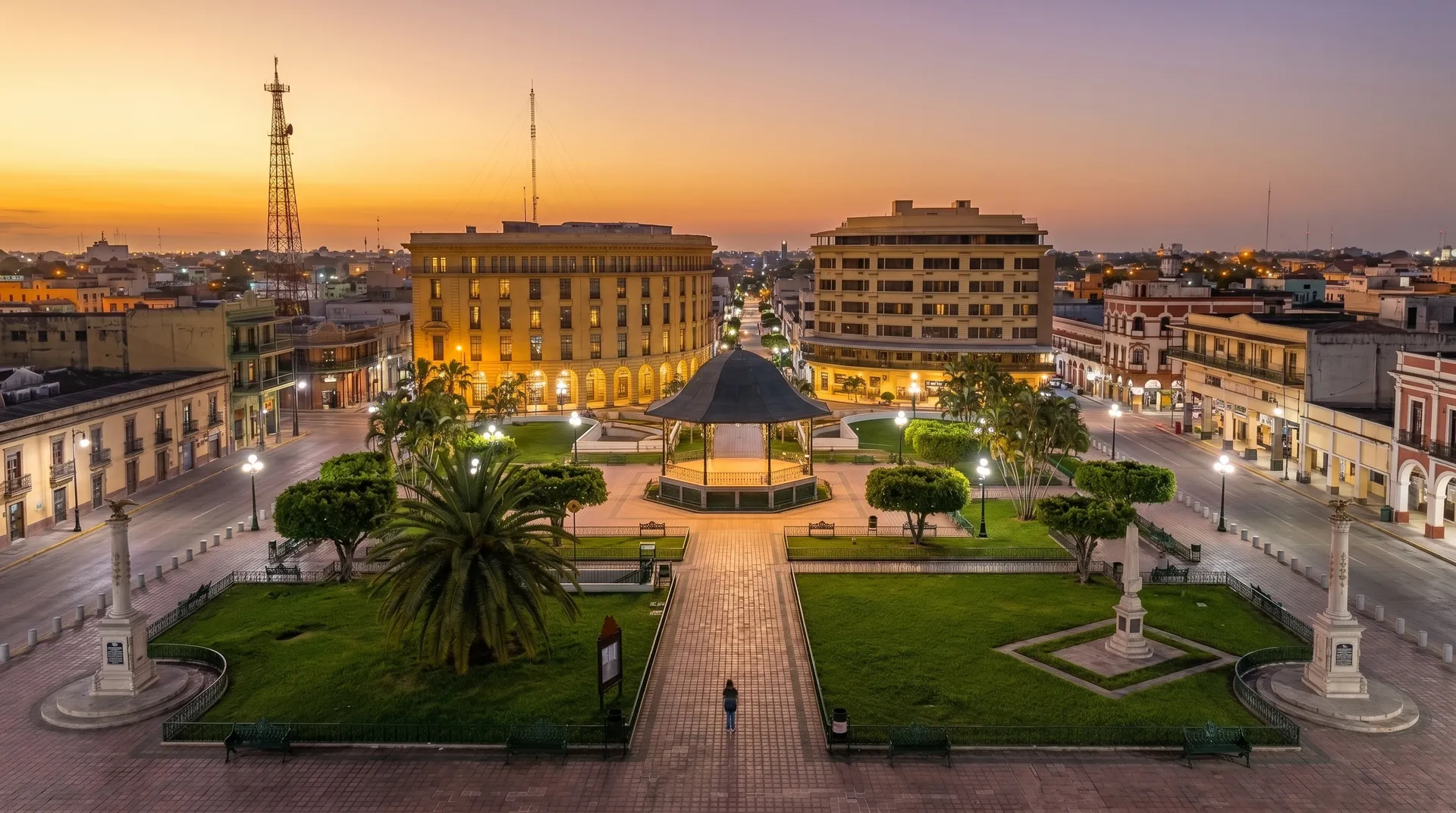
Tampico, Tamaulipas, represents a strategic logistics hub on Mexico's Gulf coast, combining port operations with industrial development. Its location provides direct access to maritime trade routes and serves as a gateway for imports and exports through the Port of Tampico. The city's geographic position makes it an ideal connection point between the central and northern regions of Mexico with international markets via sea transport.
The main industries in Tampico include petrochemicals, food processing, fishing, and port logistics. The region hosts significant petrochemical complexes and processing plants that require specialized transportation services. Its economic infrastructure includes the deepwater port facilities, industrial parks, and storage terminals. The transportation infrastructure features excellent connectivity through the Carretera Federal 180, port facilities with specialized cargo handling equipment, and access to rail connections. This comprehensive infrastructure network enables efficient cargo movement and distribution to and from the port area.










