Torreón to Oakland
Oakland → TorreónFTL freight transportation service between Torreón and Oakland. Reliable logistics solutions for your business.
Route Description
Everything you need to know about the corridor Torreón - Oakland
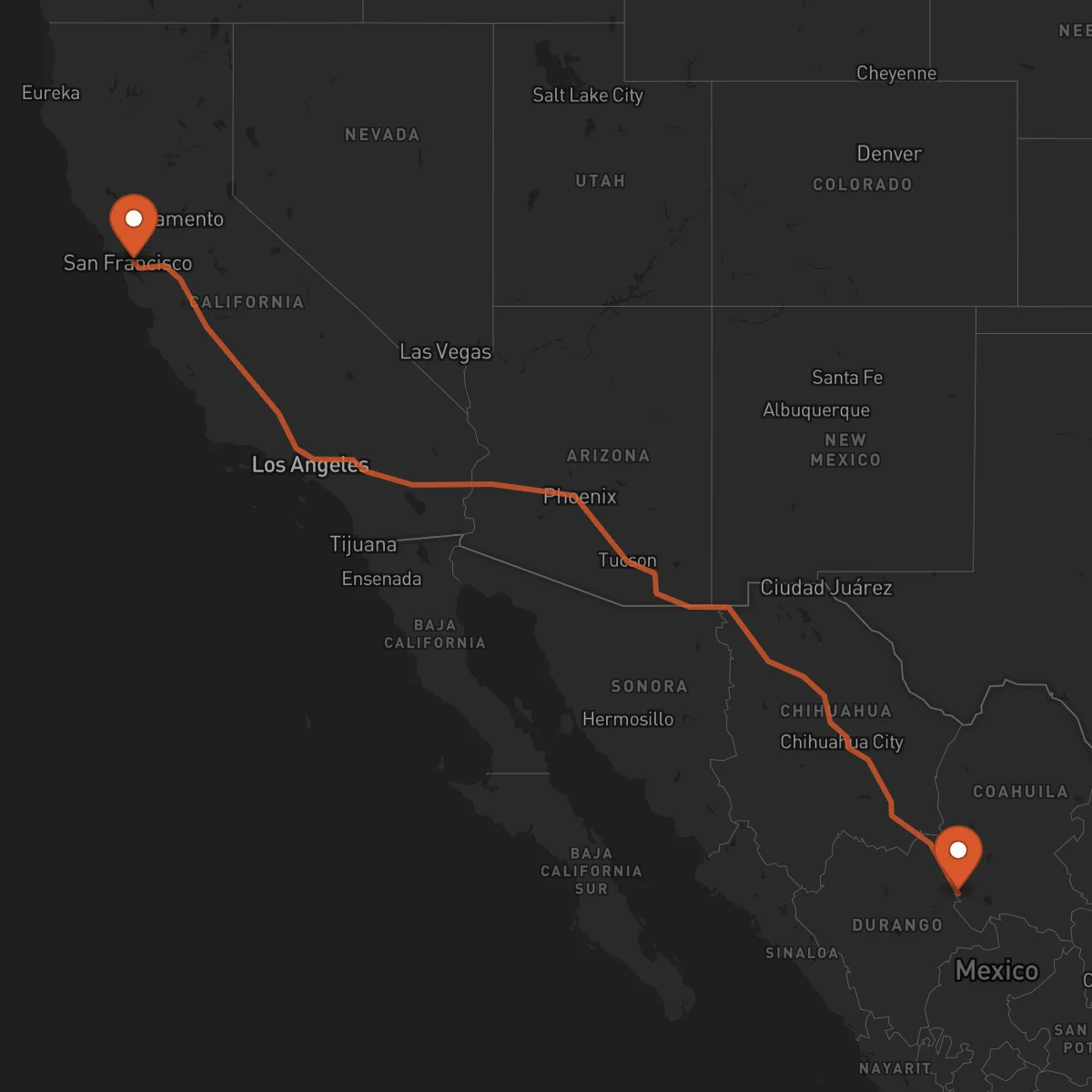
The Torreón-Oakland corridor represents a vital trade link between northern Mexico and the San Francisco Bay Area, spanning approximately 2,239 kilometers through key industrial zones. This cross-border route connects Coahuila's manufacturing powerhouse with California's major port and logistics hub, facilitating the movement of goods between North American production centers and international markets.
The corridor traverses Mexico's central plateau before crossing through strategic border points, connecting with major interstate highways that lead to the Port of Oakland. This maritime gateway serves as a crucial entry point for Asian imports and a distribution center for goods throughout the western United States. The route benefits from established transportation infrastructure and well-developed logistics networks on both sides of the border.
Primary industries utilizing this corridor include automotive manufacturing, electronics, agricultural products, and industrial equipment. Torreón's industrial base, featuring maquiladoras and manufacturing plants, generates significant freight volume requiring reliable cross-border transportation. The Port of Oakland's container terminals and intermodal facilities create additional demand for efficient trucking services connecting inland Mexico with West Coast distribution networks.
Control Terrestre optimizes cross-border operations along this corridor through our network of certified transportation providers. Our expertise in customs procedures, border documentation, and regulatory compliance ensures seamless freight movement between Torreón and Oakland. We coordinate dedicated full truckload services that maintain cargo integrity while meeting the demanding schedules of manufacturers and distributors operating across this critical trade route.
Services for this Route
Available services for the corridor Torreón - Oakland
 Origin
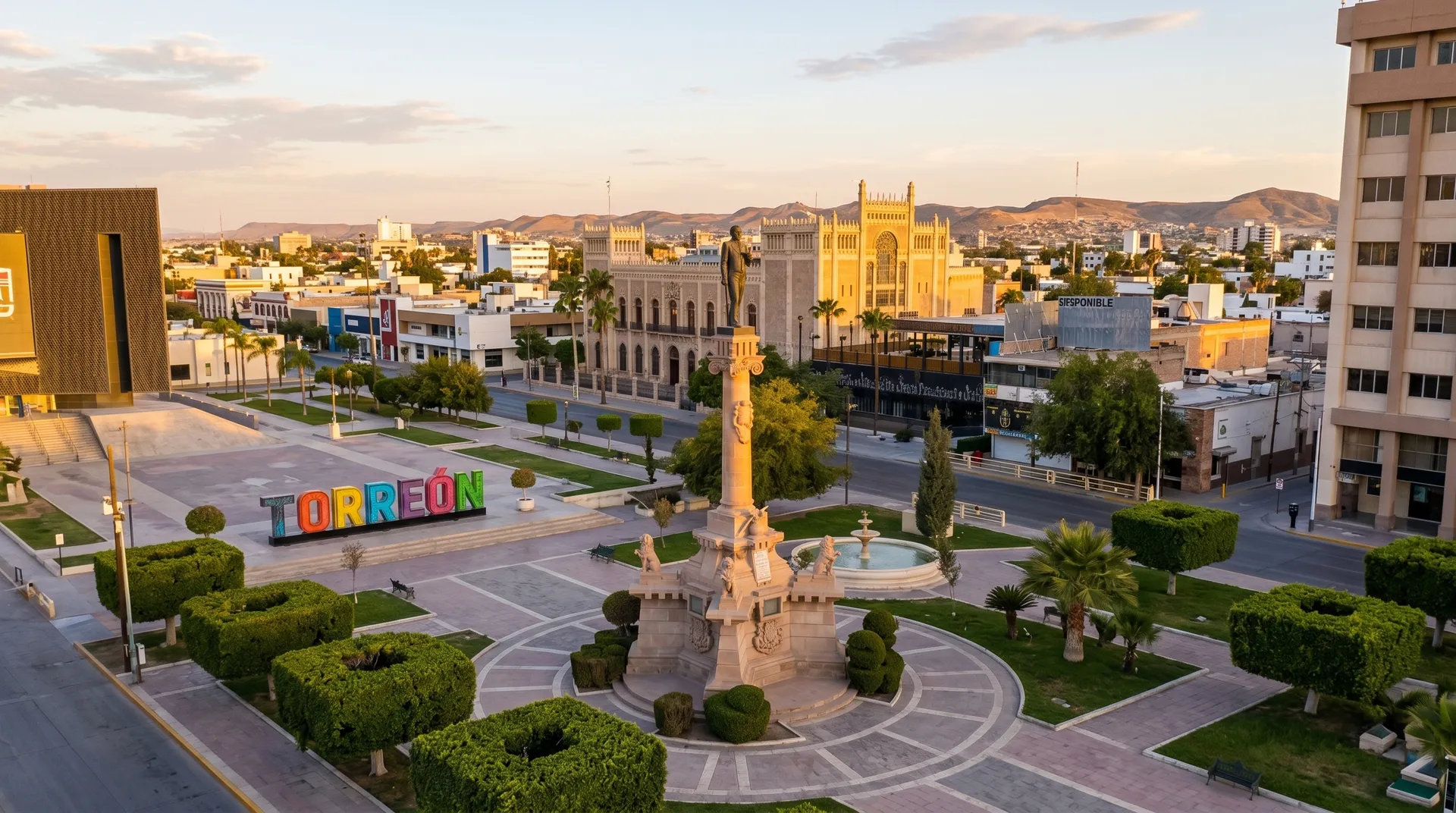
Torreón, located in Coahuila's Laguna region, serves as a strategic logistics hub in northern Mexico. The city's position at the intersection of major highways connecting central Mexico with the northern border creates optimal conditions for freight distribution. Torreón's industrial corridor hosts numerous manufacturing facilities, particularly in the automotive, aerospace, and metal-mechanical sectors, generating substantial freight volumes requiring reliable transportation solutions.
The city benefits from comprehensive transportation infrastructure including the Torreón International Airport, rail connections through Ferromex, and highway access via Federal Highways 40, 45, and 57. These multimodal connections facilitate efficient cargo movement to both U.S. border crossings and Mexico's interior markets. Torreón's industrial parks and free trade zone status further enhance its role as a manufacturing and distribution center for cross-border commerce.
 Destination
Oakland
Oakland's strategic location on the eastern shore of San Francisco Bay positions it as a critical logistics hub for northern California and the broader western United States. The Port of Oakland, one of the busiest container ports on the West Coast, provides direct maritime connections to Asia and global markets. The city's extensive intermodal facilities, including rail yards operated by Union Pacific and BNSF, create seamless cargo transfer between sea, rail, and truck transportation modes.
The Oakland area's diverse economy encompasses technology, healthcare, advanced manufacturing, and food processing industries, all requiring sophisticated logistics solutions. Major distribution centers and warehousing facilities throughout the East Bay area support the region's role as a consumption and redistribution center for goods throughout the western states. Oakland's proximity to Silicon Valley and the Central Valley's agricultural heartland further amplifies its importance in North American supply chains.










