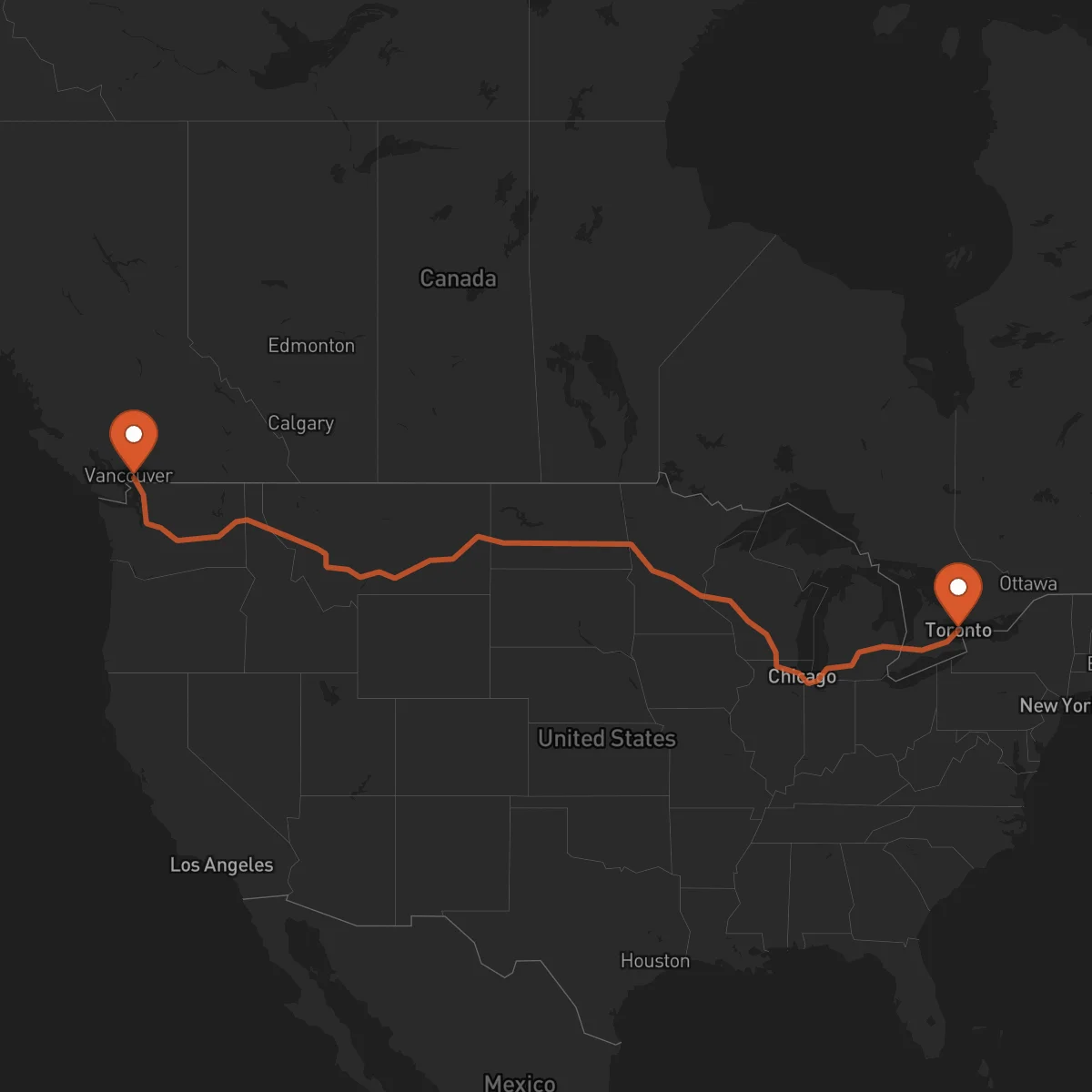
Toronto to Surrey
Surrey → TorontoFTL freight transportation service between Toronto and Surrey. Reliable logistics solutions for your business.
Route Description
Everything you need to know about the corridor Toronto - Surrey
The Toronto to Surrey corridor represents one of the most important domestic freight routes in Canada, connecting the economic heart of Ontario with British Columbia's key logistics hub. This 3,340 km route traverses the entire Canadian landscape, linking two major metropolitan areas that serve as gateways to their respective coasts. The corridor is vital for maintaining the flow of goods between Canada's most populous province and the growing markets of Western Canada.
The economic significance of this route cannot be overstated. Toronto, as Canada's financial capital and largest city, generates immense freight volumes that need to reach Western markets efficiently. Meanwhile, Surrey has emerged as a major distribution center for British Columbia, with its proximity to Vancouver's port facilities making it a critical node in Canada's supply chain network. This route supports industries ranging from automotive and manufacturing to technology and retail, ensuring that businesses across the country remain connected and competitive.
Control Terrestre specializes in optimizing this crucial corridor through our network of certified transportation providers. Our dedicated FTL services ensure that your cargo moves seamlessly from origin to destination, leveraging the most efficient highways including the Trans-Canada Highway and major provincial routes. We understand the unique challenges of cross-country transportation, from varying terrain to weather conditions, and our experienced carriers are equipped to handle every aspect of your shipment with precision and reliability.
Services for this Route
Available services for the corridor Toronto - Surrey
 Origin
Toronto stands as Canada's premier logistics hub, strategically positioned in the heart of Ontario's Golden Horseshoe region. The city's location provides unparalleled access to major markets, with its extensive transportation infrastructure including Pearson International Airport, multiple rail terminals, and direct highway connections to the United States. Toronto's economy is diverse and robust, anchored by finance, technology, manufacturing, and automotive sectors that generate substantial freight volumes requiring efficient distribution across the country.
The Greater Toronto Area (GTA) offers exceptional logistical advantages with its concentration of warehousing facilities, distribution centers, and intermodal terminals. The region's proximity to the U.S. border facilitates cross-border trade, while its central location makes it an ideal starting point for shipments heading west. Toronto's infrastructure includes the 400-series highways, providing direct connections to major routes like Highway 401, which serves as a critical east-west freight corridor across Southern Ontario.
 Destination
Surrey
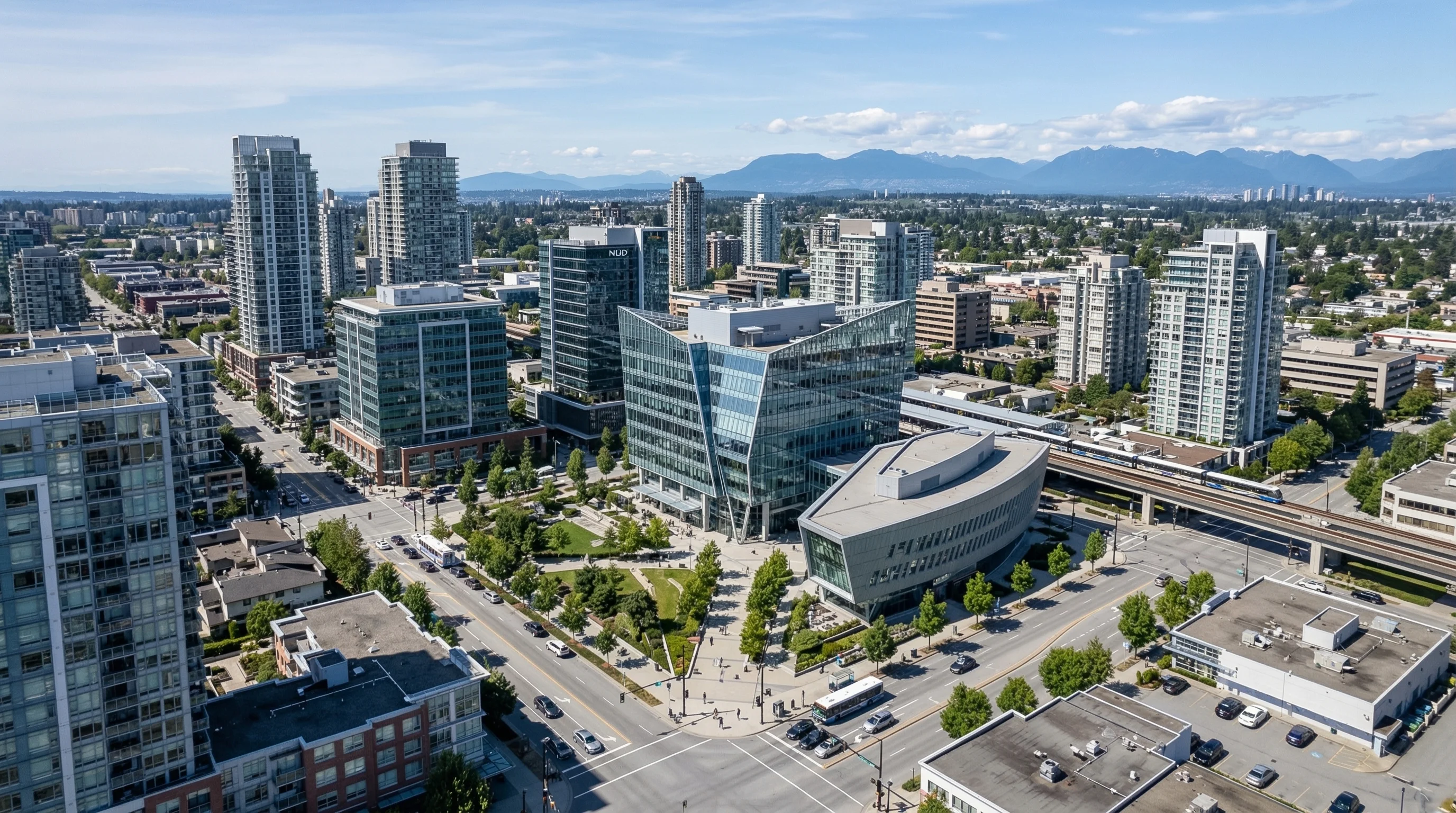
Surrey has established itself as British Columbia's second-largest city and a dominant force in Western Canada's logistics landscape. Located in the heart of Metro Vancouver's industrial belt, Surrey offers strategic advantages with its proximity to the Port of Vancouver, Canada's largest and busiest port. The city's economic profile is characterized by advanced manufacturing, technology, agriculture, and a growing logistics sector that benefits from excellent transportation connectivity and relatively lower operational costs compared to neighboring Vancouver.
The transportation infrastructure in Surrey is exceptional, featuring direct access to major highways including Highway 1 (Trans-Canada Highway), Highway 15, and the South Fraser Perimeter Road. The city hosts numerous industrial parks, warehousing facilities, and distribution centers that serve as crucial nodes in the regional supply chain. Surrey's location provides efficient connections to Vancouver International Airport and the Port of Vancouver's container terminals, making it an ideal destination for freight moving from Ontario and other Eastern Canadian markets.










