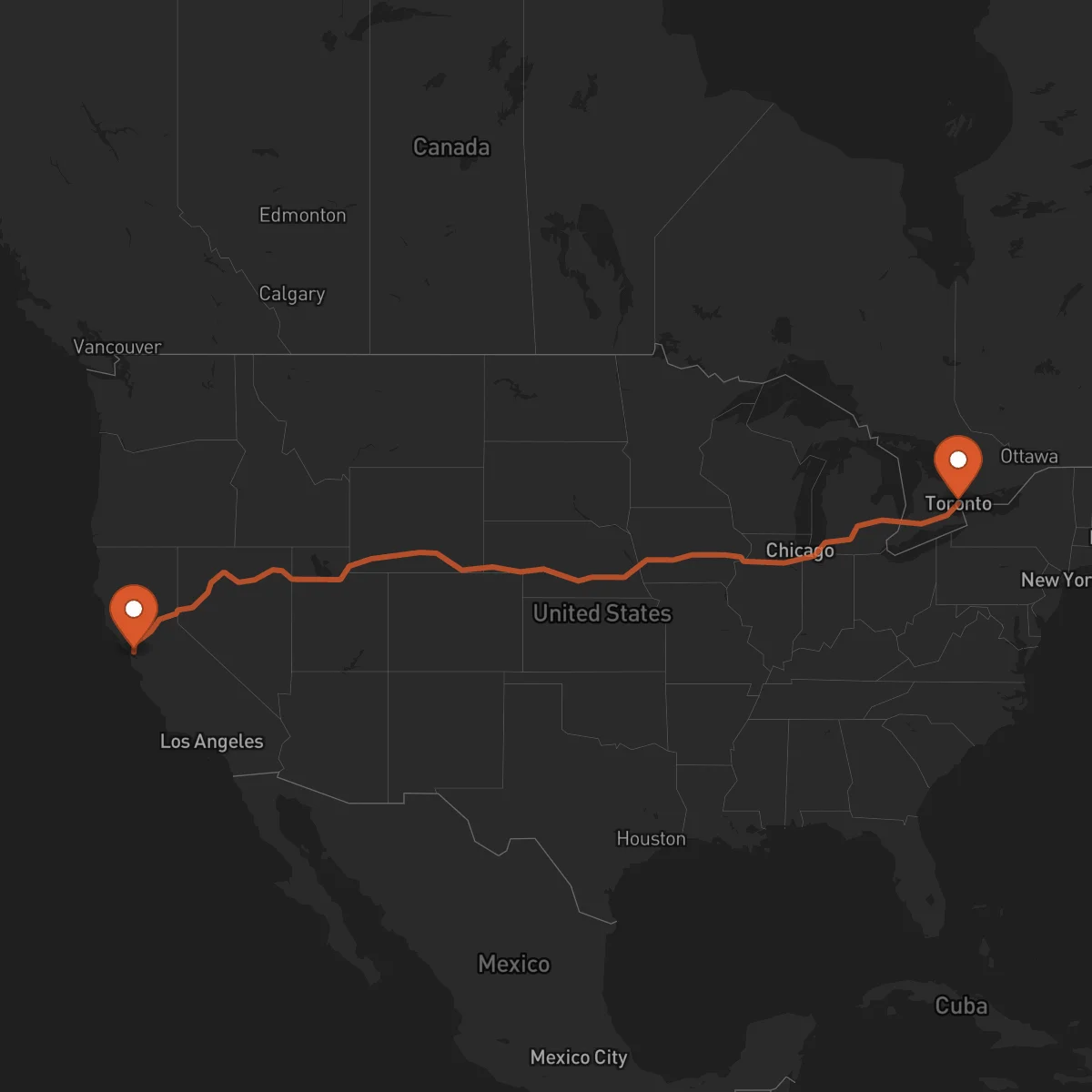
Toronto to Oakland
Oakland → TorontoFTL freight transportation service between Toronto and Oakland. Reliable logistics solutions for your business.
Route Description
Everything you need to know about the corridor Toronto - Oakland
The Toronto-Oakland corridor represents a vital logistics connection between Canada's largest city and one of California's most important ports. This cross-border route spans approximately 3,630 kilometers, connecting the economic powerhouse of Ontario with the San Francisco Bay Area's industrial and commercial hub. The corridor serves as a crucial artery for trade between Canada and the United States, facilitating the movement of goods between North America's two largest economies.
The route traverses major industrial regions, passing through key cities like Detroit, Chicago, and Salt Lake City before reaching the Pacific coast. This strategic pathway connects diverse economic sectors, from Toronto's financial services and manufacturing base to Oakland's thriving port operations, technology sector, and distribution networks. The corridor particularly benefits from Oakland's status as a major West Coast gateway for international trade, with its port handling significant cargo volumes from Asia and beyond.
Transportation infrastructure along this corridor includes major interstate highways such as I-80 and I-94, providing reliable freight movement across diverse terrain. The route crosses at key border points, with efficient customs processing essential for maintaining supply chain velocity. Control Terrestre's expertise in cross-border operations ensures seamless documentation, compliance with regulations, and optimized routing to minimize transit times and costs. Our dedicated FTL services provide the capacity and reliability that businesses require for this critical North American trade lane.
Services for this Route
Available services for the corridor Toronto - Oakland
 Origin
Toronto stands as Canada's premier logistics hub, strategically positioned in the heart of Ontario's Golden Horseshoe region. The city's location provides immediate access to major transportation networks, including extensive highway systems, rail connections, and proximity to major international airports. Toronto's advanced infrastructure supports efficient distribution throughout Eastern Canada and serves as a gateway to both U.S. markets and global trade routes.
The Greater Toronto Area hosts diverse economic sectors, with manufacturing, technology, financial services, and automotive industries driving freight demand. The region's concentration of warehouses, distribution centers, and industrial parks creates a robust logistics ecosystem. Toronto's port facilities on Lake Ontario complement the city's ground transportation capabilities, while its position near the U.S. border facilitates seamless cross-border operations for businesses serving North American markets.
 Destination
Oakland
Oakland serves as a critical logistics gateway on the U.S. West Coast, anchored by the Port of Oakland - one of the nation's busiest container ports. The city's strategic location in the San Francisco Bay Area provides access to major transportation corridors, including interstate highways, rail networks, and proximity to Silicon Valley's technology corridor. Oakland's infrastructure supports efficient distribution throughout Northern California and beyond, with excellent connectivity to both domestic and international markets.
The region's economy thrives on diverse industries, including technology, healthcare, logistics, and manufacturing. Oakland's port facilities handle significant volumes of containerized cargo, automotive imports, and agricultural products. The city's position as a major distribution center is enhanced by its proximity to major consumer markets and its role as a key node in global supply chains. The surrounding East Bay industrial parks and warehouse facilities provide extensive capacity for freight consolidation and distribution operations.










