Toronto to Manchester
Manchester → TorontoFTL freight transportation service between Toronto and Manchester. Reliable logistics solutions for your business.
Route Description
Everything you need to know about the corridor Toronto - Manchester
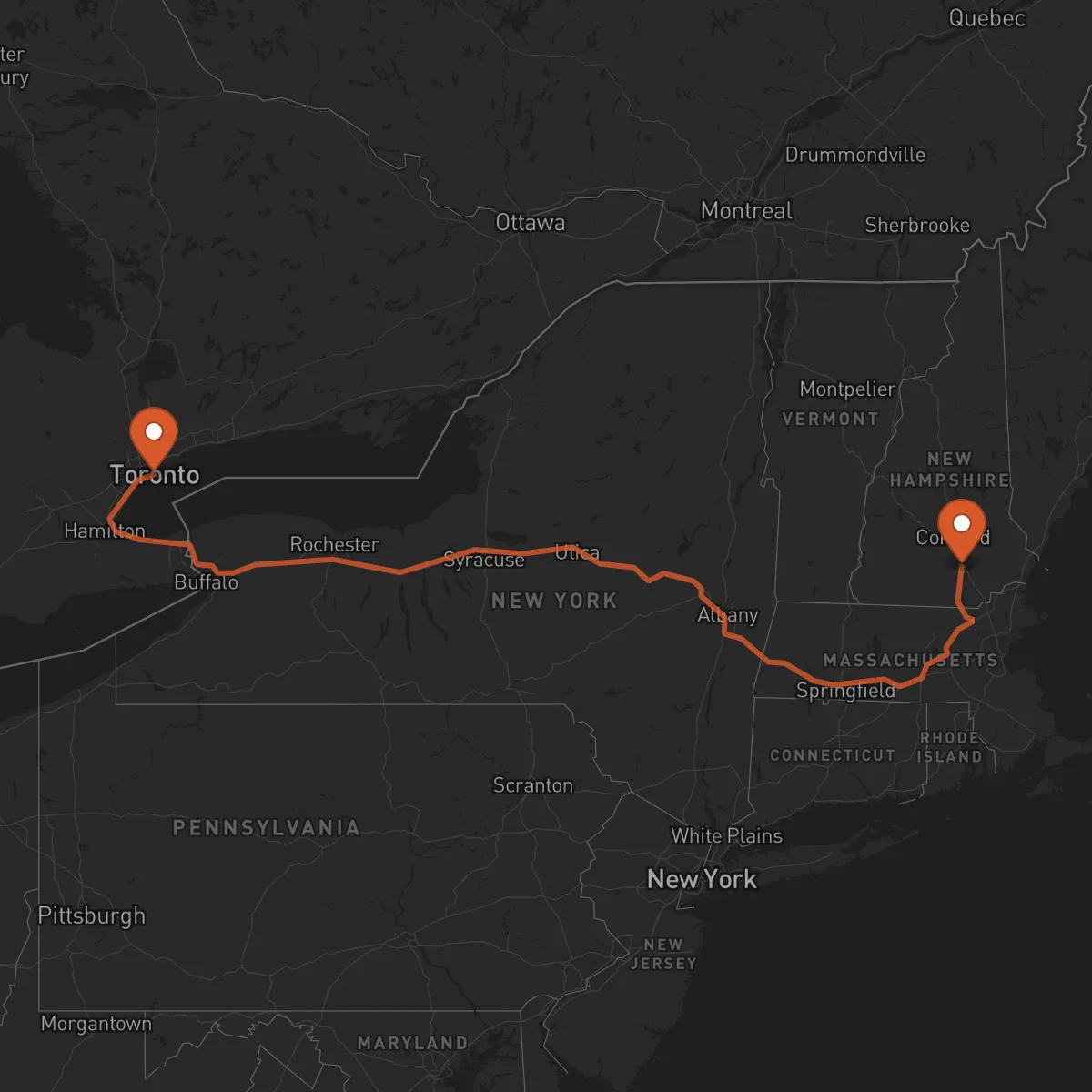
The Toronto to Manchester corridor represents a vital cross-border freight transportation route connecting Ontario, Canada with New Hampshire, United States. This strategic corridor spans approximately 646 kilometers, facilitating the movement of goods between two important economic regions. The route traverses through diverse landscapes and connects major industrial centers, making it essential for companies operating in both countries.
The corridor serves as a critical link between Canada's manufacturing heartland and the northeastern United States' industrial and commercial markets. Toronto, as Canada's largest city and financial capital, generates significant freight volumes that flow south to U.S. markets. Manchester, while smaller, serves as an important distribution hub for New England, with its proximity to Boston and other major northeastern cities making it a strategic point for regional distribution.
Key industries utilizing this corridor include automotive parts, advanced manufacturing components, consumer goods, and technology products. The route primarily follows major highways including Ontario's Highway 401 and Quebec's Autoroute 20 before crossing into the United States via the Thousand Islands Bridge or other northern New England entry points. The corridor's importance is amplified by the strong trade relationship between Canada and the United States, with thousands of trucks crossing the border daily carrying essential goods.
Control Terrestre facilitates seamless operations on this corridor through our extensive network of certified carriers and our expertise in cross-border logistics. We understand the complexities of customs clearance, documentation requirements, and border procedures, ensuring your freight moves efficiently between Toronto and Manchester. Our dedicated team coordinates every aspect of the journey, from pickup in Toronto to final delivery in Manchester, providing real-time tracking and proactive communication throughout the transportation process.
Services for this Route
Available services for the corridor Toronto - Manchester
 Origin
Toronto stands as Canada's premier logistics hub, strategically positioned on the northwestern shore of Lake Ontario. The city's location provides exceptional access to major transportation networks, including extensive highway systems, rail connections, and proximity to international shipping routes via the Great Lakes and St. Lawrence Seaway. Toronto's Pearson International Airport, one of North America's busiest cargo facilities, further enhances its logistics capabilities.
The city's economy is diverse and robust, with key industries including financial services, technology, automotive manufacturing, aerospace, and advanced manufacturing. Toronto's manufacturing sector produces a wide range of goods, from automotive components to electronics and industrial equipment. The city's status as Canada's financial capital also means significant volumes of high-value, time-sensitive freight move through its logistics networks. With over 6 million people in the Greater Toronto Area, the region generates substantial freight demand for both domestic distribution and international export.
 Destination
Manchester
Manchester, New Hampshire serves as a strategic logistics point in the northeastern United States, offering excellent connectivity to major New England markets. Located in the Merrimack Valley, Manchester provides convenient access to Boston, just 90 kilometers to the southeast, as well as other major northeastern cities. The city's transportation infrastructure includes Interstate 93, which connects directly to Boston and Vermont, and Manchester-Boston Regional Airport, supporting both passenger and cargo operations.
The Manchester area's economy has evolved from its traditional manufacturing roots to encompass advanced manufacturing, healthcare, education, and technology sectors. The region is home to numerous distribution centers and warehouses that serve the broader New England market. Manchester's relatively lower operating costs compared to Boston, combined with its skilled workforce and business-friendly environment, have attracted companies seeking efficient distribution points for their northeastern U.S. operations. The city's industrial parks and business development areas continue to expand, supporting growing freight volumes through the region.










