Toronto to Columbus
Columbus → TorontoFTL freight transportation service between Toronto and Columbus. Reliable logistics solutions for your business.
Route Description
Everything you need to know about the corridor Toronto - Columbus
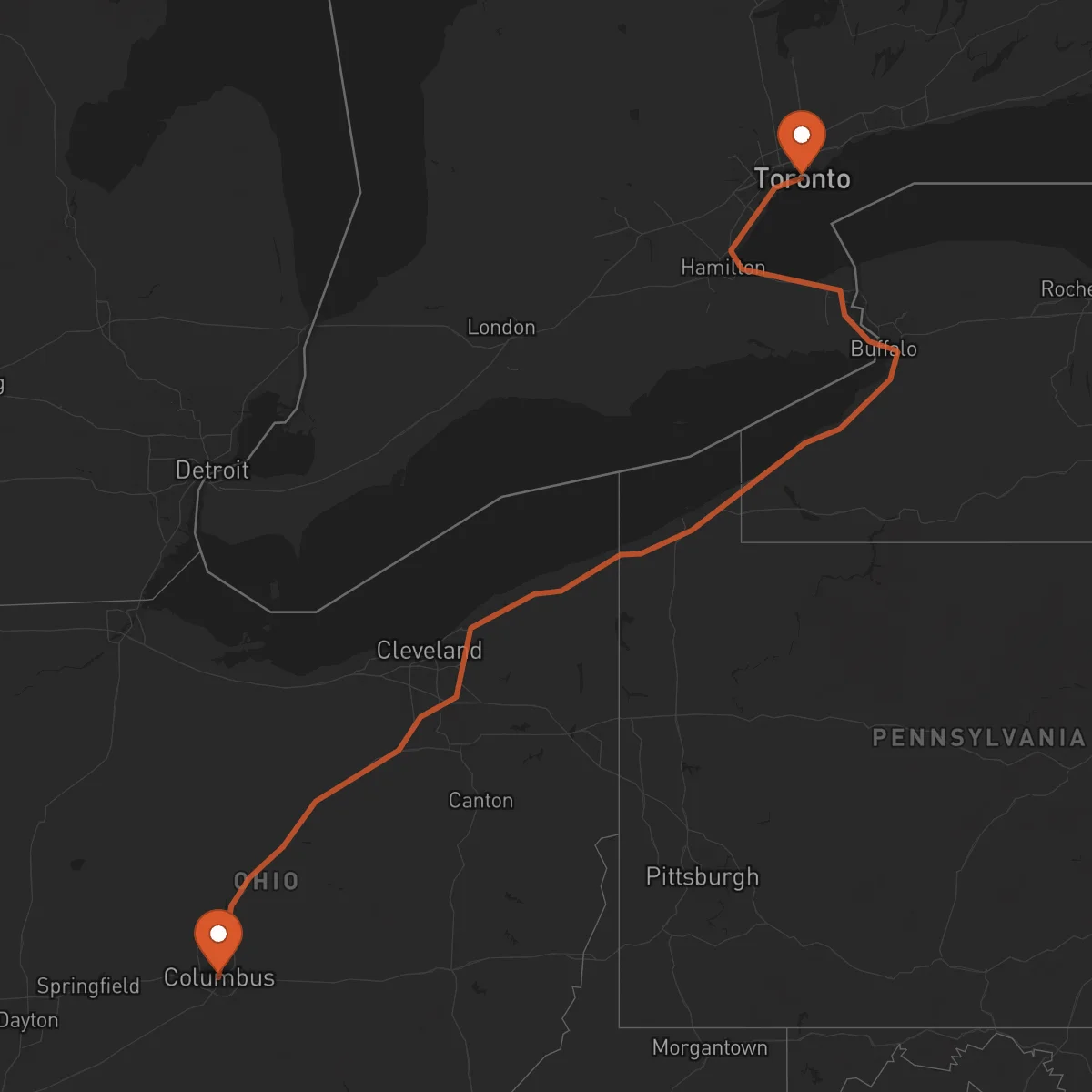
The Toronto to Columbus corridor represents a vital cross-border logistics route connecting Canada's largest economic hub with one of Ohio's most dynamic industrial centers. This 508 km route facilitates the movement of goods between two major North American markets, supporting the integrated supply chains that drive our continent's economic prosperity. The corridor traverses the Great Lakes region, connecting the manufacturing powerhouses of Southern Ontario with the growing logistics and distribution networks in Central Ohio.
The economic relationship between Toronto and Columbus is characterized by complementary industries and strong trade partnerships. Toronto serves as Canada's financial capital and a major manufacturing center, while Columbus has emerged as a logistics hub with its strategic location, skilled workforce, and business-friendly environment. Together, these cities form a powerful economic corridor that moves everything from automotive components and industrial machinery to consumer goods and agricultural products across the border.
Key transportation infrastructure along this route includes the 401 and QEW highways in Ontario, connecting seamlessly to I-75 and I-71 in Ohio. The corridor typically crosses at the Detroit-Windsor border or the Niagara Falls crossing, depending on specific origin and destination points. Control Terrestre's expertise in cross-border operations ensures smooth customs clearance, compliance with both USMCA regulations, and efficient movement of full truckload shipments between these important economic centers.
Services for this Route
Available services for the corridor Toronto - Columbus
 Origin
Toronto stands as Canada's premier logistics and economic center, strategically positioned on the northwestern shore of Lake Ontario. The city's location provides immediate access to major transportation networks including the 400-series highways, rail connections, and the Port of Toronto for maritime shipping. Toronto's Pearson International Airport further enhances its connectivity, making it a multimodal logistics powerhouse that serves as the gateway to Central and Eastern Canada.
The city's economy is diverse and robust, with key industries including financial services, technology, advanced manufacturing, automotive production, and healthcare. Toronto's manufacturing sector is particularly strong in automotive parts, aerospace components, and food processing. The region's skilled workforce and concentration of corporate headquarters make it an ideal origin point for high-value, time-sensitive freight shipments requiring reliable transportation solutions.
 Destination
Columbus
Columbus, Ohio has established itself as one of America's fastest-growing logistics and distribution hubs, strategically located at the intersection of major interstate highways I-70 and I-71. The city's central location within the Midwest provides excellent access to 50% of the US population within a day's drive, making it an ideal destination for distribution centers and logistics operations. The region boasts modern warehousing facilities, advanced intermodal yards, and a well-maintained highway infrastructure that supports efficient freight movement.
The Columbus economy is characterized by diverse sectors including logistics and distribution, insurance, education, and healthcare. The city has attracted major e-commerce and retail distribution centers due to its strategic location and business-friendly environment. Columbus's growing technology sector and research institutions also contribute to demand for specialized freight services, particularly for high-tech equipment and industrial components moving between Canadian and US markets.










