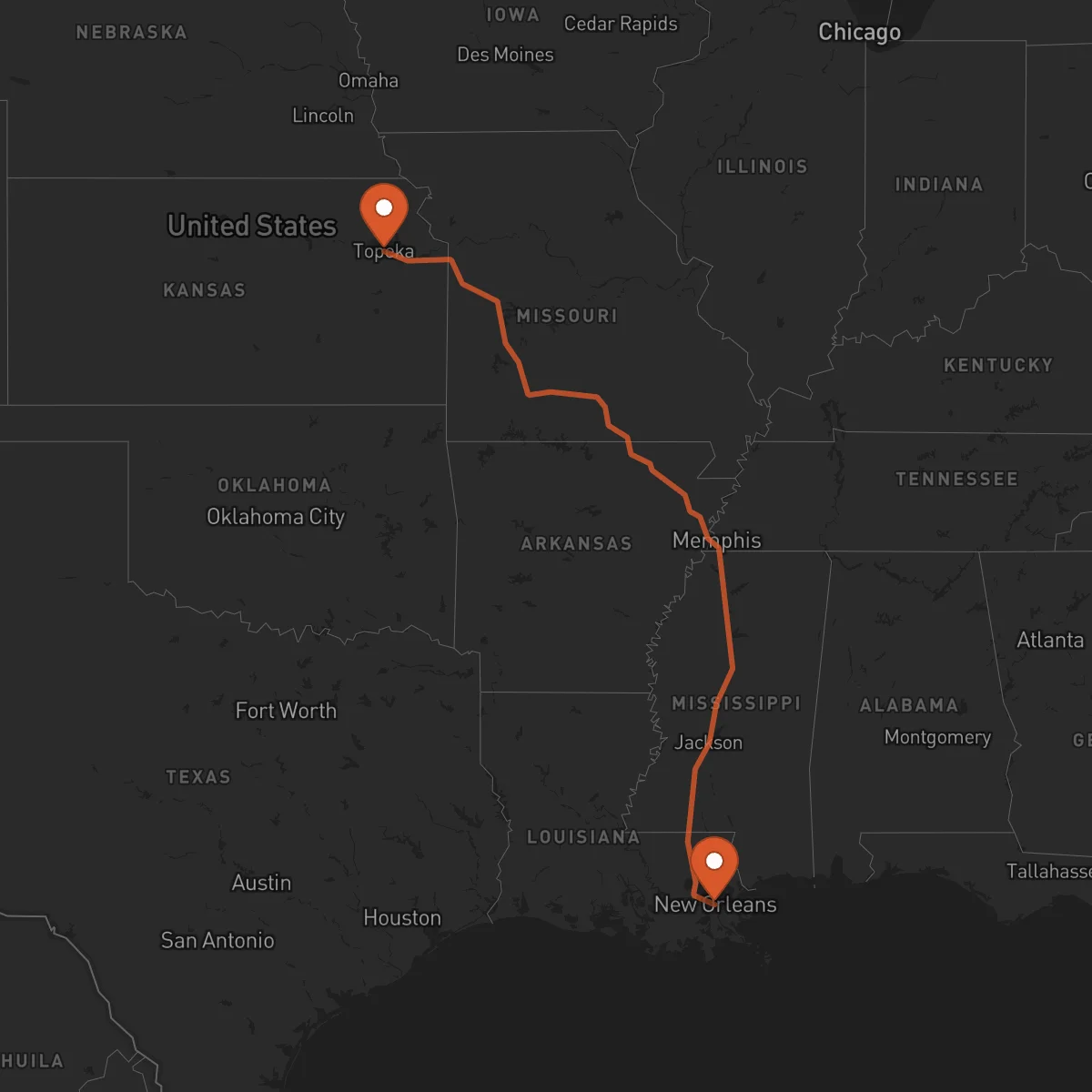
Topeka to New Orleans
New Orleans → TopekaFTL freight transportation service between Topeka and New Orleans. Reliable logistics solutions for your business.
Route Description
Everything you need to know about the corridor Topeka - New Orleans
The logistics corridor between Topeka, Kansas, and New Orleans, Louisiana, represents a vital transportation route connecting the central United States to the Gulf Coast. This 1,134 km route traverses diverse landscapes and industrial zones, serving as a crucial link for freight moving between the Midwest and the southeastern United States. The corridor facilitates the movement of goods from the agricultural heartland to one of America's busiest ports, supporting both regional and international trade.
The route connects two economically significant regions. Topeka serves as a distribution hub for Kansas and surrounding states, while New Orleans functions as a major port city and industrial center. This corridor is particularly important for industries such as agriculture, manufacturing, and energy, with freight often destined for export through the Port of New Orleans. The route also supports the petrochemical industry, which is concentrated along the Gulf Coast.
Key highways serving this corridor include I-70 East from Topeka to Indianapolis, I-65 South to Louisville, I-64 East to St. Louis, and I-55 South to New Orleans. These well-maintained interstate highways provide reliable transportation infrastructure for freight movement. Control Terrestre leverages this established network to provide efficient full truckload (FTL) services, ensuring timely delivery of goods between these strategic locations.
Control Terrestre facilitates seamless operations on this corridor by offering dedicated FTL services with experienced carriers who understand the route's nuances. Our strategic partnerships with certified transportation providers ensure reliable service, while our expertise in handling various cargo types - from standard freight to specialized and refrigerated goods - makes us the ideal partner for companies moving freight between Topeka and New Orleans.
Services for this Route
Available services for the corridor Topeka - New Orleans
 Origin
Topeka
Topeka, Kansas, serves as a strategic logistics hub in the Midwest, offering excellent connectivity to major transportation networks. Located along I-70, the city provides direct access to both east-west and north-south freight corridors. Topeka's central location makes it an ideal distribution point for goods moving throughout the central United States. The city's logistics infrastructure includes multiple warehousing facilities, intermodal yards, and a well-developed road network that supports efficient freight movement.
The economic base of Topeka includes government services, healthcare, and manufacturing sectors. The city is home to several food processing facilities and agricultural equipment manufacturers, creating consistent freight movement needs. Topeka's proximity to major agricultural regions in Kansas ensures a steady flow of agricultural products requiring transportation to various markets, including export points along the Gulf Coast.
 Destination
New Orleans
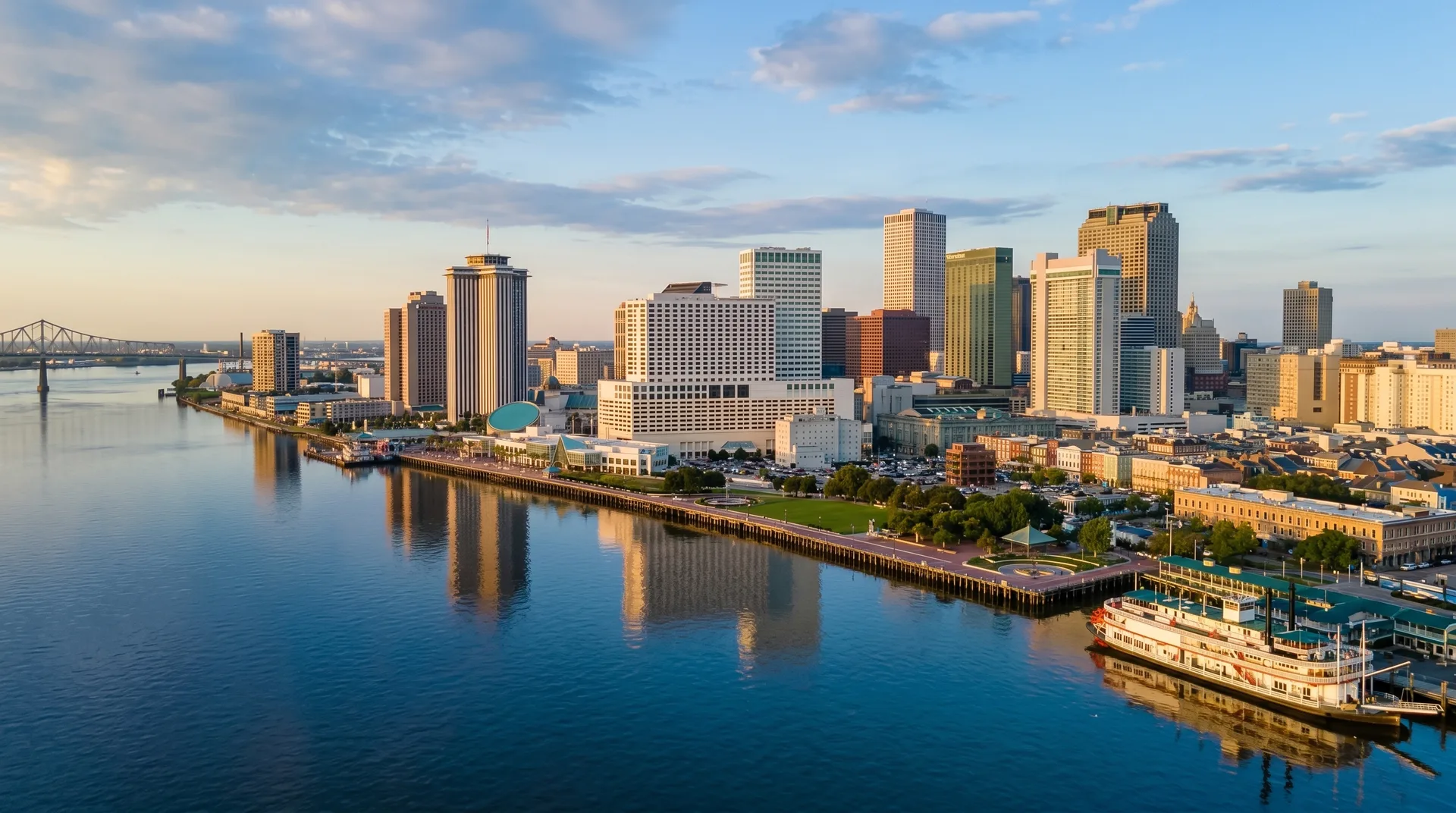
New Orleans, Louisiana, stands as a critical logistics and industrial center in the southeastern United States. The city's strategic location along the Mississippi River and near the Gulf of Mexico makes it a vital port for international trade. New Orleans boasts extensive port facilities, including the Port of New Orleans and the Port of South Louisiana, which together form one of the busiest port complexes in the country. The city's logistics infrastructure includes multiple intermodal facilities, warehousing centers, and direct connections to major interstate highways.
The economic landscape of New Orleans is diverse, with strong representation in energy, petrochemicals, tourism, and maritime industries. The city serves as a major hub for the oil and gas industry, with numerous refineries and petrochemical plants in the surrounding area. Additionally, New Orleans' role as a port city creates substantial freight movement for both imports and exports, particularly for agricultural products, raw materials, and manufactured goods destined for international markets.










