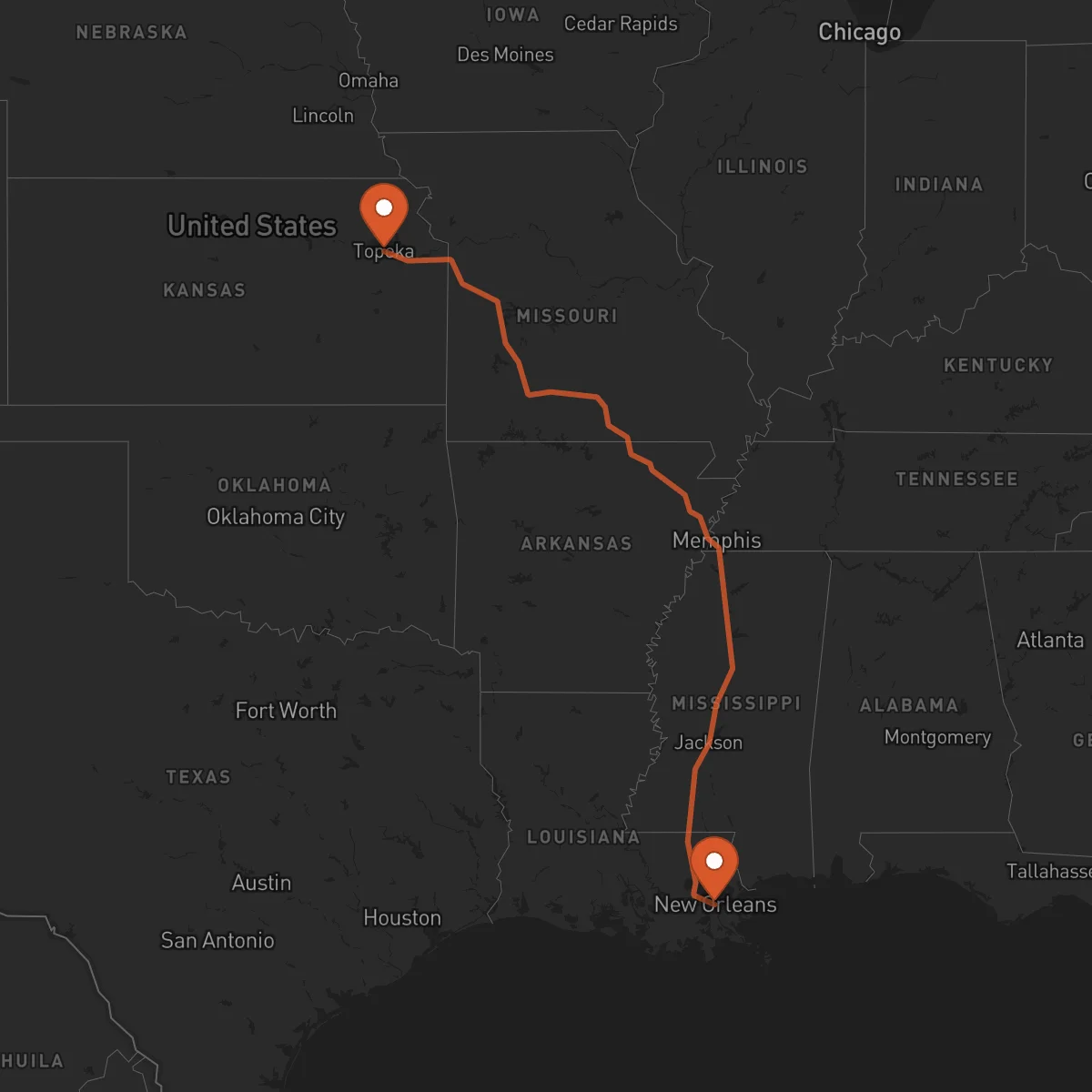
New Orleans to Topeka
Topeka → New OrleansFTL freight transportation service between New Orleans and Topeka. Reliable logistics solutions for your business.
Route Description
Everything you need to know about the corridor New Orleans - Topeka
The logistics corridor between New Orleans, Louisiana, and Topeka, Kansas, represents a vital connection between the Gulf Coast and the American Midwest. Spanning approximately 1,134 kilometers, this route traverses diverse landscapes and connects major economic regions of the United States. This corridor serves as a critical link for freight moving between the port facilities of New Orleans and the industrial and agricultural heartland of Kansas, facilitating the flow of goods that power the national economy.
The economic significance of this route is substantial, connecting the petrochemical, agricultural, and manufacturing sectors of the Gulf Coast with the food processing, machinery, and agricultural equipment industries of the Midwest. New Orleans serves as a major gateway for international trade, while Topeka represents the economic vitality of the Great Plains region. This corridor enables the efficient movement of raw materials, finished products, and agricultural commodities between these complementary economic zones.
Control Terrestre provides comprehensive freight transportation services along this corridor, offering full truckload (FTL) solutions tailored to the specific needs of each shipment. Our extensive network of certified carriers ensures reliable, efficient transportation of goods between these strategic locations. Whether you need to move time-sensitive products, temperature-controlled cargo, or specialized freight, our team coordinates every aspect of the journey to ensure your cargo arrives safely and on schedule.
Services for this Route
Available services for the corridor New Orleans - Topeka
 Origin
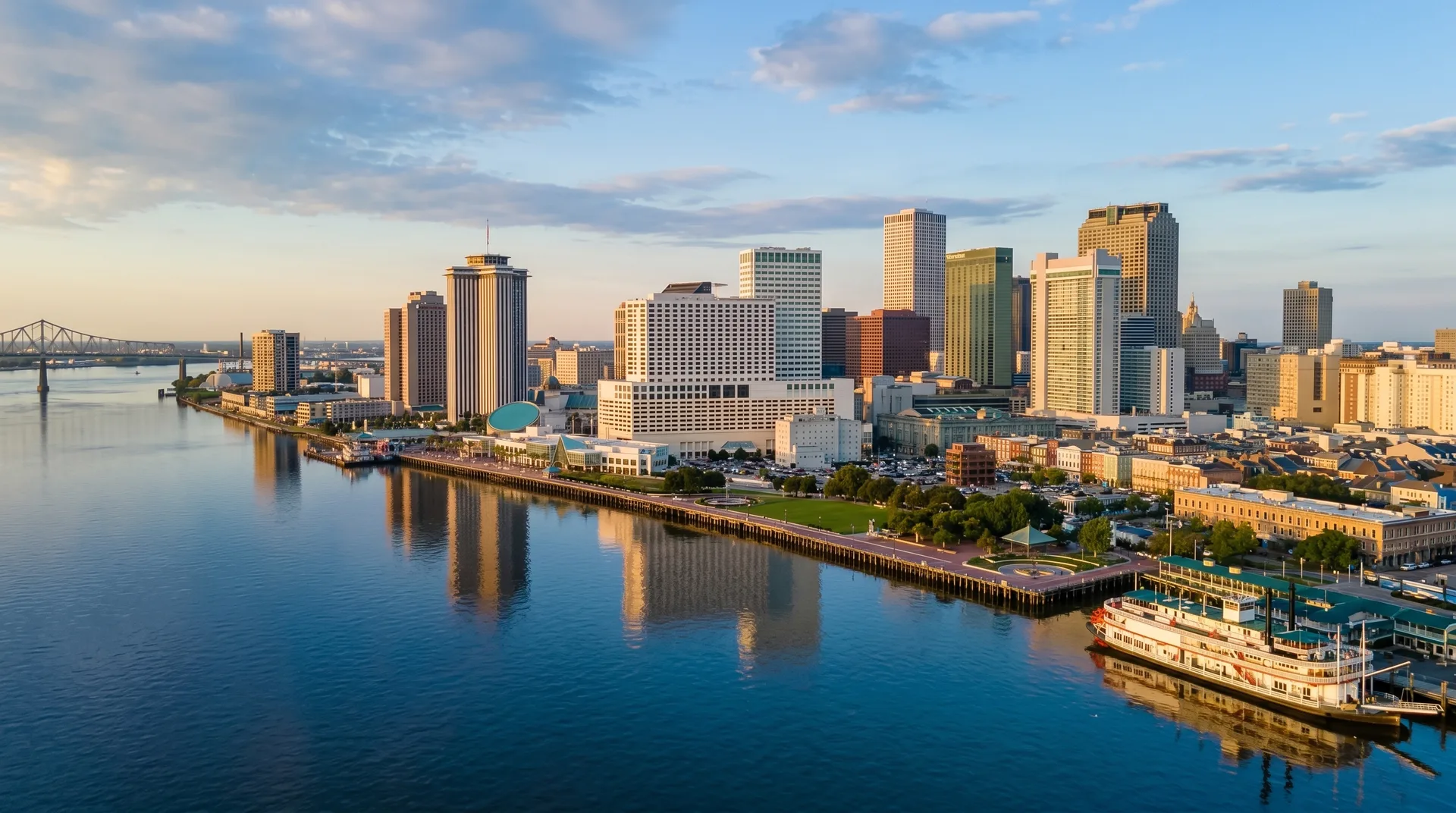
New Orleans
New Orleans, Louisiana, stands as a strategic logistics hub on the Gulf Coast, with its location at the mouth of the Mississippi River providing unparalleled access to both domestic and international markets. The city's port facilities rank among the busiest in the United States, handling a diverse range of cargo including agricultural products, petrochemicals, and manufactured goods. New Orleans' extensive transportation infrastructure includes major highways such as I-10, I-55, and I-59, creating multiple routing options for freight movement. The city's economy is anchored by the energy sector, maritime industries, tourism, and food processing, generating substantial freight volume that requires efficient transportation solutions to destinations across the country.
 Destination
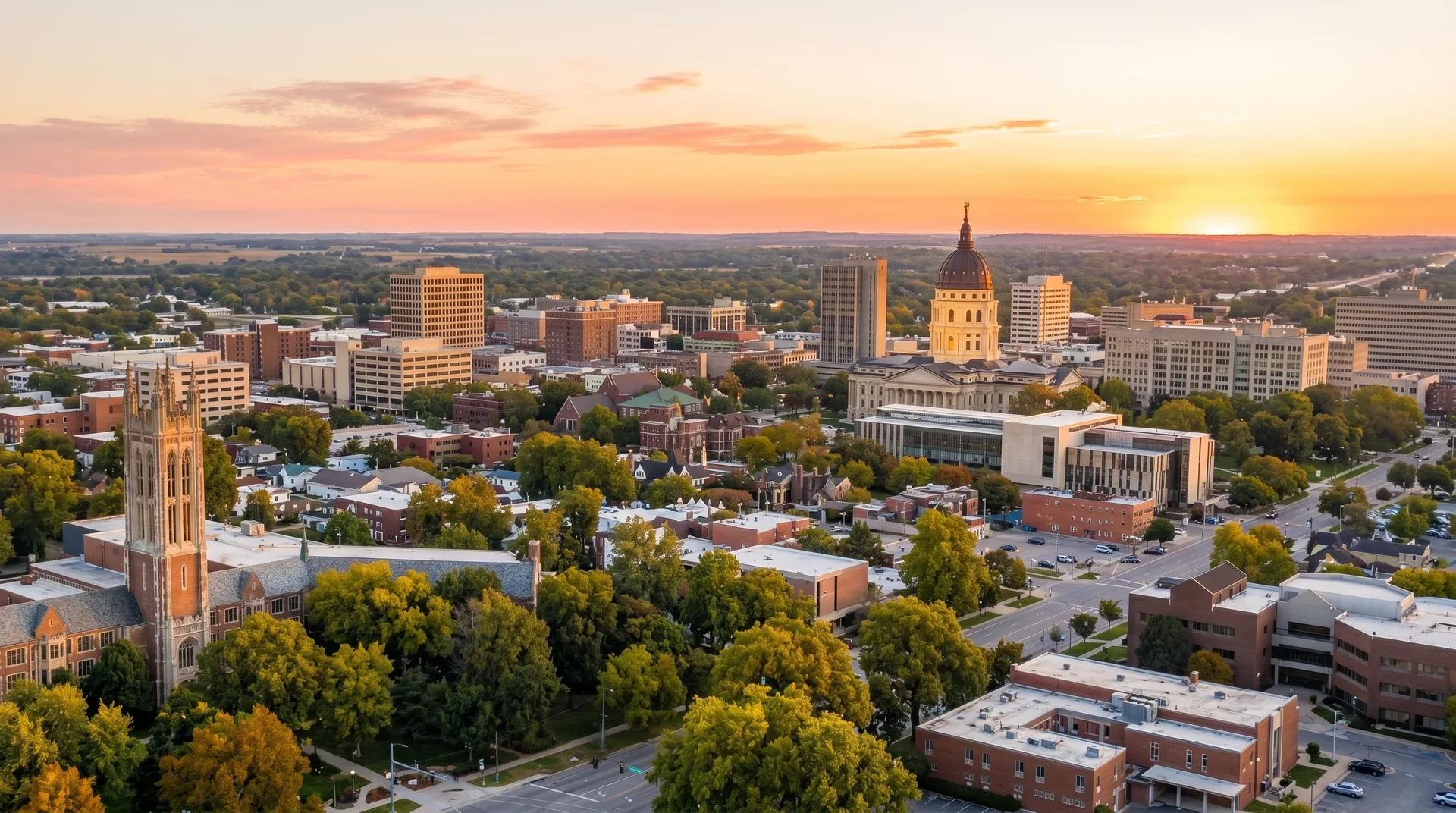
Topeka
Topeka, Kansas, serves as the capital city and a key economic center in the Midwest, strategically positioned to support the agricultural and manufacturing industries of the Great Plains. The city benefits from its location along major transportation corridors, including I-70, which provides direct access to both the East and West Coasts. Topeka's economy encompasses government services, education, healthcare, and manufacturing, with a particular focus on food processing and agricultural equipment production. The city's proximity to major agricultural regions makes it a critical distribution point for both inbound raw materials and outbound finished products. Topeka's well-developed transportation infrastructure supports efficient freight movement, connecting the city to national markets and facilitating the distribution of goods throughout the region.










