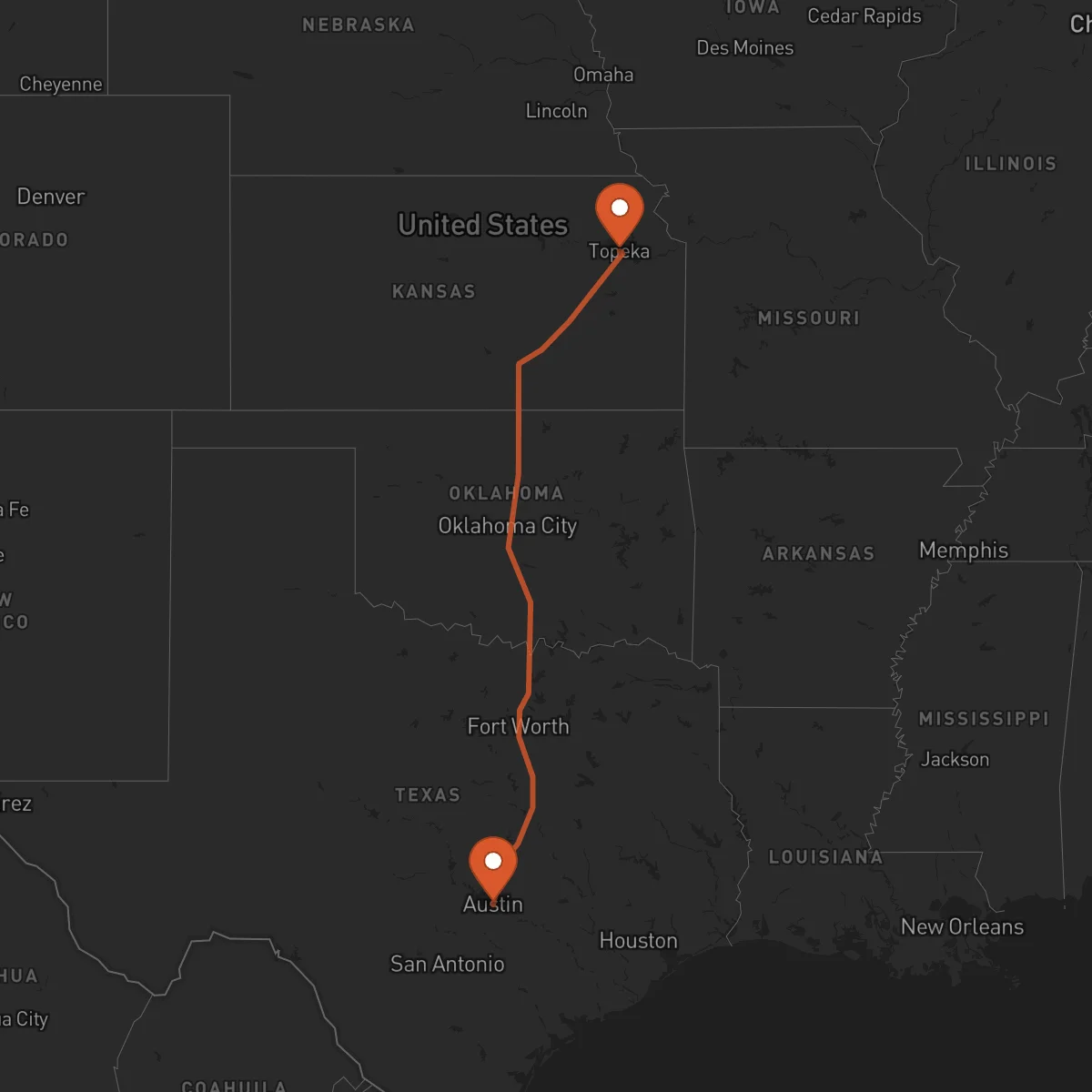
Topeka to Austin
Austin → TopekaFTL freight transportation service between Topeka and Austin. Reliable logistics solutions for your business.
Route Description
Everything you need to know about the corridor Topeka - Austin
The Topeka to Austin corridor represents a vital logistics connection between Kansas and Texas, spanning approximately 994 kilometers through the heart of the American Midwest and South. This domestic route links two dynamic economic regions, facilitating the movement of goods between the agricultural and manufacturing powerhouse of Kansas and the rapidly growing technology and business hub of Austin. The corridor traverses diverse terrain and crosses multiple state lines, requiring expert coordination and specialized knowledge of regional regulations and infrastructure.
The economic significance of this route cannot be overstated. Kansas, with its strong agricultural base and manufacturing sector, produces goods that need efficient distribution to major Texas markets. Meanwhile, Austin's booming tech industry, expanding population, and growing industrial base creates substantial demand for inbound freight from northern suppliers. This creates a balanced flow of goods in both directions, making the corridor particularly attractive for full truckload operations.
Key industries utilizing this corridor include agricultural products, manufacturing components, technology equipment, consumer goods, and industrial machinery. The route primarily follows major interstate highways including I-35, which serves as the main north-south artery connecting these markets. This infrastructure provides reliable transportation options but also requires careful planning to optimize transit times and fuel efficiency.
At Control Terrestre, we understand the unique challenges of this corridor and have developed specialized expertise in managing full truckload shipments between Topeka and Austin. Our strategic partnerships with local carriers, knowledge of regional regulations, and commitment to on-time delivery ensure your freight moves efficiently and securely across this important domestic route.
Services for this Route
Available services for the corridor Topeka - Austin
 Origin
Topeka
Topeka, Kansas serves as a strategic logistics hub in the Midwest, offering excellent connectivity to major transportation networks. Located in the northeastern part of Kansas, Topeka provides access to key interstate highways including I-70 and I-335, facilitating efficient distribution throughout the region. The city's central location within the United States makes it an ideal origin point for freight destined for southern markets, including Austin.
The economic landscape of Topeka is diverse, with strong presence in government services, healthcare, education, and manufacturing. The region is known for its agricultural equipment manufacturing, food processing facilities, and growing technology sector. These industries generate substantial freight volumes that require reliable transportation solutions to reach markets across the country. Topeka's industrial parks and warehousing facilities provide the infrastructure needed to support efficient freight consolidation and distribution operations.
 Destination
Austin
Austin, Texas has emerged as one of the most dynamic logistics destinations in the southern United States, driven by its explosive economic growth and strategic location in Central Texas. The city sits at the intersection of major transportation routes, including I-35, which provides direct connectivity to northern markets like Topeka. Austin's position within the Texas triangle, combined with its proximity to major ports and Mexico, makes it a crucial node in North American supply chains.
The Austin metropolitan area has experienced remarkable economic expansion, particularly in technology, healthcare, and advanced manufacturing sectors. The presence of major tech companies, combined with a growing population and thriving small business community, creates consistent demand for inbound freight from across the country. Austin's industrial infrastructure includes modern warehousing facilities, distribution centers, and specialized handling capabilities for high-tech and sensitive cargo. The city's commitment to economic development has resulted in continuous improvements to transportation infrastructure, enhancing its appeal as a logistics destination.










