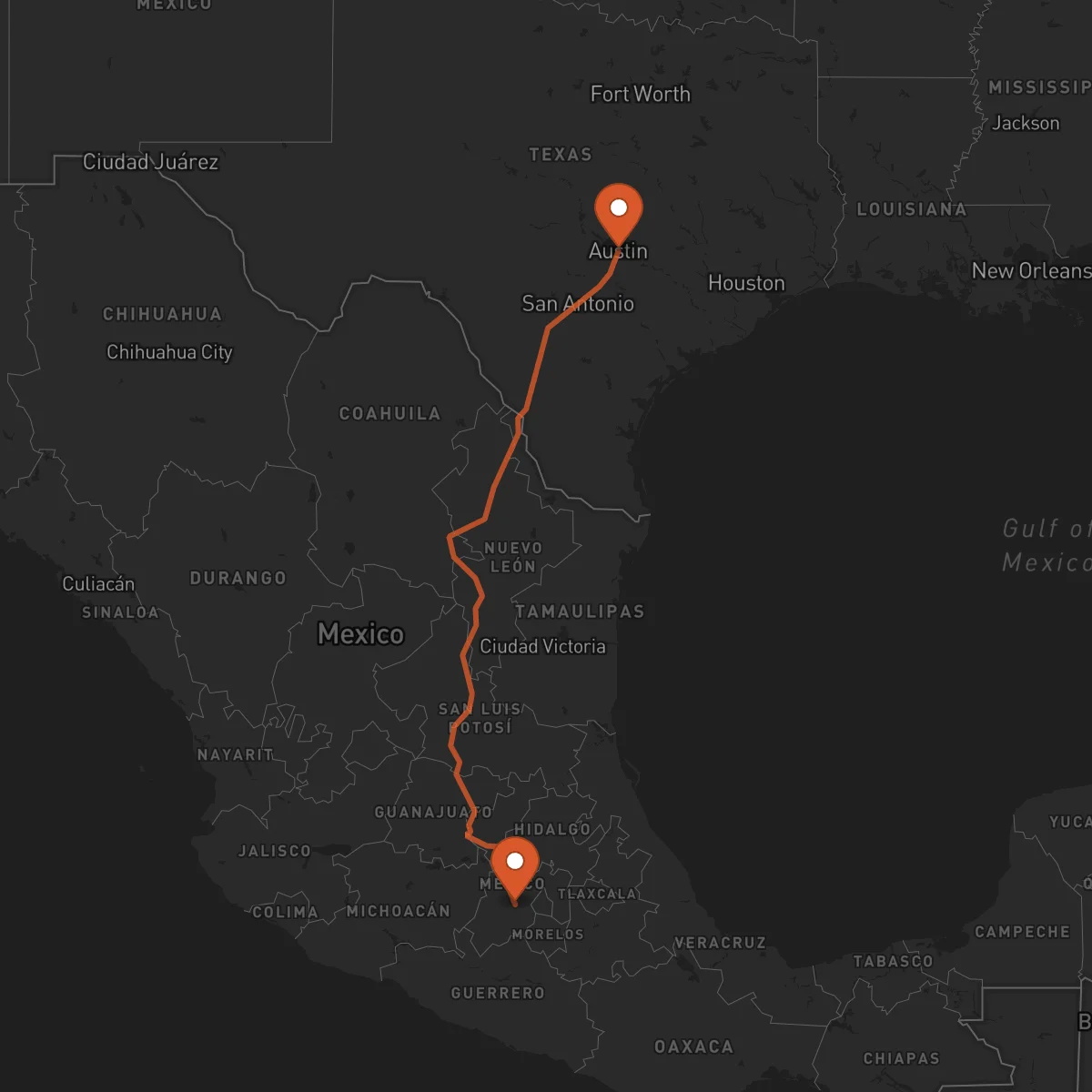
Toluca to Austin
Austin → TolucaFTL freight transportation service between Toluca and Austin. Reliable logistics solutions for your business.
Route Description
Everything you need to know about the corridor Toluca - Austin
The Toluca-Austin logistics corridor represents a vital connection between Mexico's industrial heartland and one of the United States' most dynamic technology hubs. This 1,237 km cross-border route links the State of Mexico's manufacturing powerhouse with Texas's innovation capital, facilitating the movement of high-value goods, automotive components, and advanced technology products. The corridor traverses some of North America's most important industrial regions, creating essential supply chain links for companies operating in both countries.
The economic significance of this corridor is underscored by the complementary industrial strengths of both regions. Toluca serves as a major aerospace and automotive manufacturing center, home to companies like Boeing, Airbus, and numerous auto parts manufacturers. Austin, meanwhile, has established itself as a technology and innovation hub, earning the nickname "Silicon Hills" due to its concentration of tech companies, semiconductor manufacturers, and research facilities. This creates a natural flow of goods between advanced manufacturing in Mexico and high-tech assembly and distribution in Texas.
Transportation infrastructure along this corridor includes Mexico's Federal Highway 57 and the United States' Interstate 35, two of the most heavily traveled commercial routes in North America. The corridor typically crosses at Laredo/Nuevo Laredo, one of the busiest commercial border crossings on the continent, offering multiple lanes and dedicated FAST lanes for pre-screened shipments. Control Terrestre's expertise in cross-border operations ensures seamless customs clearance, with our C-TPAT-certified partners and experienced logistics teams managing all documentation and compliance requirements. Our dedicated fleet options provide the security and reliability that high-value technology and automotive shipments demand on this critical trade route.
Services for this Route
Available services for the corridor Toluca - Austin
 Origin
Toluca
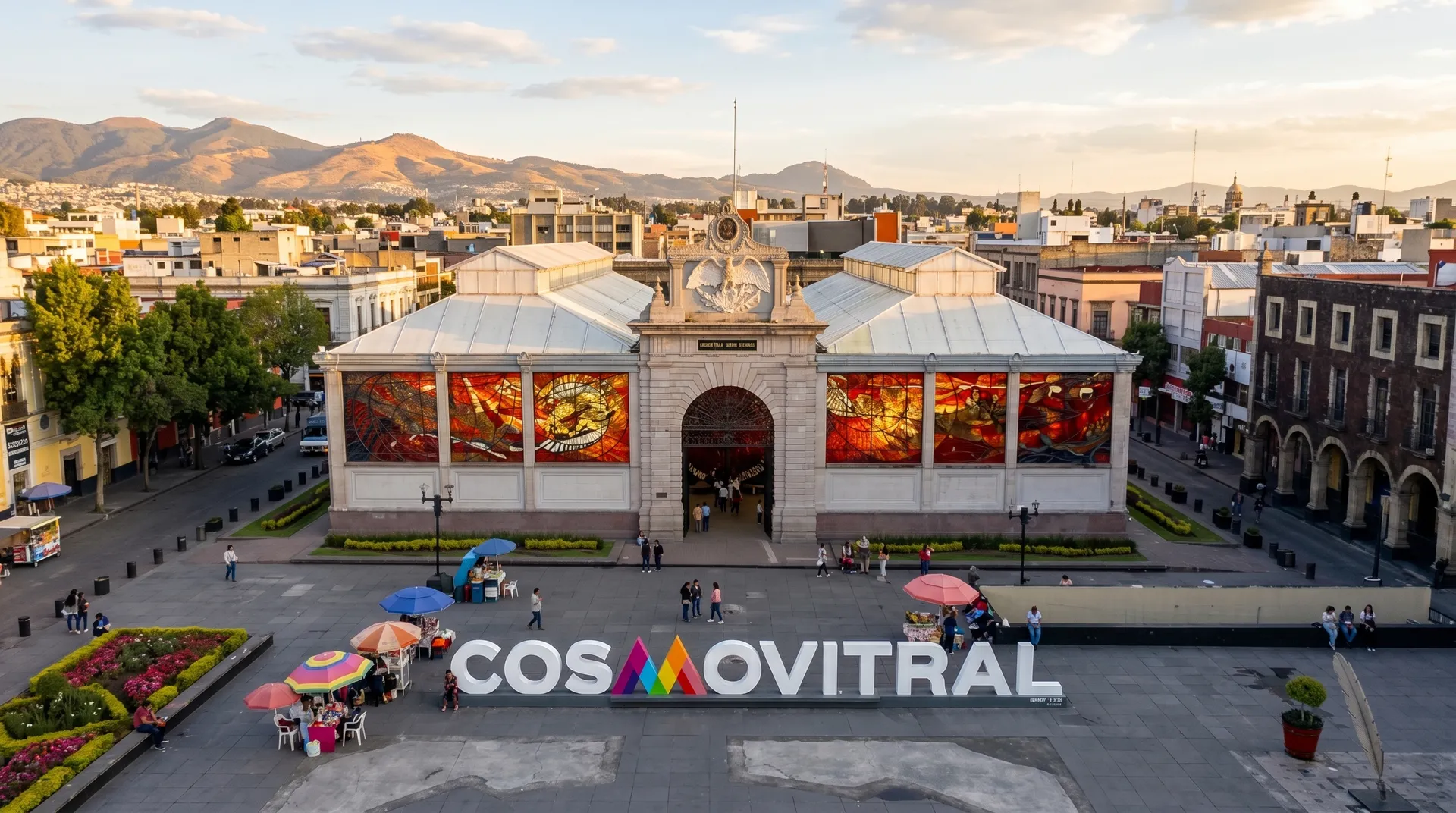
Toluca, the capital of the State of Mexico, stands as a strategic logistics hub in central Mexico. Located just 63 km west of Mexico City, it benefits from proximity to the country's largest consumer market while maintaining its own robust industrial base. The city's elevation at 2,660 meters above sea level provides unique advantages for certain manufacturing processes and creates a natural gateway to western and northern Mexico. Toluca International Airport and its extensive highway network, including direct connections to major ports like Manzanillo and Lázaro Cárdenas, make it an ideal origin point for cross-border shipments.
The region's economy is dominated by aerospace, automotive, and advanced manufacturing sectors. Companies like Chrysler, General Motors, and numerous Tier 1 and Tier 2 automotive suppliers have established operations here, taking advantage of skilled labor and proximity to key markets. The aerospace industry has also flourished, with companies like Airbus and Boeing maintaining significant operations. This industrial diversity creates consistent demand for reliable freight transportation services, particularly for just-in-time deliveries and specialized cargo requiring temperature control or enhanced security.
 Destination
Austin
Austin, Texas, has emerged as one of the United States' most important logistics destinations, particularly for technology and advanced manufacturing. Located in central Texas, Austin offers strategic access to major markets across the southern and southwestern United States. The city's position along Interstate 35 creates direct connections to major distribution centers in Dallas, San Antonio, and beyond, while its international airport provides additional air cargo options. Austin's growing infrastructure, including the recent expansion of its port facilities and warehousing capabilities, supports its role as a distribution hub for high-tech products.
The Austin metropolitan area has transformed into a technology powerhouse, hosting major operations for companies like Dell, Apple, Google, Tesla, and numerous semiconductor manufacturers. The presence of the University of Texas and its research facilities has fostered innovation in artificial intelligence, biotechnology, and advanced manufacturing. This concentration of high-value, time-sensitive industries creates specific logistics requirements, including expedited shipping, specialized handling for sensitive electronics, and secure transportation for intellectual property. Austin's economic growth has also spurred demand for construction materials, consumer goods, and industrial equipment, creating a diverse freight market that benefits from reliable cross-border connections.










