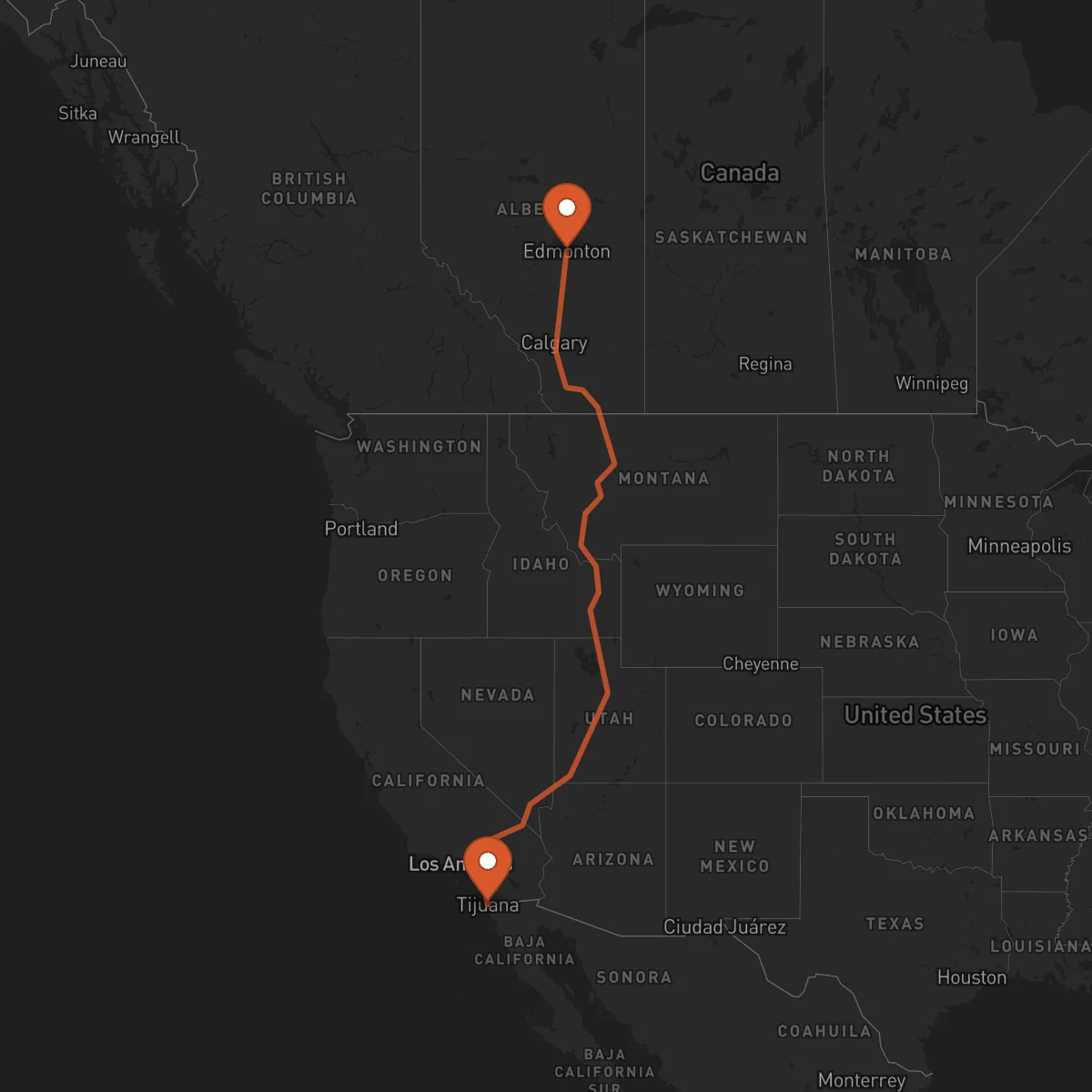
Tijuana to Edmonton
Edmonton → TijuanaFTL freight transportation service between Tijuana and Edmonton. Reliable logistics solutions for your business.
Route Description
Everything you need to know about the corridor Tijuana - Edmonton
The Tijuana-Edmonton corridor represents a vital logistics connection between Mexico's Pacific coast and Canada's northern economic hub. This cross-border route spans approximately 2,353 kilometers, traversing three countries and connecting two major industrial regions. The corridor serves as a critical link for North American supply chains, facilitating the movement of goods between Mexico's manufacturing powerhouse and Canada's energy and resource-based economy.
The economic significance of this route cannot be overstated. Tijuana's proximity to the United States and its robust manufacturing sector, particularly in aerospace, electronics, and medical devices, creates a strong export base. Edmonton, as Alberta's capital and a center for energy, agriculture, and logistics, provides a complementary market with high demand for specialized industrial equipment and consumer goods. The corridor supports industries ranging from automotive and technology to agriculture and energy equipment.
Transportation infrastructure along this route includes major highways such as Mexico's Federal Highway 1D and 2, the United States' Interstate 5 and Interstate 15, and Canada's Trans-Canada Highway. The corridor benefits from multiple border crossing options, including the Otay Mesa and Tecate crossings between Tijuana and the United States, and various points of entry along the U.S.-Canada border. Control Terrestre's expertise in cross-border logistics ensures seamless customs clearance and compliance with regulations across all three countries, minimizing delays and optimizing transit times for full truckload shipments.
Services for this Route
Available services for the corridor Tijuana - Edmonton
 Origin
Tijuana
Tijuana stands as a strategic logistics hub on Mexico's northern border, offering unparalleled access to both the U.S. market and Pacific trade routes. The city's location just 20 kilometers from San Diego provides immediate access to one of North America's busiest border crossings. Tijuana's industrial landscape includes a strong presence of maquiladoras, particularly in aerospace, medical devices, and electronics manufacturing. The region boasts modern transportation infrastructure, including the Tijuana International Airport, the Port of Ensenada for maritime shipping, and an extensive network of highways connecting to major U.S. distribution centers.
 Destination
Edmonton serves as a strategic logistics center in western Canada, positioned at the crossroads of major transportation networks. The city's location along the North Saskatchewan River and its proximity to the Alberta oil sands make it a crucial hub for energy-related logistics. Edmonton's industrial base includes oil and gas services, agriculture, manufacturing, and technology sectors. The city benefits from excellent transportation infrastructure, including the Edmonton International Airport, extensive rail connections via CN and CP rail lines, and major highways such as the Yellowhead Highway and Queen Elizabeth II Highway, providing efficient access to other Canadian markets.










