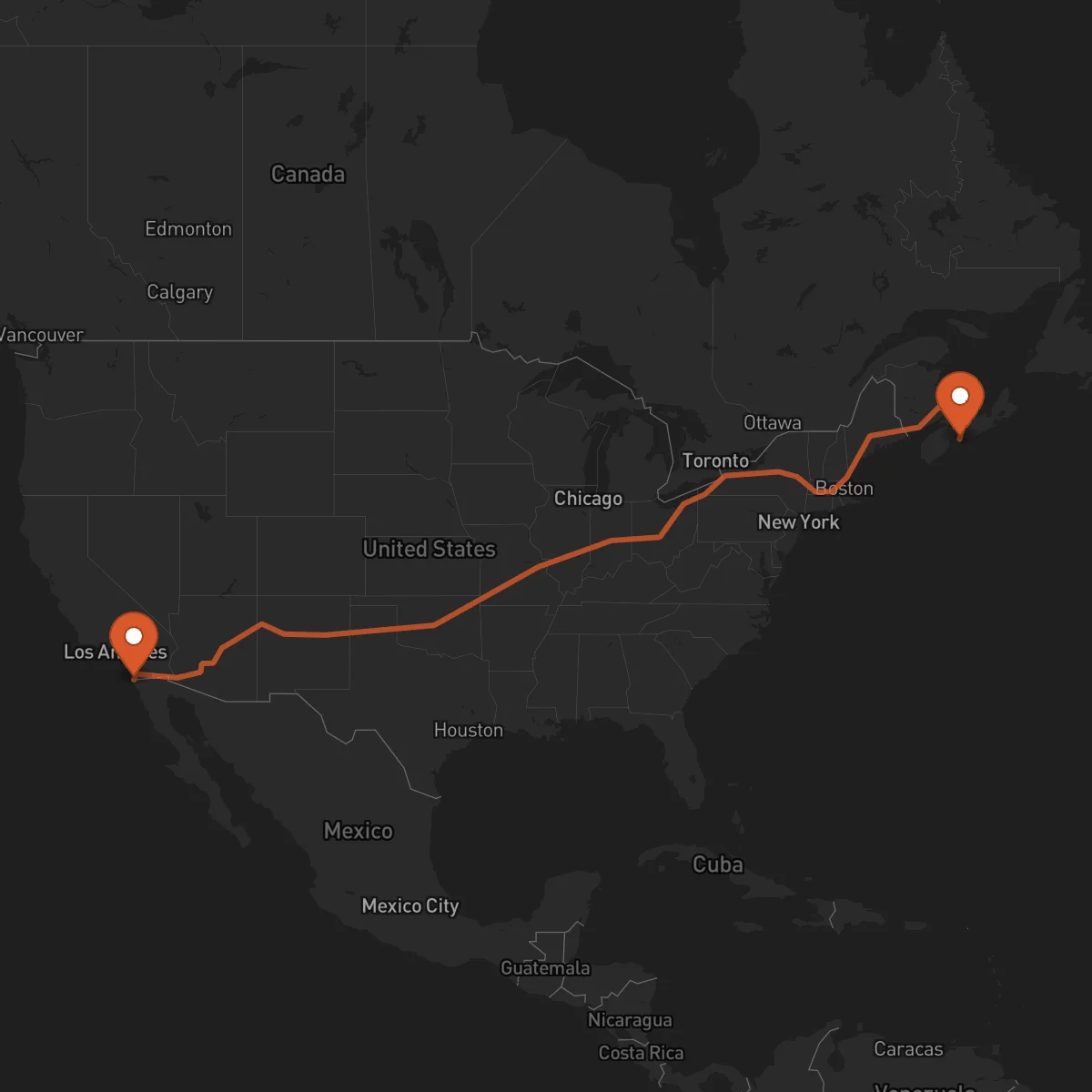
Tijuana to Halifax
Halifax → TijuanaFTL freight transportation service between Tijuana and Halifax. Reliable logistics solutions for your business.
Route Description
Everything you need to know about the corridor Tijuana - Halifax
The Tijuana to Halifax corridor represents a vital North American logistics route spanning approximately 4,744 kilometers across three countries. This cross-border corridor connects Mexico's Pacific coast with Canada's Atlantic gateway, traversing diverse industrial and agricultural regions. The route's strategic importance stems from its ability to link major manufacturing hubs, agricultural centers, and international ports, creating an essential supply chain artery for North American commerce.
The corridor passes through key economic regions including California's technology corridor, the agricultural heartland of the Midwest, and the manufacturing centers of Ontario and Quebec before reaching Halifax's maritime facilities. Major industries utilizing this route include automotive manufacturing, aerospace components, agricultural products, electronics, and industrial machinery. The transportation infrastructure consists of major interstate highways including I-5, I-15, I-80, I-90, and the Trans-Canada Highway, providing reliable connectivity throughout the journey.
Key border crossings include the Otay Mesa and Calexico East ports of entry into the United States, followed by the Detroit-Windsor crossing into Canada. These crossings are equipped with modern customs facilities and expedited processing programs for certified carriers. Control Terrestre facilitates seamless operations on this corridor through our C-TPAT certification, FAST program participation, and experienced cross-border teams who ensure efficient documentation, customs compliance, and timely delivery across all jurisdictions.
Services for this Route
Available services for the corridor Tijuana - Halifax
 Origin
Tijuana
Tijuana serves as a strategic logistics hub on Mexico's northern border, offering immediate access to both US markets and Pacific maritime routes. The city's location adjacent to San Diego creates a unique bi-national economic zone with integrated transportation infrastructure. Tijuana's Maquiladora industry, particularly in aerospace, medical devices, and electronics manufacturing, generates substantial freight volumes requiring efficient cross-border transportation solutions.
The region boasts modern logistics infrastructure including the Tijuana International Airport, the Port of Ensenada for maritime connections, and extensive highway networks connecting to major US interstates. The Otay Mesa border crossing provides dedicated commercial lanes and expedited processing for certified carriers. Tijuana's proximity to major US distribution centers in Southern California makes it an ideal origin point for shipments destined for Canadian and eastern US markets.
 Destination
Halifax
Halifax functions as Atlantic Canada's premier logistics gateway, offering strategic access to European and global markets via the Port of Halifax. As the closest major North American port to Europe, Halifax provides significant advantages for international trade and distribution. The city's deep-water port facilities can accommodate the largest container vessels, while the Halifax Stanfield International Airport offers extensive air cargo capabilities.
The region's economy centers on maritime industries, advanced manufacturing, and technology sectors, with growing aerospace and defense industries. Halifax's location provides optimal distribution access to the Maritimes, Quebec, and the northeastern United States. The city's transportation infrastructure includes the Trans-Canada Highway, extensive rail connections through CN Rail, and modern warehousing facilities designed for efficient cross-border distribution and international trade operations.










