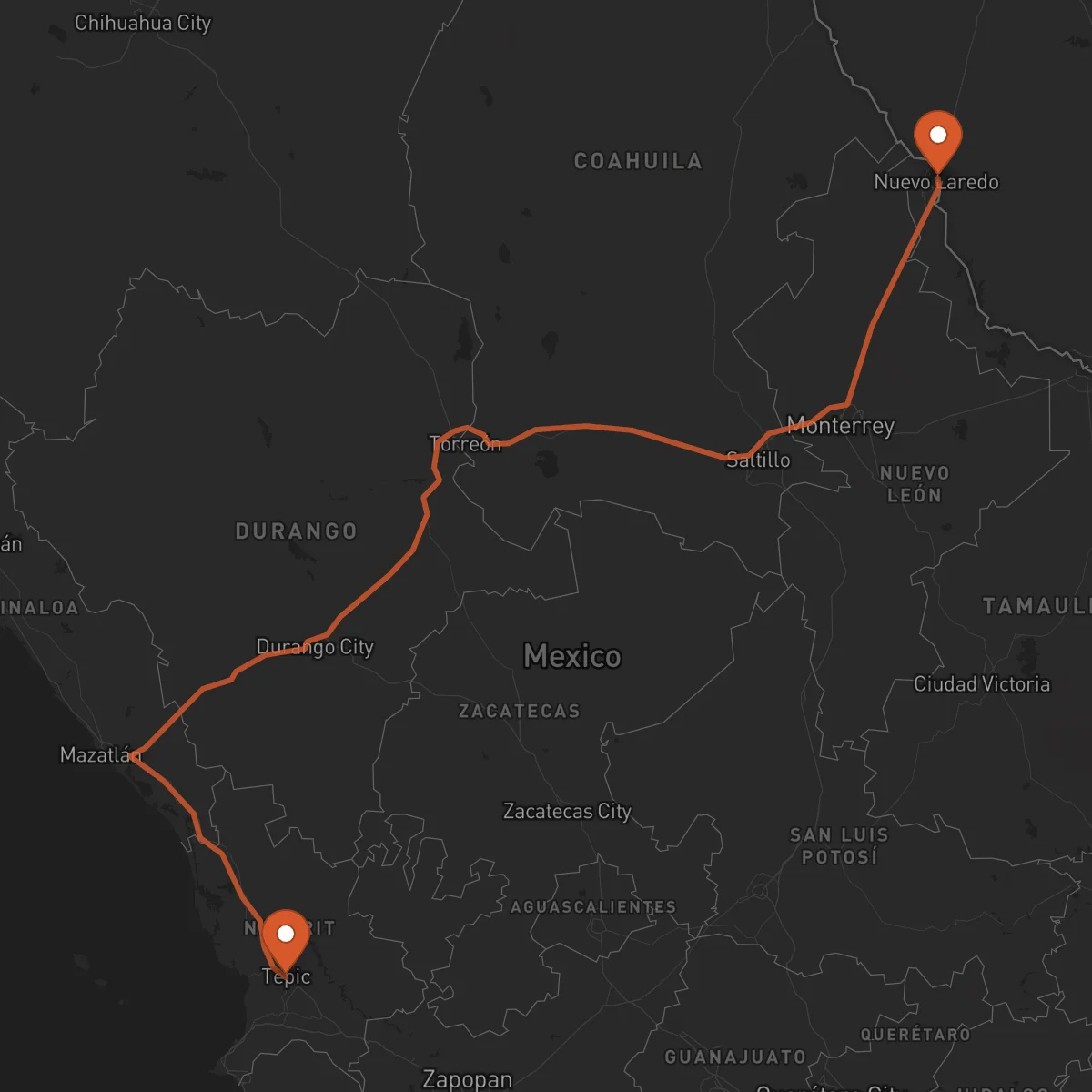
Tepic to Laredo
Laredo → TepicFTL freight transportation service between Tepic and Laredo. Reliable logistics solutions for your business.
Route Description
Everything you need to know about the corridor Tepic - Laredo
The logistics corridor connecting Tepic, Nayarit, with Laredo, Texas, represents a vital trade route between Mexico and the United States, spanning approximately 861 kilometers. This cross-border corridor facilitates the movement of goods between Mexico's western industrial regions and the central United States, serving as a crucial link in North American supply chains. The route traverses diverse terrain, from the Pacific coastal plain through Mexico's interior highlands, before crossing the border at one of North America's busiest commercial crossings.
The economic significance of this corridor is substantial, connecting Tepic's growing industrial base with Laredo's position as a major North American logistics hub. Tepic serves as an important manufacturing center in Nayarit, while Laredo processes billions of dollars in annual trade, handling approximately 40% of all land-based trade between the United States and Mexico. This corridor supports industries including automotive components, electronics, agricultural products, and manufactured goods moving in both directions.
Transportation infrastructure along this route includes Mexico's Federal Highway 15, which connects Tepic to major border crossings, and the extensive highway network serving Laredo's commercial facilities. The corridor benefits from modern highway conditions and established logistics services, though cross-border operations require careful coordination of customs procedures and documentation. Control Terrestre provides specialized FTL services along this corridor, offering experienced drivers familiar with cross-border requirements, dedicated equipment options, and comprehensive support for seamless freight movement between Tepic and Laredo.
Services for this Route
Available services for the corridor Tepic - Laredo
 Origin
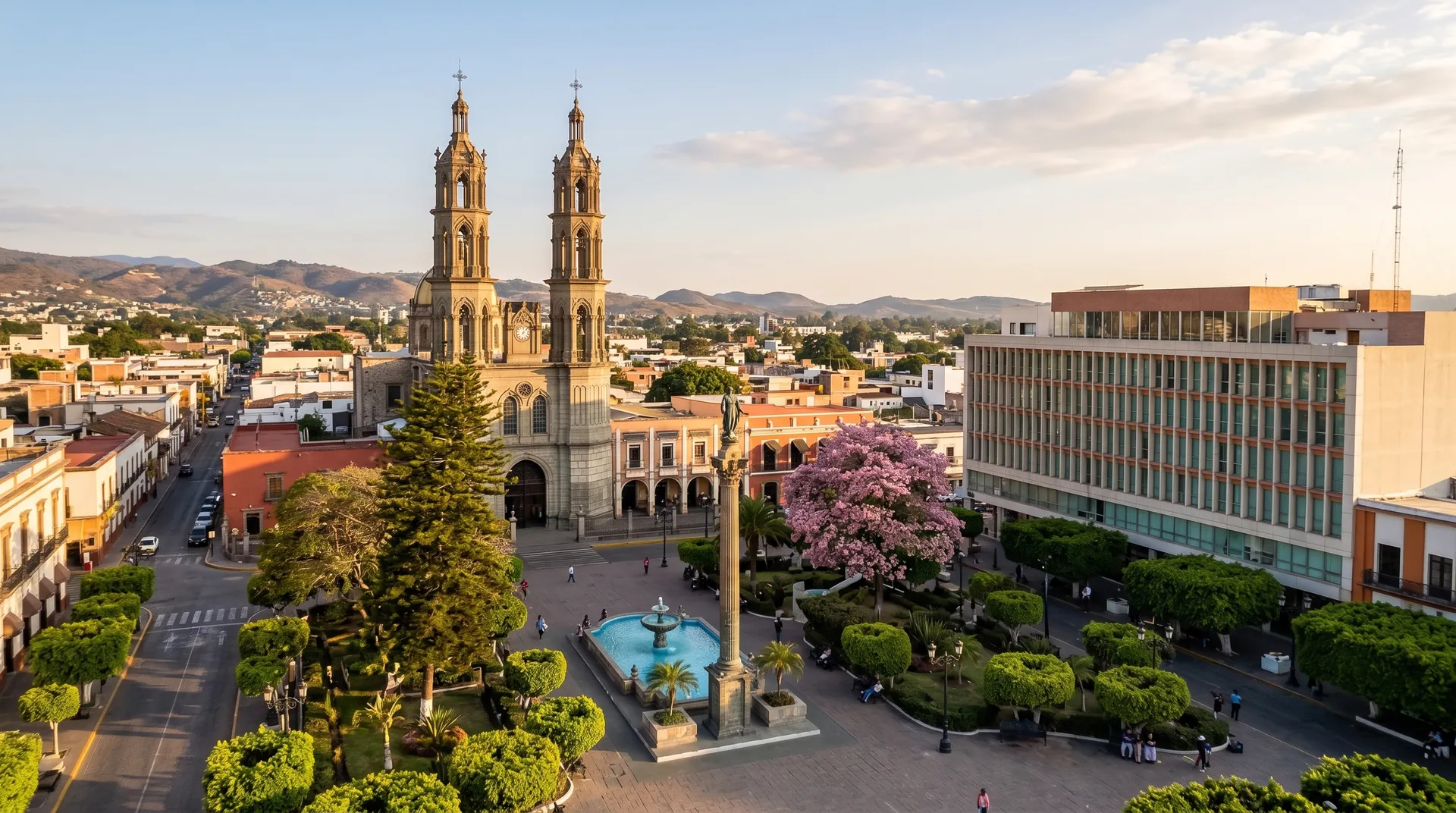
Tepic, the capital of Nayarit, occupies a strategic position on Mexico's Pacific coast with growing importance in the country's logistics network. Located at the intersection of major transportation routes, Tepic serves as a gateway to Mexico's western industrial regions and provides access to both domestic and international markets. The city benefits from its proximity to the Port of San Blas and its connections to Mexico's interior highway system, making it an increasingly attractive location for manufacturing and distribution operations.
The economic base of Tepic and surrounding Nayarit includes diverse sectors such as electronics manufacturing, agricultural processing, and light industry. The region has attracted significant foreign investment, particularly in technology and automotive supply chain operations. Available transportation infrastructure includes Federal Highway 15 connecting to Guadalajara and northern Mexico, as well as access to Pacific coast ports for international shipping. Tepic's airport provides additional logistics options for time-sensitive cargo, while the city's industrial parks offer modern facilities for manufacturing and warehousing operations.
 Destination
Laredo
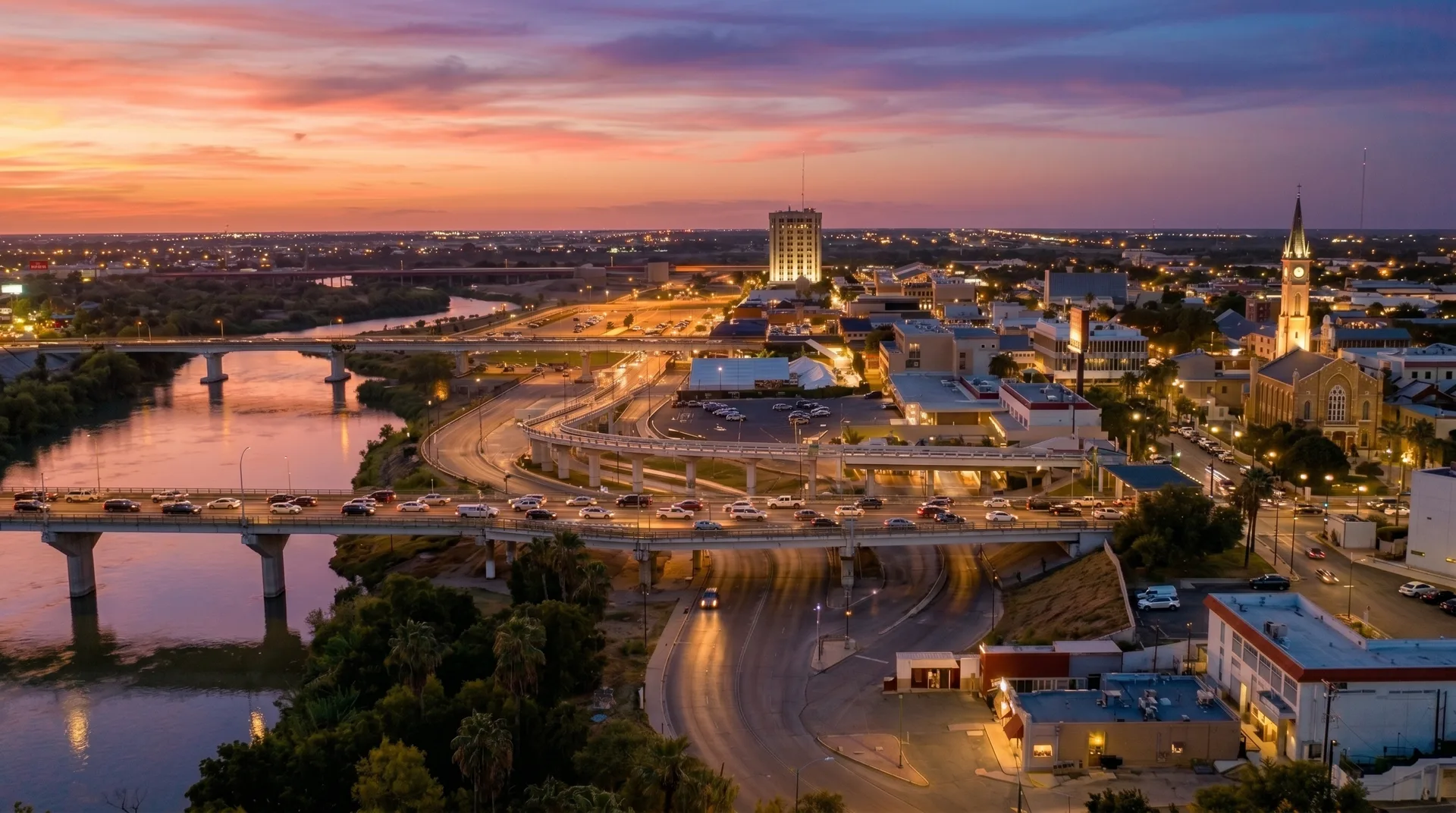
Laredo, Texas, stands as one of North America's most critical logistics hubs, uniquely positioned on the U.S.-Mexico border with exceptional connectivity to major markets. The city processes billions of dollars in annual trade, serving as the primary gateway for commerce between the United States and Mexico. Laredo's strategic location provides immediate access to Interstate 35, which runs north-south through the central United States, connecting to major metropolitan areas including San Antonio, Austin, Dallas-Fort Worth, and continuing to the Canadian border.
The economic landscape of Laredo centers on international trade, warehousing, and transportation services. The region hosts numerous industrial parks, distribution centers, and logistics facilities that support cross-border operations. Laredo's transportation infrastructure is exceptionally robust, featuring multiple international bridges, extensive rail connections through Union Pacific and Kansas City Southern lines, and proximity to major U.S. air cargo facilities. The city's Foreign Trade Zone facilities and proximity to the World Trade Bridge, one of North America's busiest commercial crossings, make it an ideal destination for companies seeking efficient access to U.S. markets while maintaining strong connections to Mexican manufacturing centers.










