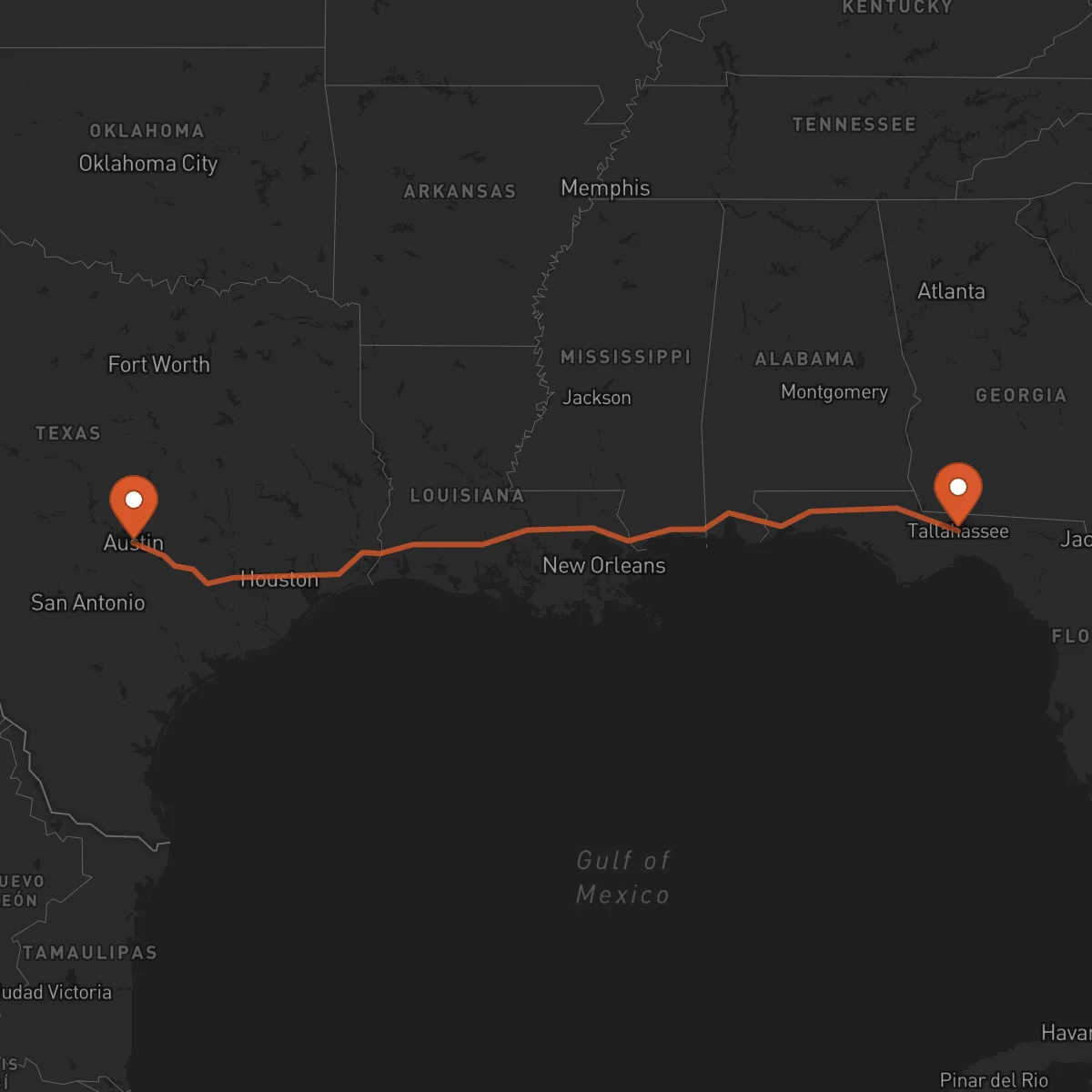
Tallahassee to Austin
Austin → TallahasseeFTL freight transportation service between Tallahassee and Austin. Reliable logistics solutions for your business.
Route Description
Everything you need to know about the corridor Tallahassee - Austin
The Tallahassee to Austin corridor represents a vital logistics artery connecting the Florida Panhandle with the dynamic Texas capital. This 1291 km route traverses diverse landscapes and economic regions, facilitating the movement of goods between the southeastern United States and the rapidly growing tech and manufacturing hub of central Texas. The corridor strategically links two states with distinct economic strengths, enabling efficient distribution of products across multiple industries.
This route follows major interstate highways including I-10 and I-35, providing reliable access through key transportation hubs. The journey passes through major cities like Mobile, New Orleans, and San Antonio, offering multiple opportunities for distribution and cross-docking operations. The infrastructure along this corridor has been developed to handle significant freight volumes, making it an essential pathway for businesses operating across the southeastern and south-central United States.
Control Terrestre specializes in optimizing freight movements along this corridor through our extensive network of certified carriers. Our full truckload (FTL) services ensure dedicated capacity for your shipments, eliminating the delays and handling risks associated with consolidated freight. We leverage our C-TPAT and FAST certified partners to provide expedited border crossing capabilities and enhanced security measures throughout the journey. Our real-time tracking systems and experienced logistics team ensure your cargo moves efficiently from Tallahassee to Austin, maintaining the integrity and timely delivery of your freight.
Services for this Route
Available services for the corridor Tallahassee - Austin
 Origin
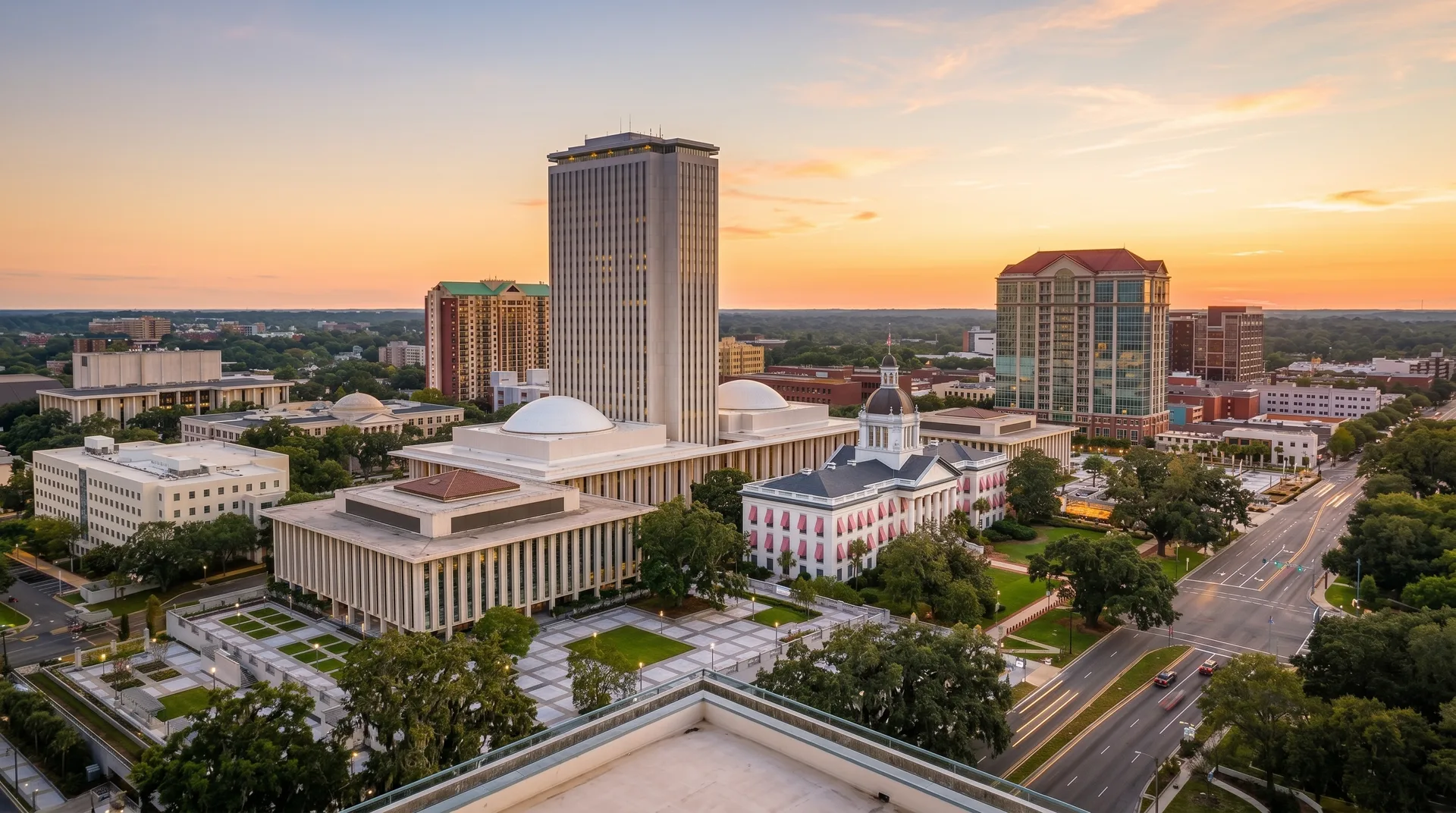
Tallahassee
Tallahassee serves as a strategic logistics hub for northern Florida and the surrounding region. Located in the Florida Panhandle, the city provides excellent connectivity to major transportation networks including Interstate 10, which runs east-west across the southern United States. Tallahassee's position makes it an ideal origin point for freight distribution throughout Florida, Georgia, Alabama, and beyond. The city hosts several industrial parks and distribution centers that support its growing logistics sector.
The local economy benefits from diverse industries including government services, education, healthcare, and manufacturing. Florida State University and Florida A&M University contribute to a skilled workforce that supports various sectors. The region's agricultural output, including timber and agricultural products, creates consistent freight movement requirements. Tallahassee International Airport and the nearby Port of Panama City provide additional multimodal transportation options for businesses requiring comprehensive logistics solutions.
 Destination
Austin
Austin stands as one of America's fastest-growing metropolitan areas and a major logistics destination in central Texas. The city's strategic location at the intersection of major transportation corridors, including Interstate 35, provides excellent connectivity to the broader Texas market and beyond. Austin's transportation infrastructure includes Austin-Bergstrom International Airport, multiple rail connections, and extensive highway networks that facilitate efficient freight movement throughout the region and to Mexico.
The Austin metropolitan area has evolved into a technology and innovation powerhouse, earning its reputation as "Silicon Hills." The city hosts headquarters and major operations for numerous tech companies, creating substantial demand for logistics services. Beyond technology, Austin's economy encompasses healthcare, education, government services, and a growing manufacturing sector. The University of Texas at Austin contributes to research and development activities that drive innovation across multiple industries. This economic diversity creates consistent and varied freight transportation needs throughout the year.










