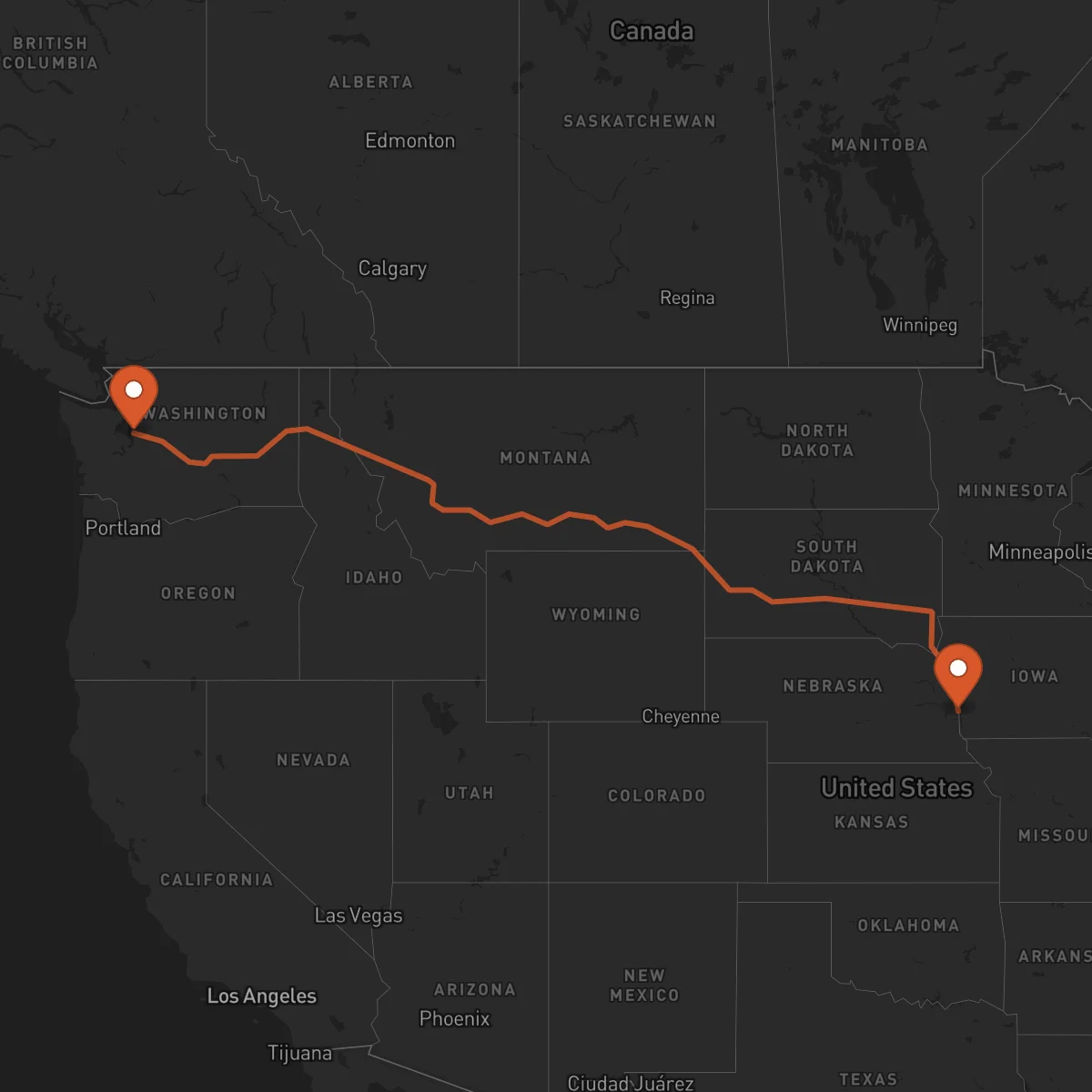
Seattle to Omaha
Omaha → SeattleFTL freight transportation service between Seattle and Omaha. Reliable logistics solutions for your business.
Route Description
Everything you need to know about the corridor Seattle - Omaha
The Seattle-Omaha corridor represents a vital logistics connection between the Pacific Northwest and the American Midwest. This 2,199 km route links Washington State's largest port city with Nebraska's commercial hub, facilitating the flow of goods between coastal and inland markets. The corridor traverses diverse terrain and crosses multiple state lines, requiring specialized knowledge of regional regulations and infrastructure.
The economic significance of this route cannot be overstated. Seattle serves as a gateway for international trade, while Omaha functions as a major distribution center for the central United States. This corridor supports the movement of high-value technology products, agricultural equipment, and manufactured goods between these two economic powerhouses. The route connects major industrial centers, enabling just-in-time inventory systems and supporting the supply chains of numerous Fortune 500 companies.
Control Terrestre provides comprehensive FTL transportation services along this corridor, leveraging our network of certified carriers and strategic partnerships. Our team understands the unique challenges of this route, from navigating mountain passes to coordinating cross-state operations. We offer dedicated services with real-time tracking, ensuring your cargo moves efficiently from origin to destination. Our experience with specialized freight, including temperature-controlled shipments and oversized loads, makes us the ideal partner for companies requiring reliable transportation between Seattle and Omaha.
Services for this Route
Available services for the corridor Seattle - Omaha
 Origin
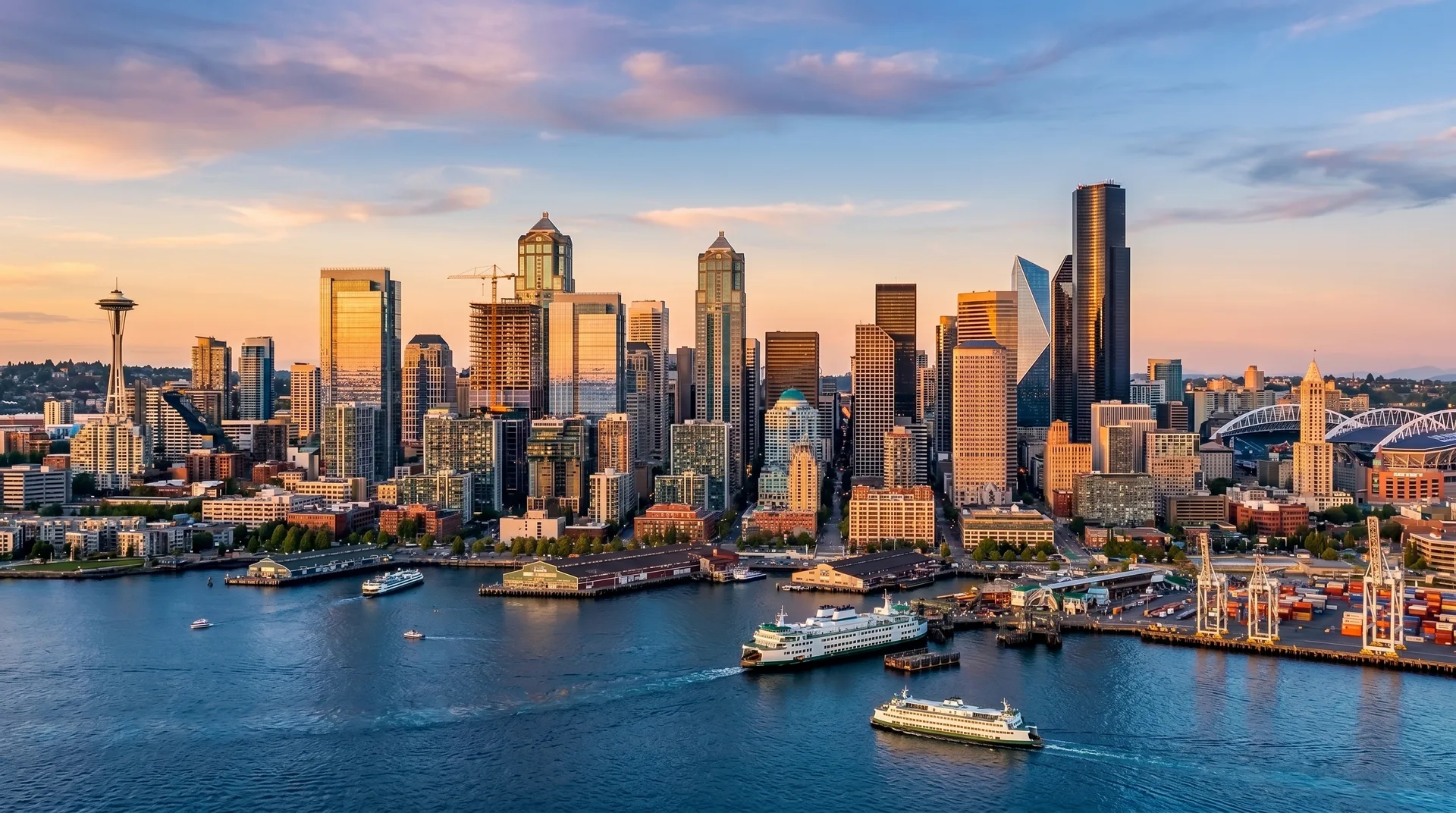
Seattle
Seattle's strategic location on the Puget Sound makes it a critical logistics hub for the Pacific Northwest. As home to one of North America's busiest ports, Seattle serves as a gateway for international trade, connecting Asia-Pacific markets with the continental United States. The city's robust transportation infrastructure includes extensive highway networks, rail connections, and proximity to major airports, facilitating seamless multimodal freight movement.
The region's economy is driven by technology, aerospace, and maritime industries. Seattle is home to major corporations like Boeing, Microsoft, and Amazon, creating a high demand for specialized freight services. The Port of Seattle handles millions of containers annually, making it an ideal origin point for both domestic and international shipments. The city's location provides access to the I-90 and I-5 corridors, offering multiple routing options for freight heading east toward the Midwest.
 Destination
Omaha
Omaha's central location in the United States makes it a strategic distribution hub for the Midwest. The city sits at the crossroads of major interstate highways, including I-80, providing excellent connectivity to both coasts and the southern states. Omaha's transportation infrastructure includes extensive rail networks, with Union Pacific's headquarters located in the city, and a well-developed highway system that facilitates efficient freight movement.
The Omaha metropolitan area is a major center for insurance, banking, and telecommunications, with companies like Berkshire Hathaway and Mutual of Omaha headquartered here. The region's agricultural heritage continues to influence its economy, with significant grain storage and food processing facilities. Omaha's central location makes it an ideal consolidation point for regional distribution, with numerous warehousing and logistics facilities supporting the movement of goods throughout the central United States.










