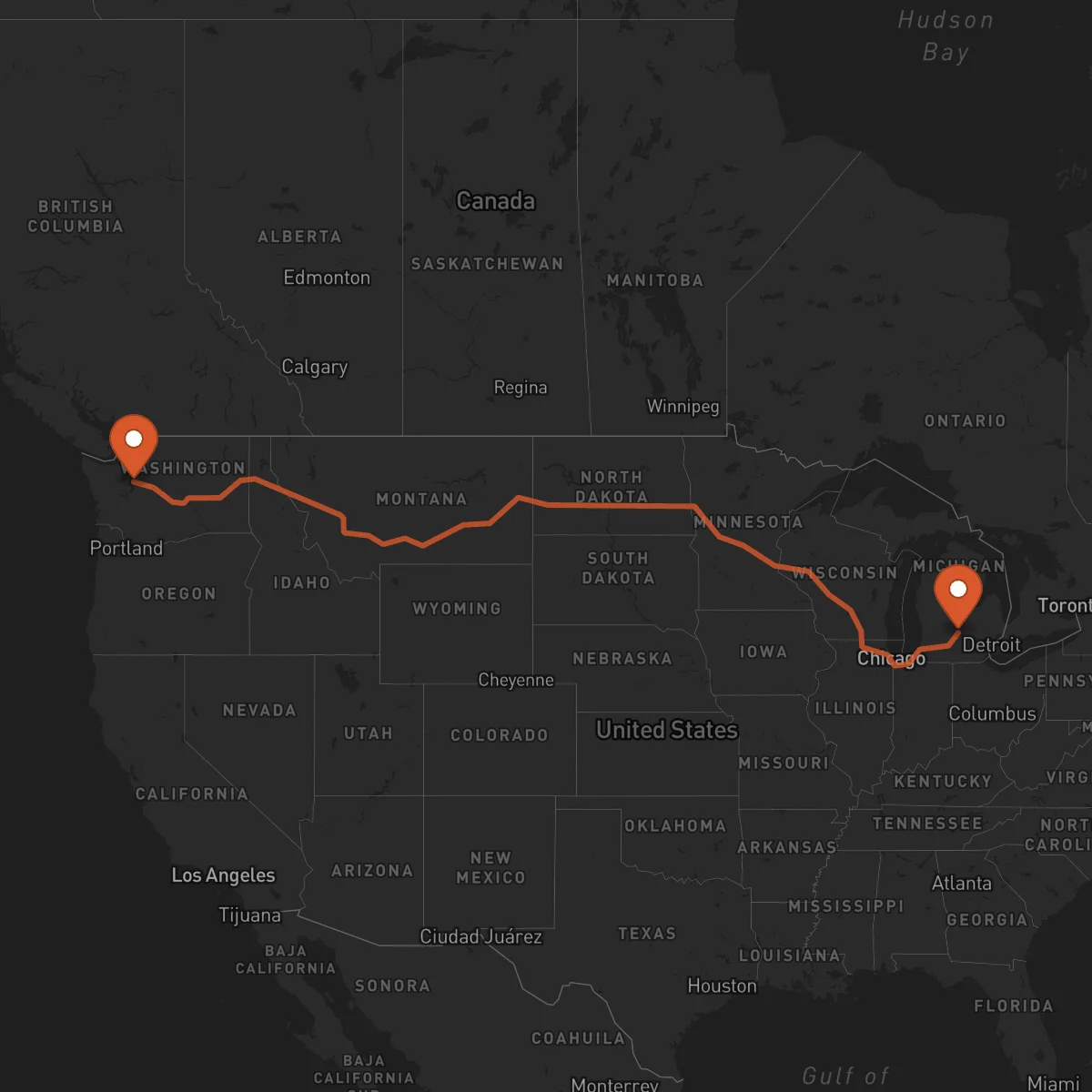
Seattle to Lansing
Lansing → SeattleFTL freight transportation service between Seattle and Lansing. Reliable logistics solutions for your business.
Route Description
Everything you need to know about the corridor Seattle - Lansing
The Seattle to Lansing corridor connects two vital economic centers in the United States, spanning approximately 2,980 kilometers across the northern states. This domestic route traverses through Washington, Idaho, Montana, North Dakota, Minnesota, Wisconsin, and Michigan, serving as a critical link between the Pacific Northwest and the Midwest. The corridor's strategic importance lies in its ability to connect major manufacturing hubs, agricultural regions, and distribution centers across the country's heartland.
The economic context of this corridor reflects the diverse industrial landscape of both regions. Seattle serves as a gateway for international trade and technology innovation, while Lansing anchors Michigan's automotive and manufacturing sector. This route facilitates the movement of goods between the West Coast's export-oriented economy and the Midwest's manufacturing powerhouse, supporting industries ranging from aerospace and technology to automotive and agriculture.
Control Terrestre provides specialized FTL (Full Truckload) transportation services along this corridor, ensuring reliable and efficient freight movement. Our experienced carriers navigate the major highways including I-90, I-94, and I-69, offering dedicated solutions for time-sensitive and high-value cargo. We understand the unique challenges of this cross-country route and provide comprehensive logistics support to keep your supply chain moving smoothly between Seattle and Lansing.
Services for this Route
Available services for the corridor Seattle - Lansing
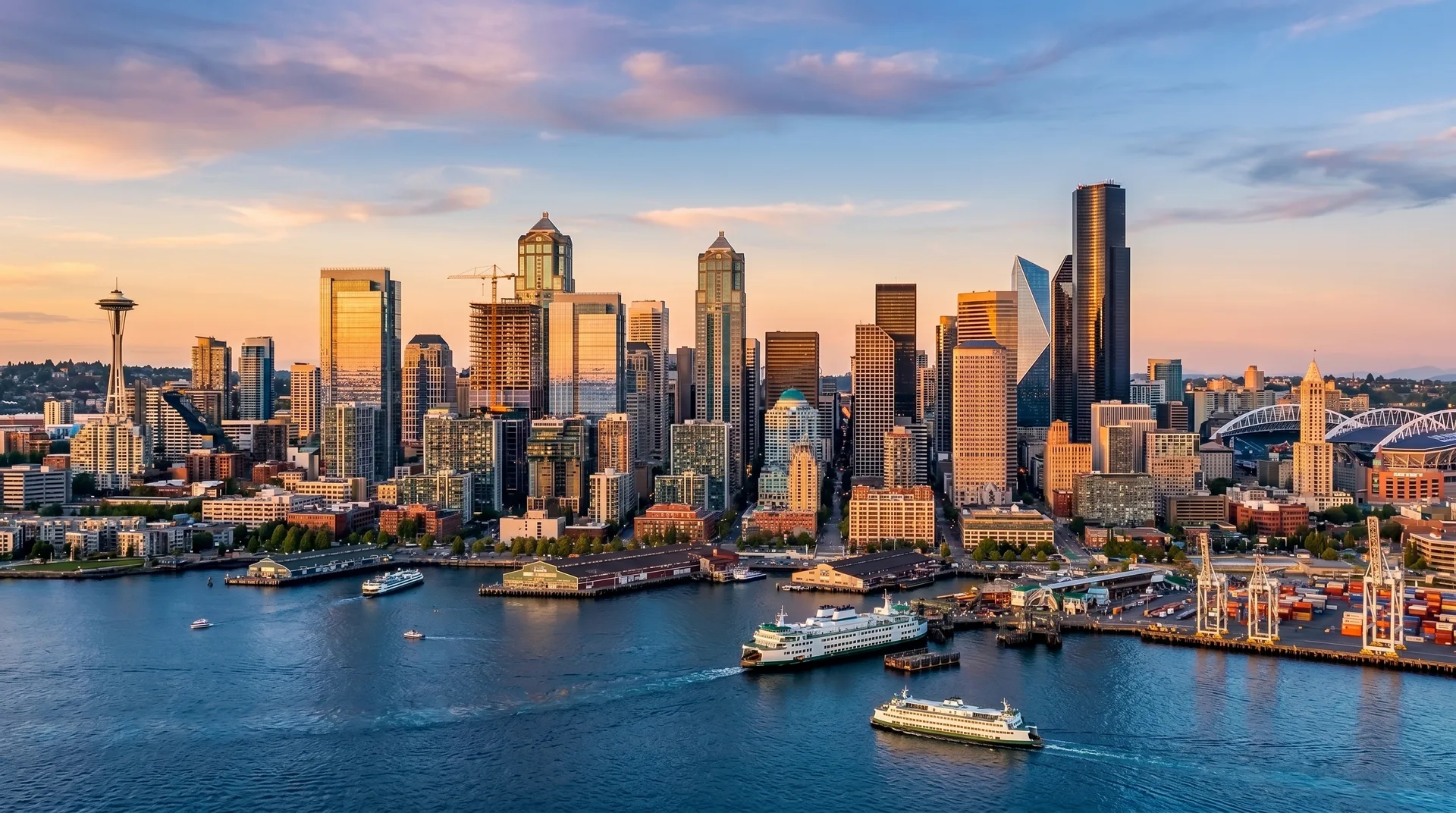 Origin
Seattle
Seattle, Washington serves as a strategic logistics hub on the West Coast, offering access to major ports, international airports, and extensive highway networks. The city's location provides direct connections to Asia-Pacific markets and serves as a gateway for both imports and exports. Seattle's robust transportation infrastructure includes the Port of Seattle, Seattle-Tacoma International Airport, and major highways such as I-5 and I-90, making it an ideal origin point for nationwide freight distribution.
The region's economy is driven by technology, aerospace, and maritime industries, with companies like Boeing, Microsoft, and Amazon headquartered in the area. This creates a diverse demand for freight transportation services, ranging from high-tech equipment and aerospace components to consumer goods and e-commerce shipments. Seattle's proximity to major West Coast ports also makes it a crucial point for international trade, requiring specialized logistics solutions for cross-border and domestic freight movements.
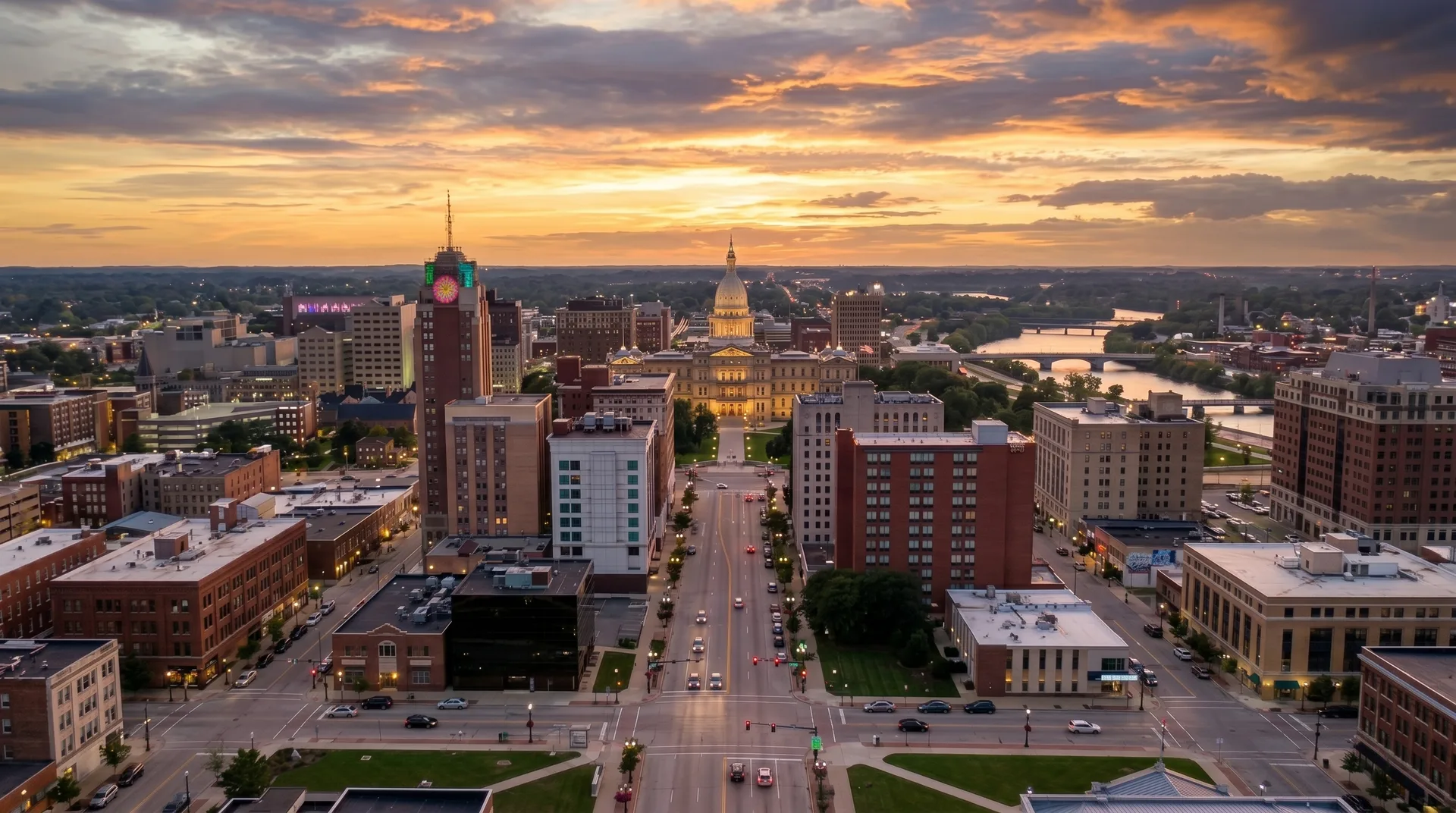 Destination
Lansing
Lansing, Michigan, as the state capital and part of the Greater Lansing area, serves as a strategic logistics point in the Midwest. The region's location provides access to major manufacturing centers, automotive plants, and agricultural areas throughout Michigan and neighboring states. Lansing's transportation infrastructure includes proximity to major highways like I-96 and I-496, as well as access to rail networks and the Port of Lansing for regional distribution.
The Lansing area's economy is anchored by the automotive industry, with General Motors operating major facilities in the region. Additionally, the area has a strong presence in manufacturing, healthcare, and education sectors. This industrial diversity creates consistent demand for freight transportation services, particularly for automotive parts, finished vehicles, and industrial equipment. The region's central location in Michigan makes it an ideal distribution point for serving both the Upper and Lower Peninsulas, as well as neighboring states in the Midwest.










