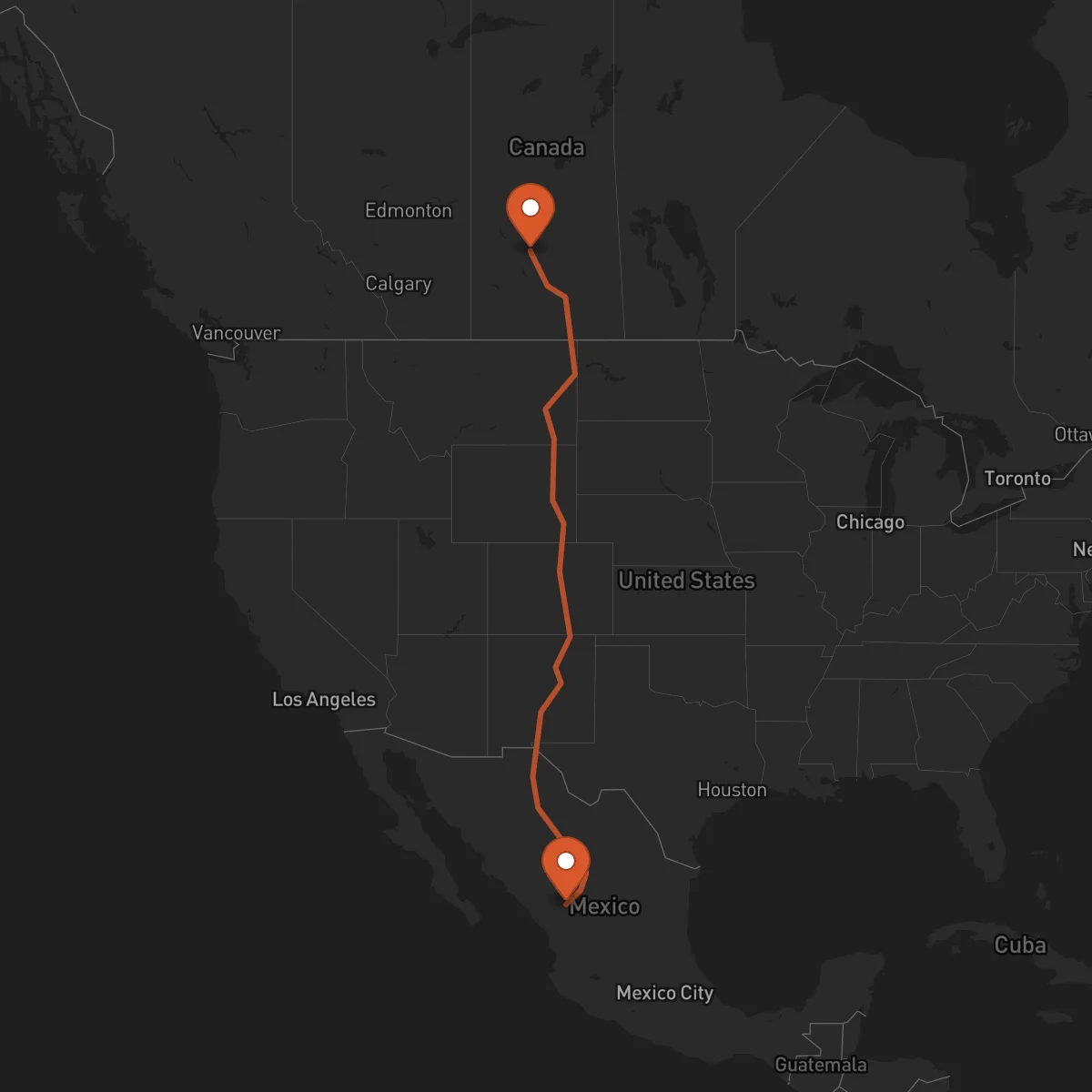
Saskatoon to Durango
Durango → SaskatoonFTL freight transportation service between Saskatoon and Durango. Reliable logistics solutions for your business.
Route Description
Everything you need to know about the corridor Saskatoon - Durango
The logistics corridor connecting Saskatoon, Saskatchewan, to Durango, Durango, represents a vital cross-border trade route spanning approximately 3,133 kilometers. This corridor facilitates the movement of goods between Canada's agricultural heartland and Mexico's industrial north, serving as a critical link in North American supply chains. The route traverses diverse terrain and crosses multiple jurisdictions, requiring specialized expertise in cross-border logistics operations.
The economic significance of this corridor is underscored by the complementary industrial strengths of both regions. Saskatoon serves as a hub for agricultural production, mining, and energy resources, while Durango's economy is characterized by manufacturing, mining, and agricultural processing. Key industries utilizing this corridor include agricultural products, mining equipment, industrial machinery, and manufactured goods, all of which benefit from the integrated North American market.
Transportation infrastructure along this corridor relies primarily on major highway networks, including the CANAMEX Corridor and connecting routes through the United States. The journey involves strategic border crossings where customs clearance and compliance with both US and Mexican regulations are essential. Control Terrestre's expertise in managing cross-border documentation, carrier selection, and regulatory compliance ensures seamless freight movement across all jurisdictions, minimizing delays and optimizing transit efficiency.
Services for this Route
Available services for the corridor Saskatoon - Durango
 Origin
Saskatoon
Saskatoon, located in central Saskatchewan, serves as a strategic logistics hub for western Canada. The city's position along the South Saskatchewan River provides access to major transportation networks, including the Yellowhead Highway and rail connections that link to national and international markets. Saskatoon's economy is anchored in agriculture, mining, and energy sectors, with potash mining and agricultural processing being particularly significant. The city's transportation infrastructure includes Saskatoon John G. Diefenbaker International Airport, extensive road networks, and connections to the Canadian National Railway, facilitating efficient distribution of goods to both domestic and international destinations.
 Destination
Durango, situated in north-central Mexico, occupies a strategic position in the country's logistics network. The city serves as an important industrial and commercial center, with strong connections to major ports and border crossings. Durango's economy encompasses mining, manufacturing, and agriculture, with particular strengths in automotive parts production, mining equipment, and agricultural processing. The region's transportation infrastructure includes access to Federal Highway 45, which connects to major trade routes, as well as rail connections through Ferrocarril Mexicano. Durango's proximity to key industrial centers in northern Mexico makes it an essential node in regional supply chains.










