Saskatoon to Brampton
Brampton → SaskatoonFTL freight transportation service between Saskatoon and Brampton. Reliable logistics solutions for your business.
Route Description
Everything you need to know about the corridor Saskatoon - Brampton
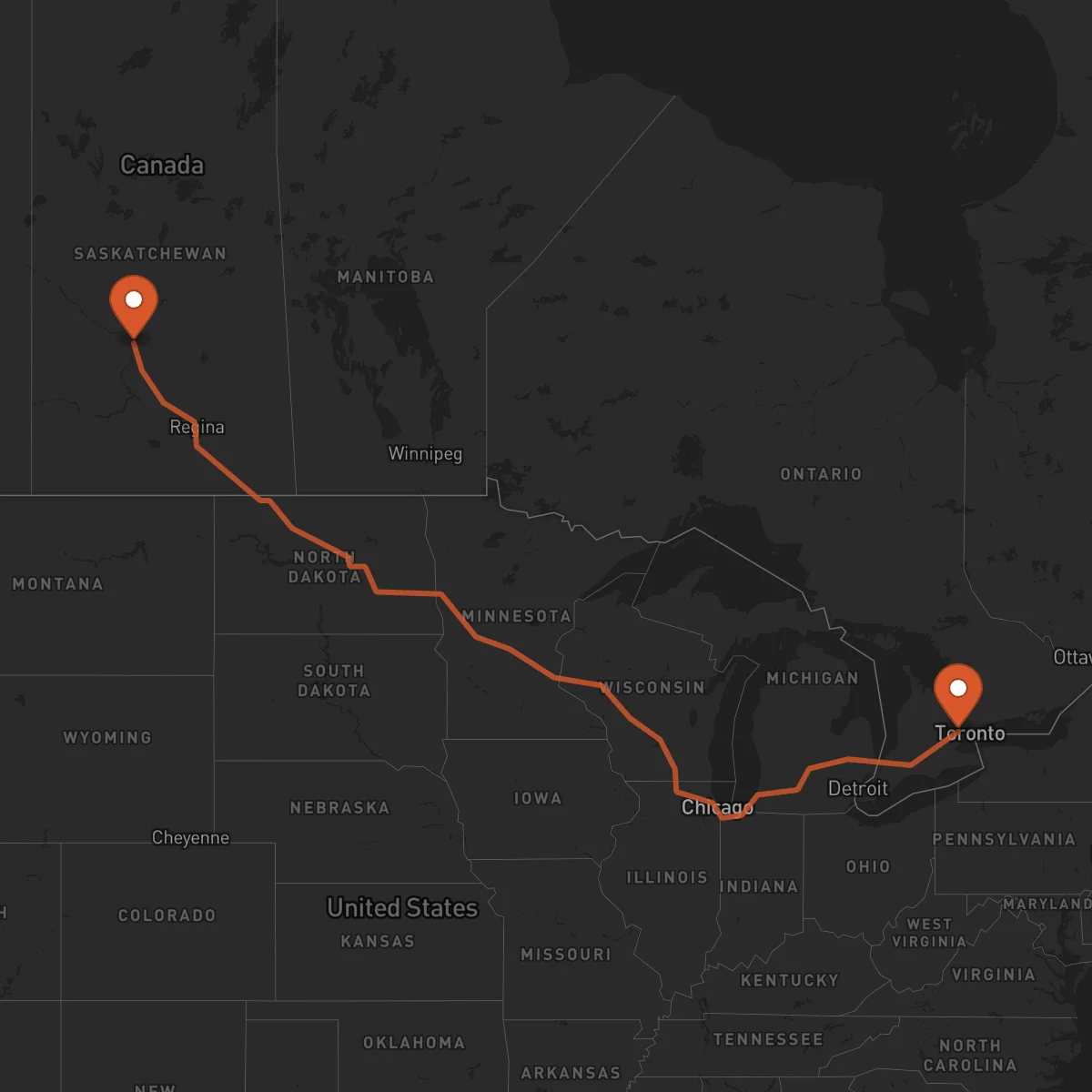
The Saskatoon to Brampton corridor represents a vital logistics connection across the Canadian Prairies and into Ontario's industrial heartland. This 2,198 km domestic route links Saskatchewan's agricultural and mining powerhouse with one of Canada's most dynamic manufacturing and distribution centers. The corridor traverses diverse terrain and crosses multiple provincial boundaries, making it essential for businesses that need reliable full truckload (FTL) transportation between Western and Central Canada.
This route serves as a critical supply chain artery for industries including agriculture, mining, manufacturing, and retail distribution. Saskatoon's position as a major grain producer and mining hub complements Brampton's role as a manufacturing and logistics center, creating substantial freight demand in both directions. The corridor supports the movement of bulk commodities, manufactured goods, and specialized cargo between these economic regions.
Control Terrestre provides comprehensive FTL services along this corridor using our network of certified carriers. We understand the unique challenges of long-haul Canadian routes, including weather considerations, border-adjacent regulations, and the need for specialized equipment. Our dedicated service ensures your freight moves efficiently between Saskatoon and Brampton with real-time tracking and professional handling throughout the journey.
Services for this Route
Available services for the corridor Saskatoon - Brampton
 Origin
Saskatoon
Saskatoon serves as a strategic logistics hub in central Saskatchewan, positioned along the South Saskatchewan River with excellent access to major transportation networks. The city's location provides direct connections to the Trans-Canada Highway system and serves as a gateway to northern resource extraction areas. Saskatoon's transportation infrastructure includes the John G. Diefenbaker International Airport and extensive rail connections through Canadian National Railway and Canadian Pacific Railway.
The city's economy centers on agriculture, mining, and technology sectors. As the largest city in Saskatchewan, Saskatoon is a major producer of potash, uranium, and agricultural products. The surrounding region produces significant quantities of wheat, canola, and other grains, creating substantial freight movement to processing facilities and export markets. The city's growing technology sector and research institutions also generate specialized cargo needs.
 Destination
Brampton stands as one of Canada's most important logistics and manufacturing centers, located in the Greater Toronto Area with exceptional transportation connectivity. The city's strategic position provides direct access to Highway 401, Canada's busiest highway, and proximity to Pearson International Airport. Brampton's extensive industrial parks and distribution centers make it a critical node in North American supply chains. The city's economy is dominated by advanced manufacturing, automotive parts production, and logistics services. Major employers include manufacturing facilities for automotive components, food processing plants, and numerous warehousing and distribution centers. Brampton's diverse industrial base creates consistent demand for full truckload services, handling everything from raw materials to finished goods. The city's proximity to Toronto and access to major ports and border crossings further enhance its importance in Canadian logistics.










