Saskatoon to Cheyenne
Cheyenne → SaskatoonFTL freight transportation service between Saskatoon and Cheyenne. Reliable logistics solutions for your business.
Route Description
Everything you need to know about the corridor Saskatoon - Cheyenne
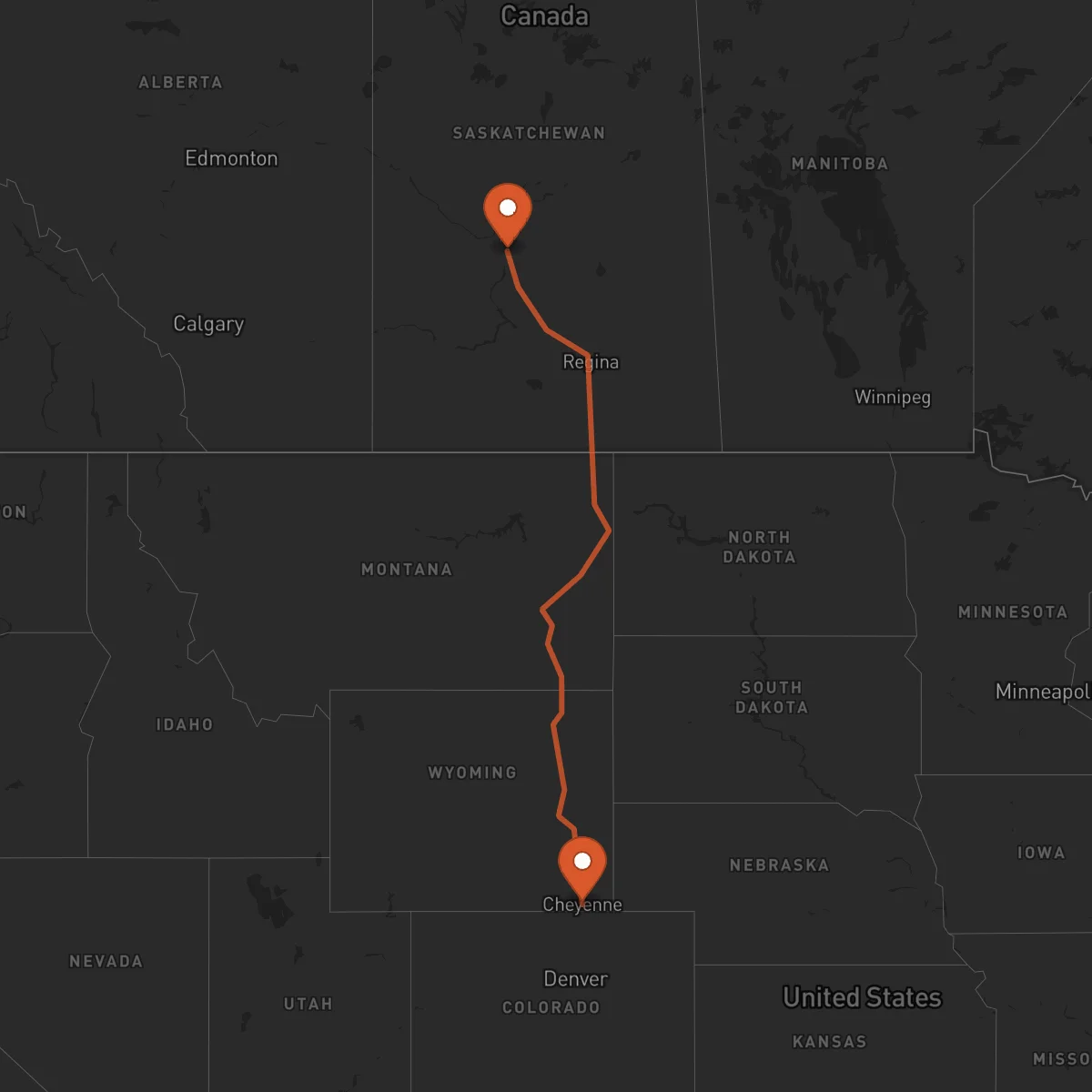
The logistics corridor between Saskatoon and Cheyenne represents a vital cross-border connection linking Canada's agricultural heartland with the industrial and energy sectors of the United States. This 1234 km route traverses the vast plains of the Canadian Prairies before crossing into the American Midwest, creating an essential supply chain link for industries on both sides of the border.
The corridor's strategic importance stems from its ability to connect Saskatchewan's agricultural production with Wyoming's energy and manufacturing sectors. Saskatoon serves as a major distribution hub for Canadian agricultural products, while Cheyenne acts as a gateway to the Rocky Mountain region's industrial complex. This north-south route facilitates the movement of commodities, machinery, and specialized equipment between these complementary economic regions.
Key transportation infrastructure includes the Trans-Canada Highway system connecting to Interstate highways in the United States. The primary border crossing at Portal/Pine Creek offers efficient customs processing for commercial freight. Control Terrestre's expertise in cross-border logistics ensures seamless movement through customs, handling all necessary documentation and compliance requirements for full truckload shipments between these two strategic locations.
Our dedicated fleet and experienced drivers understand the unique challenges of this corridor, including weather variations across different climate zones and the specific documentation requirements for cross-border freight. We provide reliable, full truckload transportation services that maintain the integrity of your supply chain from origin to destination.
Services for this Route
Available services for the corridor Saskatoon - Cheyenne
 Origin
Saskatoon
Saskatoon, located in central Saskatchewan, stands as a major logistics hub in Canada's Prairie provinces. The city's strategic position along the South Saskatchewan River and its access to major transportation routes make it an ideal origin point for cross-border freight movements. Saskatoon's economy is driven by agriculture, mining, and technology sectors, with the city serving as the primary distribution center for Saskatchewan's agricultural products and potash mining operations.
The city boasts excellent transportation infrastructure, including the John G. Diefenbaker International Airport and extensive rail connections through Canadian National Railway and Canadian Pacific Railway. Highway 11 and Highway 16 provide direct road connections to other major Canadian cities and U.S. border crossings. The Port of Saskatoon, a unique inland port facility, offers intermodal capabilities that enhance the city's logistics advantages. This infrastructure network, combined with Saskatoon's skilled workforce and business-friendly environment, positions the city as a critical node in North American supply chains.
 Destination
Cheyenne
Cheyenne, Wyoming's capital and largest city, serves as a strategic logistics gateway to the Rocky Mountain region. Located at the intersection of major interstate highways I-25 and I-80, Cheyenne offers unparalleled access to the western United States' industrial and energy sectors. The city's elevation and central location make it an ideal distribution point for freight moving throughout the mountain states and beyond.
The region's economy is anchored by energy production, including oil, natural gas, and coal mining, as well as manufacturing and agriculture. Cheyenne's industrial parks and rail connections through Union Pacific Railroad provide robust infrastructure for freight handling and distribution. The city's proximity to Denver and other major Colorado markets enhances its role as a logistics hub. Cheyenne's airport and extensive highway network ensure efficient connections to national and international markets, making it an optimal destination for cross-border freight from Canadian origins.










