Saskatoon to Calgary
Calgary → SaskatoonFTL freight transportation service between Saskatoon and Calgary. Reliable logistics solutions for your business.
Route Description
Everything you need to know about the corridor Saskatoon - Calgary
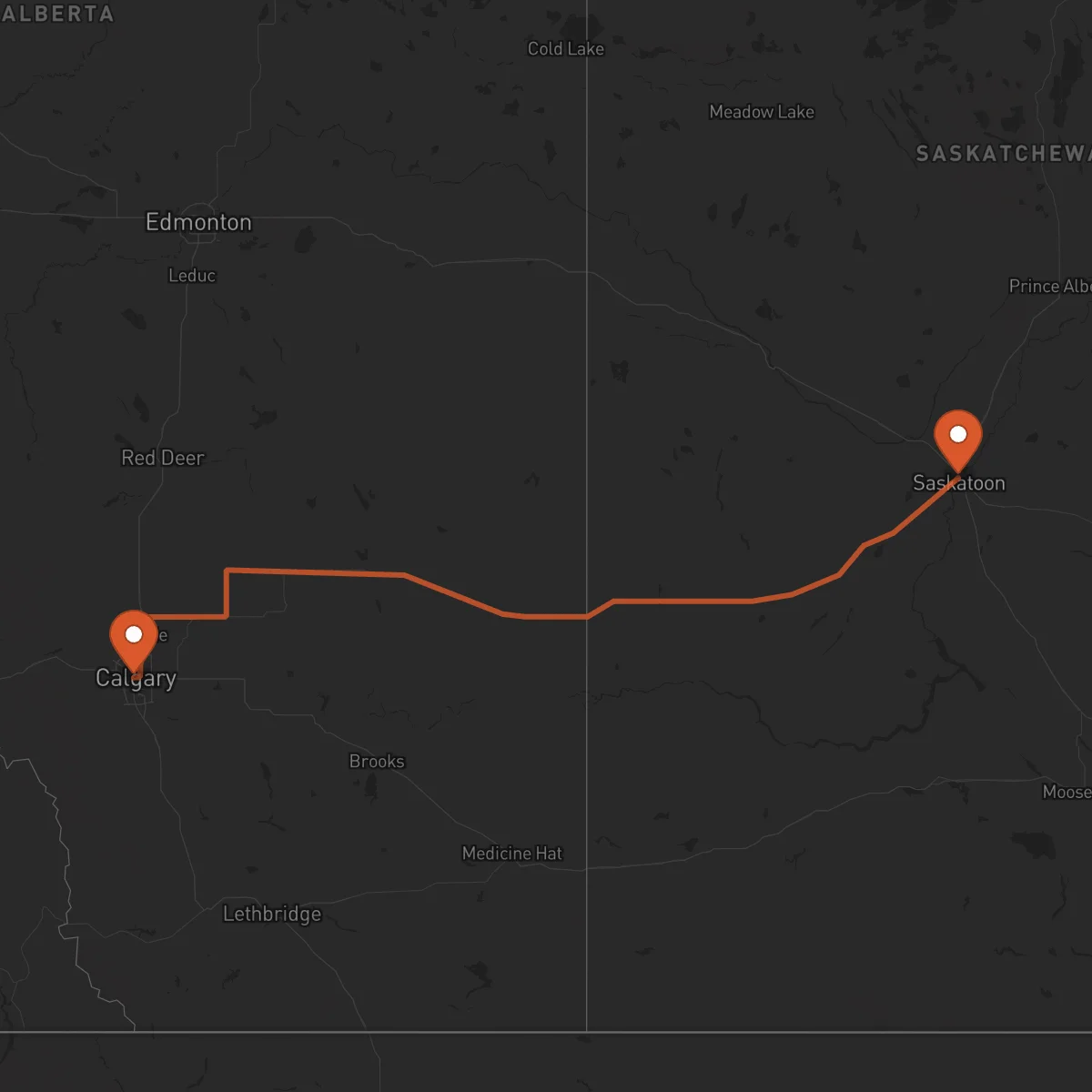
The Saskatoon to Calgary corridor is a vital domestic freight route connecting Saskatchewan and Alberta across approximately 526 kilometers. This strategic corridor links two major economic centers in Western Canada, facilitating the movement of goods between the agricultural heartland of Saskatchewan and the energy and industrial hub of Alberta. The route primarily follows Highway 1 (Trans-Canada Highway) and Highway 2, providing reliable and efficient transportation infrastructure for freight operations.
The economic significance of this corridor is substantial, serving as a critical link between Saskatchewan's agricultural production and Alberta's processing and distribution centers. Major industries utilizing this route include agriculture and food processing, energy sector equipment and supplies, manufacturing components, and retail distribution. The corridor supports the movement of bulk commodities, machinery, industrial equipment, and consumer goods between these two provinces.
Control Terrestre optimizes freight operations along this corridor through our network of certified transportation providers. Our dedicated full truckload (FTL) services ensure that your cargo moves efficiently between Saskatoon and Calgary without intermediate stops or handling. We understand the specific requirements of each industry served by this route and provide tailored solutions that maintain the integrity and timely delivery of your freight throughout the journey.
Services for this Route
Available services for the corridor Saskatoon - Calgary
 Origin
Saskatoon
Saskatoon, located in central Saskatchewan, serves as a strategic logistics hub for the region. The city's position along major transportation corridors makes it an ideal origin point for freight distribution throughout Western Canada. Saskatoon's economy is diverse, with strong sectors in agriculture, mining (particularly potash), manufacturing, and technology. The city is home to significant food processing facilities, agricultural equipment manufacturers, and distribution centers that generate substantial freight volume.
The transportation infrastructure in Saskatoon includes access to major highways, including the Yellowhead Highway (Highway 16) and Highway 11, connecting to national rail networks and the Saskatoon John G. Diefenbaker International Airport. The city's logistics capabilities are enhanced by its proximity to agricultural production areas and mining operations, making it a crucial point for outbound freight to markets across Canada and beyond.
 Destination
Calgary, Alberta's largest city, stands as a major logistics and economic center in Western Canada. Strategically located at the intersection of major transportation routes, Calgary serves as a gateway to the oil sands, mountain regions, and broader Alberta markets. The city's economy is anchored by the energy sector, but also includes significant manufacturing, technology, logistics, and retail distribution industries. Calgary's position makes it an ideal destination for freight from across the prairies and beyond.
The city boasts excellent transportation infrastructure, including the Calgary International Airport, extensive highway networks (including the Trans-Canada Highway), and strong rail connections through Canadian Pacific Railway and Canadian National Railway. Calgary's logistics ecosystem includes major distribution centers, intermodal facilities, and a robust network of warehousing and fulfillment services. This infrastructure, combined with the city's economic diversity, creates substantial demand for reliable freight transportation services connecting to other major Canadian markets.










