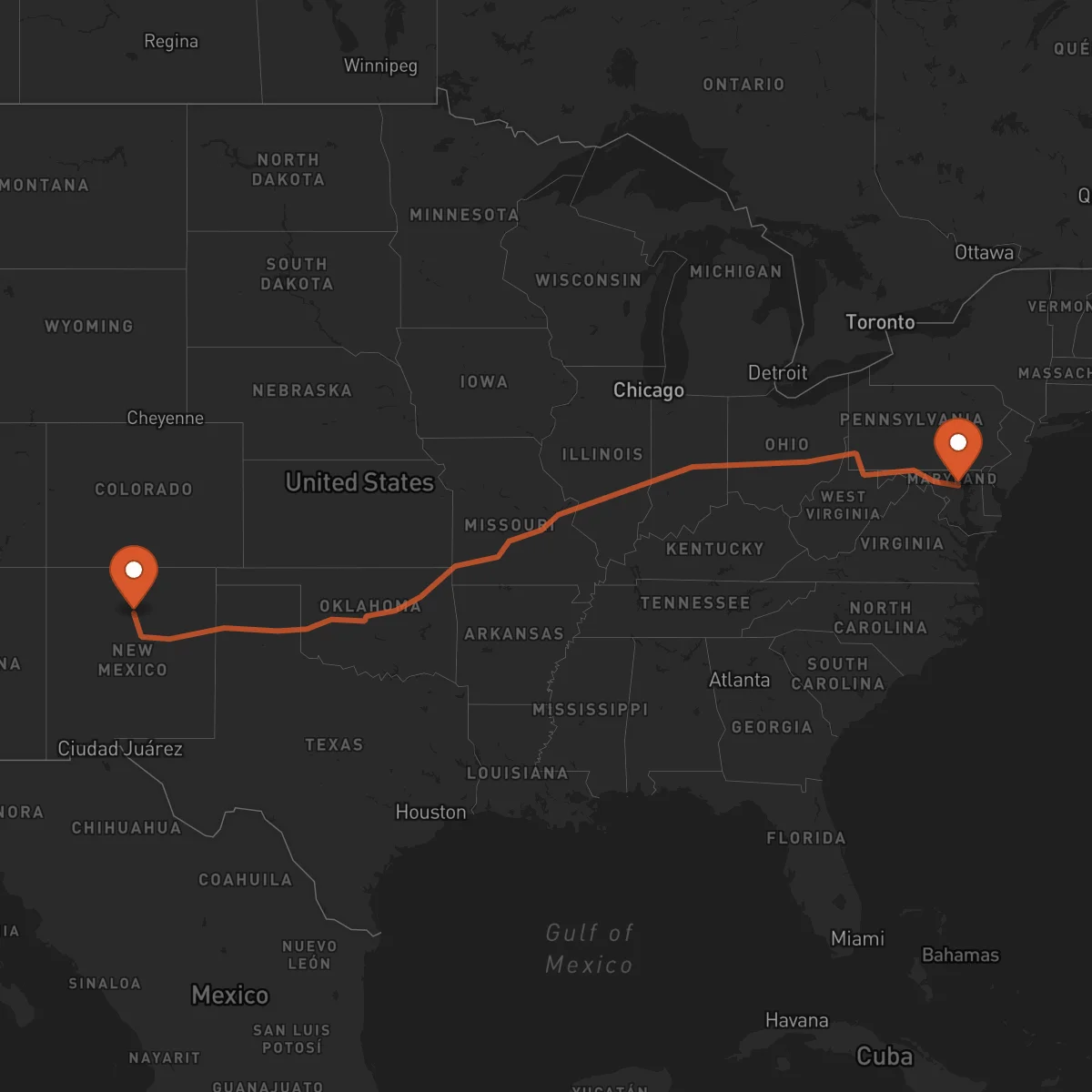
Santa Fe to Baltimore
Baltimore → Santa FeFTL freight transportation service between Santa Fe and Baltimore. Reliable logistics solutions for your business.
Route Description
Everything you need to know about the corridor Santa Fe - Baltimore
The logistics corridor between Santa Fe, New Mexico, and Baltimore, Maryland, represents a vital transportation link spanning approximately 2,607 kilometers across the United States. This east-west route connects the Southwest region with the Mid-Atlantic, traversing diverse landscapes and crossing multiple states including New Mexico, Texas, Oklahoma, Missouri, Illinois, Indiana, Ohio, West Virginia, Pennsylvania, and Maryland. The corridor serves as a crucial artery for freight movement between the growing industrial centers of the Southwest and the major port and distribution hub of Baltimore.
The economic significance of this corridor cannot be overstated. Santa Fe and the surrounding New Mexico region are home to aerospace manufacturing, renewable energy development, and government facilities, while Baltimore serves as a major East Coast port and distribution center for automotive, pharmaceutical, and consumer goods industries. This route facilitates the movement of high-value, time-sensitive cargo between these economic powerhouses, supporting industries that require reliable full truckload (FTL) transportation solutions.
Key transportation infrastructure along this corridor includes major interstate highways such as I-40, I-44, I-55, I-64, and I-70, which provide efficient cross-country connectivity. The route also intersects with major rail networks and passes through key logistics hubs in cities like Oklahoma City, St. Louis, Indianapolis, and Columbus. Control Terrestre leverages this extensive infrastructure network to provide seamless FTL transportation services, ensuring that cargo moves efficiently from origin to destination without unnecessary delays or handling.
Control Terrestre specializes in full truckload transportation along this corridor, offering dedicated services that eliminate the risks associated with consolidated freight. Our strategic partnerships with certified carriers ensure that shipments maintain their integrity throughout the journey, whether transporting specialized cargo, hazardous materials, or standard freight. With our expertise in cross-country logistics and commitment to reliability, we provide the transportation backbone that businesses need to maintain their supply chains between Santa Fe and Baltimore.
Services for this Route
Available services for the corridor Santa Fe - Baltimore
 Origin
Santa Fe
Santa Fe, New Mexico, serves as a strategic origin point for logistics operations in the Southwest region. Located at the foothills of the Sangre de Cristo Mountains, Santa Fe benefits from its position within New Mexico's growing transportation network. The city and surrounding area are home to significant aerospace and defense industries, including major facilities operated by government agencies and private contractors. Additionally, Santa Fe's proximity to research institutions and renewable energy projects creates demand for specialized freight transportation services. The region's transportation infrastructure includes access to Interstate 25 and connections to major rail networks, facilitating efficient movement of goods to both coastal and inland destinations.
 Destination
Baltimore
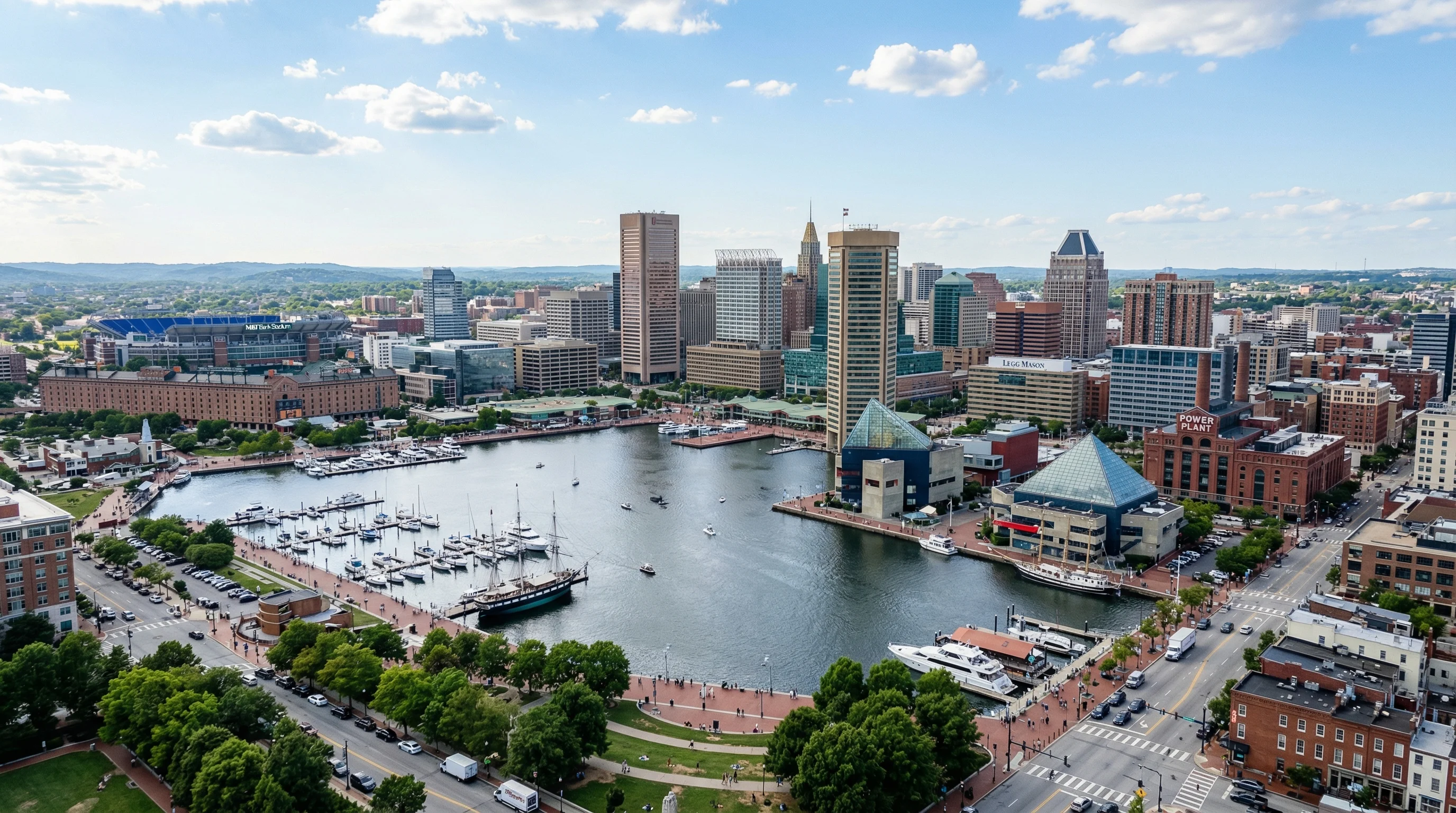
Baltimore, Maryland, stands as a premier logistics destination on the East Coast, anchored by one of the nation's busiest ports and a robust transportation infrastructure. The Port of Baltimore handles millions of tons of cargo annually, including automobiles, containers, and bulk commodities, making it a critical gateway for international trade. Baltimore's strategic location within the Northeast megalopolis provides access to a vast consumer market within a day's drive. The region's economy is diversified, with strong presence in healthcare, education, finance, and advanced manufacturing sectors. Transportation infrastructure in Baltimore includes extensive highway networks (I-95, I-695, I-83), rail connections via CSX and Norfolk Southern, and the port's comprehensive intermodal facilities, supporting efficient distribution throughout the Mid-Atlantic region.










