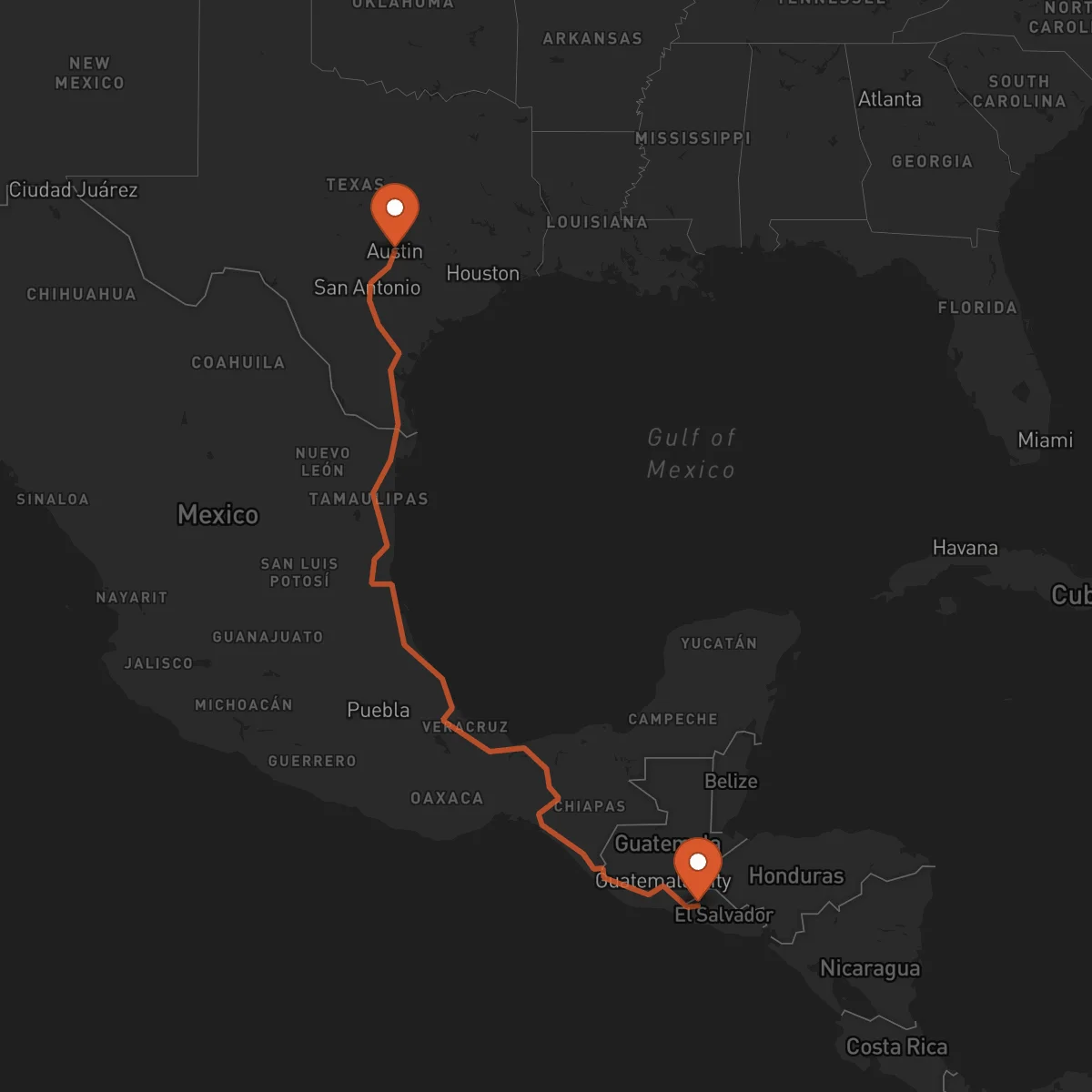
Santa Ana to Austin
Austin → Santa AnaFTL freight transportation service between Santa Ana and Austin. Reliable logistics solutions for your business.
Route Description
Everything you need to know about the corridor Santa Ana - Austin
The Santa Ana-Austin corridor represents a vital logistics connection between El Salvador and the United States, spanning approximately 1996 km. This cross-border route facilitates the movement of goods between Central America and the heart of Texas, connecting the industrial capabilities of Santa Ana with Austin's thriving technology and manufacturing sectors. The corridor traverses through key Mexican states including Veracruz, Puebla, and Nuevo León before crossing into Texas through Laredo or Pharr, depending on the specific route chosen.
The transportation infrastructure along this corridor includes major highways such as CA-1 in El Salvador, connecting to Mexican Federal Highways 150D and 85D, which provide efficient access to the Texas border. Once in the United States, I-35 serves as the primary artery connecting Laredo to Austin. This well-established route benefits from modern toll roads and multiple border crossing options, allowing for flexible scheduling and reduced transit times.
Control Terrestre facilitates seamless operations along this corridor through our network of certified carriers and strategic partnerships. We manage all customs procedures, ensuring compliance with both CA-4 and NAFTA/USMCA regulations. Our dedicated team coordinates cross-border documentation, provides real-time tracking, and maintains constant communication throughout the journey. With our expertise in handling the specific requirements of this route, we ensure that your full truckload shipments move efficiently between Santa Ana and Austin, regardless of cargo type or special handling needs.
Services for this Route
Available services for the corridor Santa Ana - Austin
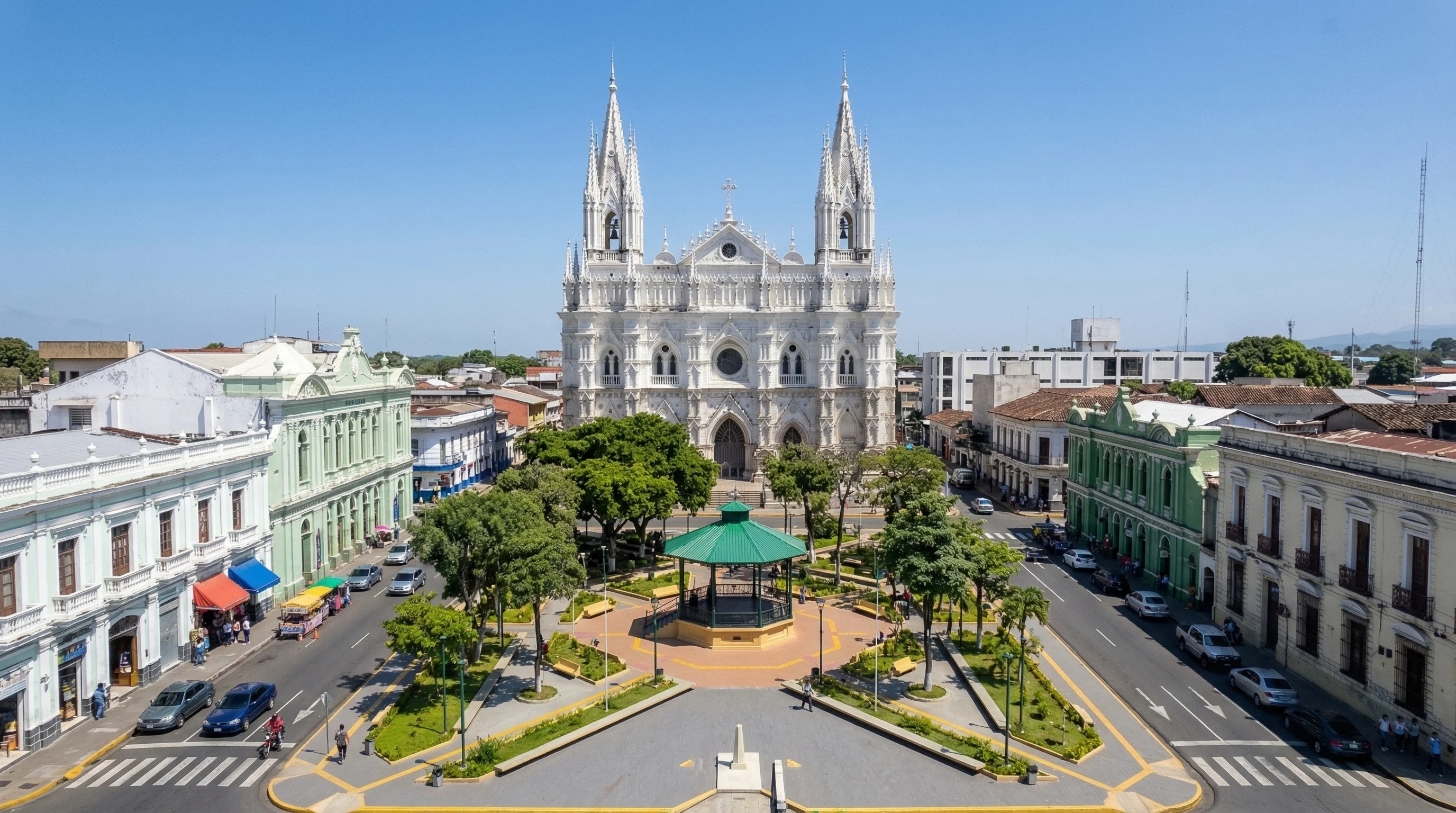 Origin
Santa Ana
Santa Ana serves as a strategic logistics hub in western El Salvador, positioned near the country's border with Guatemala. The city's industrial parks and free trade zones make it an important origin point for exports to the United States. Santa Ana's economy is driven by textile manufacturing, food processing, and agricultural products, with numerous companies operating in the region's industrial corridors. The city benefits from the Comalapa International Airport for air freight connections and a well-developed road network that connects to the Pan-American Highway, providing efficient access to the Guatemalan border and beyond.
 Destination
Austin
Austin stands as a major logistics and economic center in central Texas, strategically located along the I-35 corridor. The city's diverse economy encompasses technology, semiconductor manufacturing, healthcare, and education, with major employers including Dell, Samsung, and numerous tech startups. Austin's logistics infrastructure includes the Austin-Bergstrom International Airport, multiple freight rail connections, and direct access to major highways. The city's proximity to Mexico and its position within Texas's manufacturing belt make it an ideal destination for cross-border freight, with excellent distribution capabilities throughout the southwestern United States.










