St. John's to Pierre
Pierre → St. John'sFTL freight transportation service between St. John's and Pierre. Reliable logistics solutions for your business.
Route Description
Everything you need to know about the corridor St. John's - Pierre
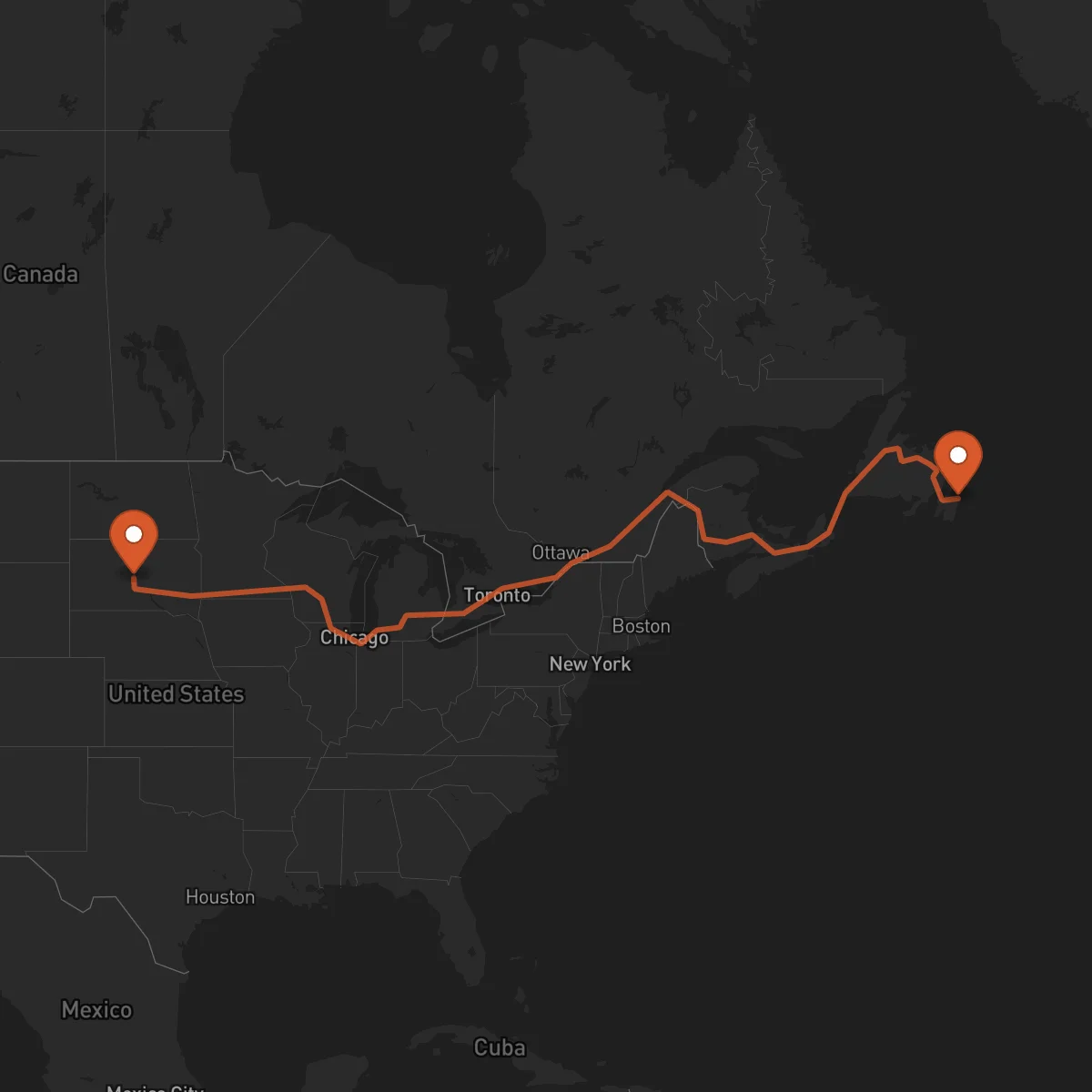
The cross-border corridor connecting San Juan de Terranova (St. John's) in Newfoundland and Labrador, Canada to Pierre, South Dakota, United States spans approximately 3,639 kilometers through diverse Canadian and American landscapes. This route serves as a vital link between the Atlantic provinces and the American Midwest, facilitating the movement of goods between Canada's easternmost port city and South Dakota's capital. The corridor traverses major transportation networks including the Trans-Canada Highway (Highway 1) through Newfoundland, connecting to Highway 17 through Ontario, and continuing through key American states before reaching South Dakota.
The economic significance of this corridor lies in its ability to connect Newfoundland's resource-based economy with South Dakota's agricultural and manufacturing sectors. San Juan de Terranova serves as a critical entry point for goods arriving via maritime routes, while Pierre represents a strategic inland hub for distribution throughout the American Midwest. The route passes through major industrial centers and agricultural regions, making it essential for companies in the mining, forestry, and agricultural sectors. Control Terrestre's expertise in cross-border operations ensures seamless freight movement across this extensive corridor, handling all customs documentation and regulatory compliance between Canadian and US jurisdictions.
Services for this Route
Available services for the corridor St. John's - Pierre
 Origin
St. John's
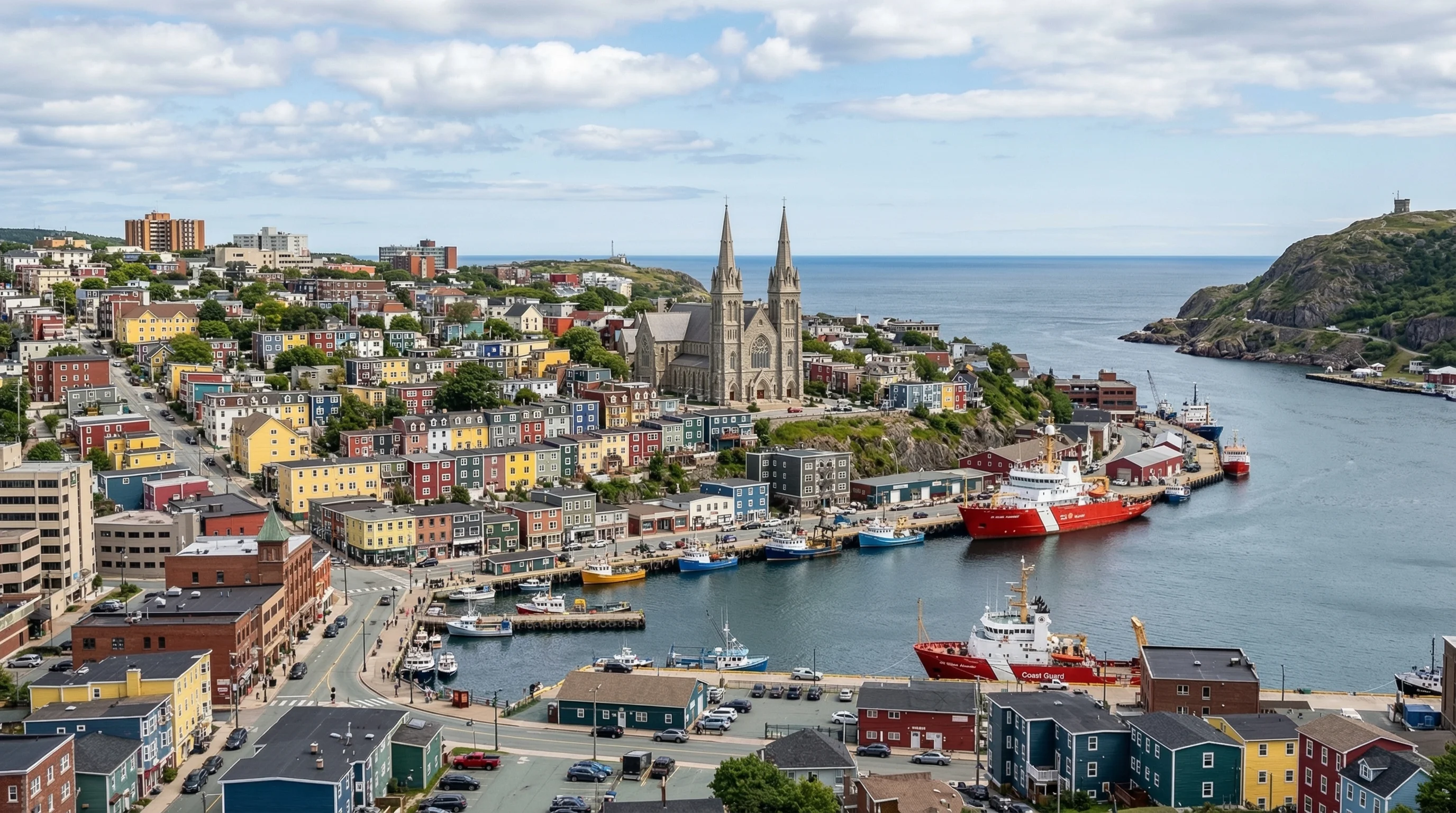
San Juan de Terranova (St. John's), located on the eastern tip of the Avalon Peninsula in Newfoundland and Labrador, serves as Canada's most easterly port city and a strategic gateway for Atlantic trade. The city's deep-water harbor provides critical infrastructure for maritime freight operations, connecting North American markets with European and global destinations. St. John's economy is anchored in offshore oil and gas exploration, fisheries, and emerging technology sectors, creating diverse freight transportation needs. The region's unique geographic position makes it an ideal consolidation point for goods destined for mainland Canada and the United States. Transportation infrastructure includes the St. John's International Airport for air freight and the Port of St. John's, which accommodates container ships, bulk carriers, and specialized vessels. The city's road network connects to the provincial highway system, providing overland access to the rest of Newfoundland and onward to mainland Canada through ferry services.
 Destination
Pierre
Pierre, the capital city of South Dakota, is strategically positioned along the Missouri River in the central part of the state, making it a key distribution hub for the American Midwest. The city's location at the intersection of major transportation routes provides excellent connectivity to regional markets. Pierre's economy is primarily driven by state government operations, agriculture, and manufacturing, with significant activity in food processing, machinery production, and agricultural equipment. The region's robust agricultural sector creates substantial freight transportation demand for both inbound raw materials and outbound finished products. Transportation infrastructure includes Interstate 90 and Interstate 29, providing efficient highway access to major Midwestern markets. The city is served by the Pierre Regional Airport for air cargo operations and has rail connections through BNSF Railway, complementing the extensive highway network. This multimodal infrastructure makes Pierre an ideal destination for freight consolidation and distribution throughout the central United States.










