Pierre to St. John's
St. John's → PierreFTL freight transportation service between Pierre and St. John's. Reliable logistics solutions for your business.
Route Description
Everything you need to know about the corridor Pierre - St. John's
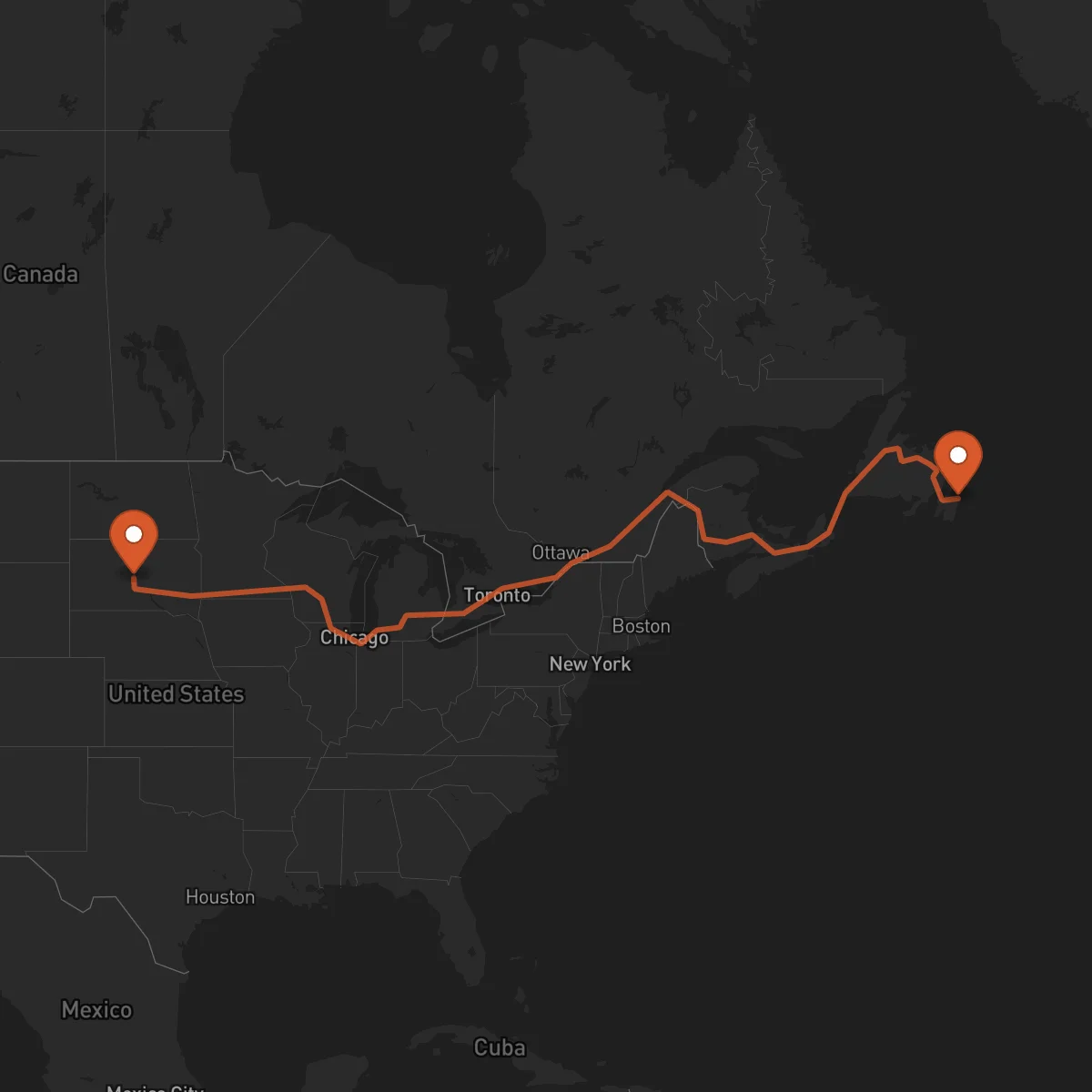
The logistics corridor connecting Pierre, South Dakota, to St. John's, Newfoundland and Labrador, represents a critical cross-border freight route spanning approximately 3,639 kilometers across North America. This corridor traverses the heart of the continent, connecting the central United States with Canada's easternmost province, facilitating essential trade flows between these regions. The route strategically links the industrial Midwest with Atlantic Canada's maritime economy, passing through major transportation hubs including Minneapolis, Thunder Bay, and Quebec City before reaching the island of Newfoundland via ferry service from North Sydney.
The economic significance of this corridor is substantial, supporting industries such as manufacturing, agriculture, mining, and energy. South Dakota's agricultural exports, including grains and livestock products, flow northward through this route, while Newfoundland's seafood, mining products, and emerging renewable energy sectors require reliable inbound logistics for equipment and supplies. The corridor also serves as a vital link for cross-border e-commerce and just-in-time manufacturing supply chains that depend on predictable transit times across multiple jurisdictions.
Key infrastructure along this corridor includes Interstate 90, Trans-Canada Highway 1, and the Marine Atlantic ferry service connecting Nova Scotia to Newfoundland. The international border crossing at Portal, North Dakota/Pembina, Manitoba provides efficient processing for commercial vehicles, while Canadian ports of entry are equipped with modern customs facilities. Control Terrestre's expertise in cross-border operations ensures seamless customs clearance, regulatory compliance, and optimized routing across this complex multi-jurisdictional corridor, providing our clients with reliable full truckload transportation solutions that maintain cargo integrity throughout the entire journey.
Services for this Route
Available services for the corridor Pierre - St. John's
 Origin
Pierre
Pierre, South Dakota, serves as a strategic logistics hub in the American Midwest, positioned along the Missouri River with excellent access to major transportation networks. The city's location at the intersection of U.S. Highway 83 and U.S. Highway 14 provides efficient connections to regional freight corridors and national distribution networks. Pierre's central location within South Dakota makes it an ideal origin point for freight distribution across the Great Plains and beyond, with proximity to major agricultural production areas and industrial centers in neighboring states.
The local economy is anchored by state government operations, healthcare, and a diverse industrial base including manufacturing, energy production, and agricultural processing. South Dakota's significant agricultural output, including corn, soybeans, wheat, and livestock products, creates substantial freight volumes moving through Pierre. The region also supports specialized industries such as precision manufacturing, renewable energy equipment production, and mining supplies, all requiring reliable full truckload transportation services to reach both domestic and international markets.
 Destination
St. John's
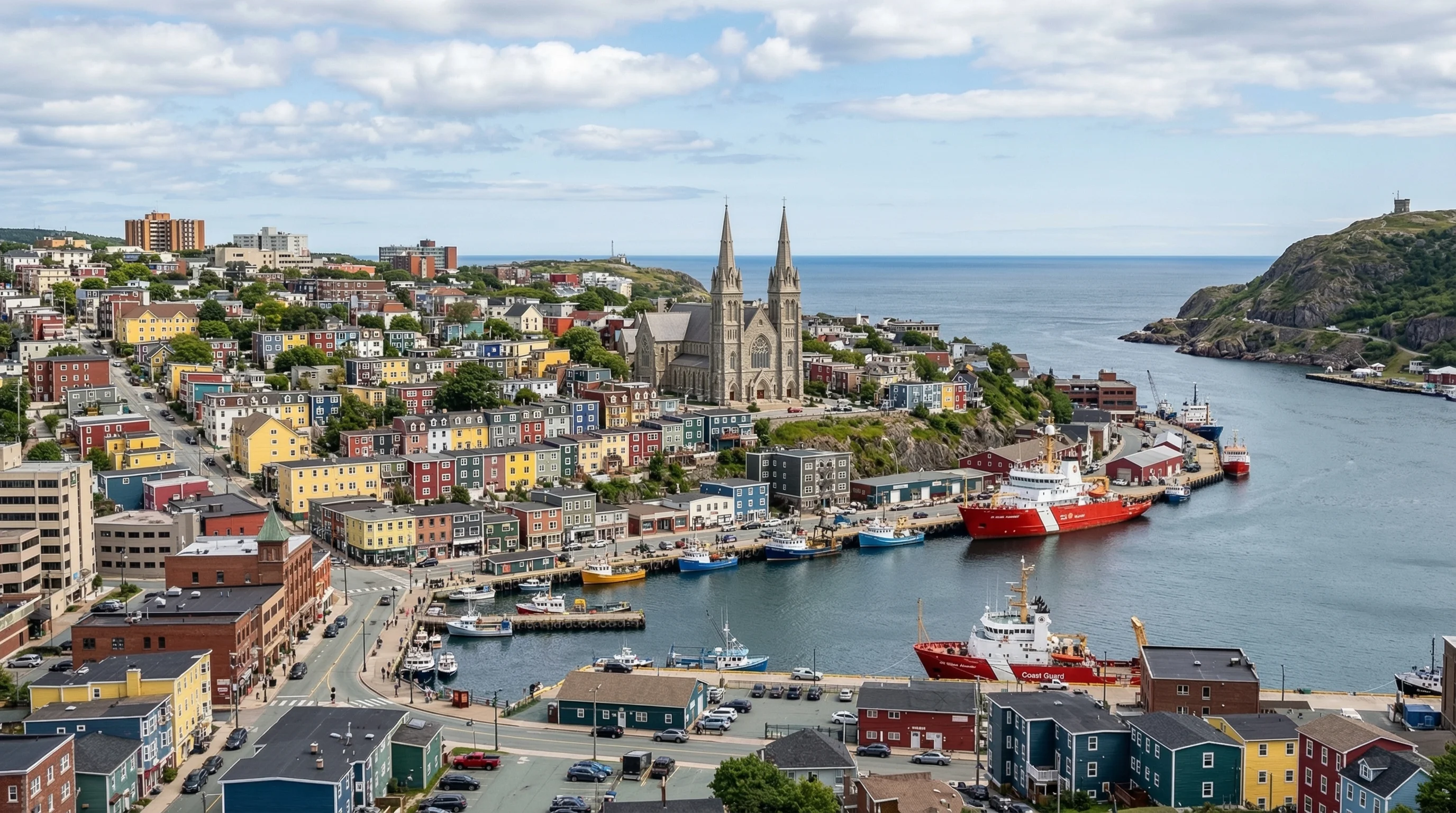
St. John's, Newfoundland and Labrador, represents Canada's easternmost major port and a critical logistics gateway to the Atlantic region. Located on the eastern shore of the Avalon Peninsula, the city serves as the primary entry point for goods arriving in Newfoundland, with the Port of St. John's providing deep-water facilities capable of handling diverse cargo types. The city's strategic position, while geographically isolated from mainland Canada, creates unique logistics challenges that require specialized expertise in multi-modal transportation solutions, including the essential ferry connections to Nova Scotia.
The local economy is driven by offshore oil and gas production, fisheries, tourism, and emerging sectors such as ocean technology and renewable energy. Newfoundland's resource-based industries require substantial inbound freight for equipment, supplies, and materials, while the seafood processing sector depends on efficient outbound logistics for fresh and frozen products. St. John's also serves as a regional distribution center for the entire province, with its transportation infrastructure supporting the movement of goods to smaller communities across Newfoundland's extensive coastline and challenging terrain.










