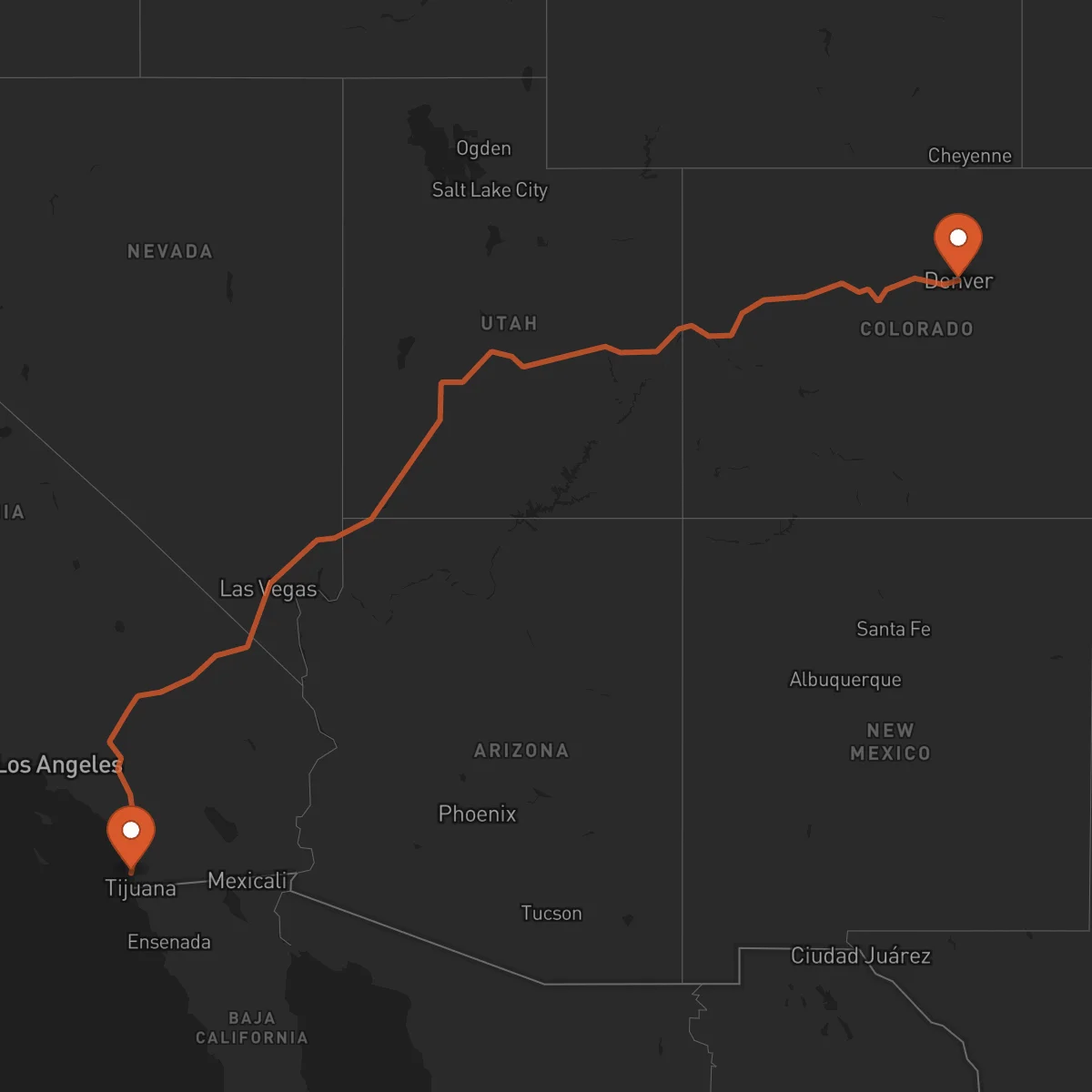
San Diego to Denver
Denver → San DiegoFTL freight transportation service between San Diego and Denver. Reliable logistics solutions for your business.
Route Description
Everything you need to know about the corridor San Diego - Denver
The San Diego to Denver corridor represents a vital logistics link connecting the Pacific coast with the Rocky Mountain region. This 1340 km route traverses diverse landscapes, from California's coastal plains through the southwestern deserts to the high plains of Colorado. The corridor serves as a critical supply chain artery for industries requiring efficient transportation between these major economic centers.
The San Diego region is a major international trade hub with the Port of San Diego facilitating significant maritime commerce, while Denver serves as a central distribution point for the Mountain West region. This route enables seamless movement of goods between these strategic locations, supporting the economic integration of California's coastal economy with Colorado's inland markets.
Key industries utilizing this corridor include technology and electronics from the San Diego area, agricultural products from California's Imperial Valley, automotive components, and manufacturing goods. The route also supports the movement of consumer goods, industrial equipment, and specialized cargo between these regions. Manufacturing centers in both locations depend on reliable transportation for just-in-time inventory management and supply chain efficiency.
Control Terrestre facilitates operations on this corridor through our network of certified transportation providers, offering full truckload (FTL) services with equipment options including dry vans, refrigerated units, and specialized trailers. Our C-TPAT and BASC certified partners ensure secure, compliant cross-country transportation with real-time tracking capabilities and dedicated customer support throughout the journey.
Services for this Route
Available services for the corridor San Diego - Denver
 Origin
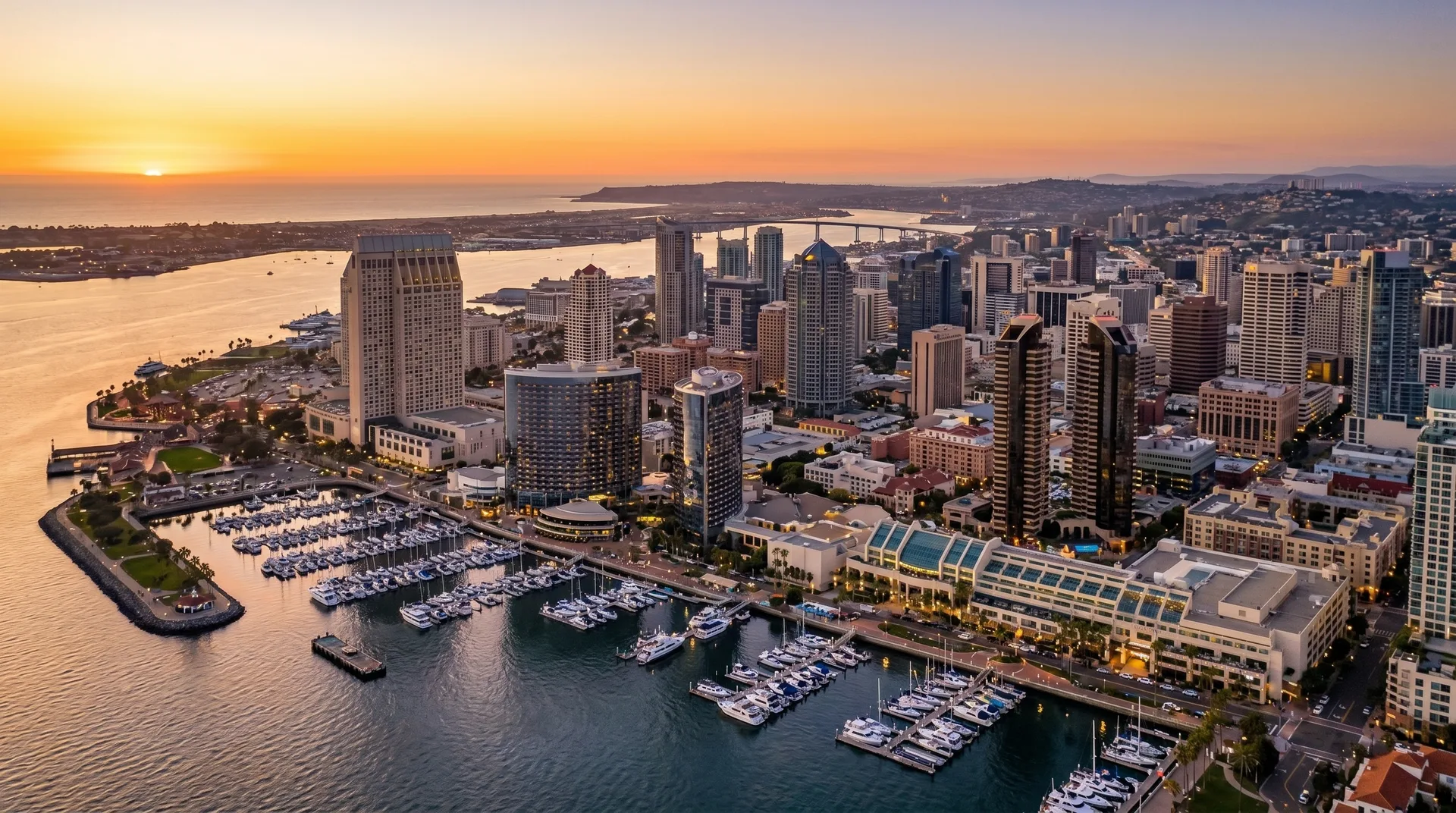
San Diego
San Diego's strategic location on the Pacific coast makes it a crucial gateway for international trade and domestic distribution. The city hosts the Port of San Diego, a major maritime facility handling containerized cargo, bulk goods, and specialized shipments. San Diego International Airport provides air cargo capabilities, complementing the region's multimodal transportation network.
The region's economy is diverse, with strong biotechnology, telecommunications, and defense sectors. Major employers include healthcare and life sciences companies, electronics manufacturers, and military installations. The manufacturing sector produces everything from medical devices to aerospace components, while the agricultural industry in surrounding areas contributes to the region's economic output.
Transportation infrastructure in San Diego includes extensive highway networks connecting to major interstates, rail freight services via the San Diego and Arizona Eastern Railway, and robust port facilities. The city's proximity to the U.S.-Mexico border enhances its role as a logistics hub, facilitating cross-border trade and providing additional routing options for freight movement.
 Destination
Denver
Denver's strategic position as the largest city in the Rocky Mountain region makes it a central distribution hub for the Mountain West. The city's location at the intersection of major interstates (I-25, I-70, I-76) provides excellent connectivity to surrounding states and beyond. Denver International Airport, one of the largest cargo airports in the country, supports significant air freight operations.
The Denver metropolitan area hosts a diverse industrial base including aerospace, telecommunications, energy, and technology sectors. Major employers include telecommunications companies, healthcare providers, and manufacturing firms producing everything from computer components to outdoor equipment. The region's energy sector, including both traditional and renewable sources, creates substantial freight transportation needs.
Denver's transportation infrastructure includes extensive highway networks, rail freight services via Union Pacific and BNSF lines, and a well-developed intermodal facility at the airport. The city's central location makes it an ideal distribution point for goods destined throughout the Rocky Mountain region, with excellent connections to major markets in the Midwest, West Coast, and Southwest.










