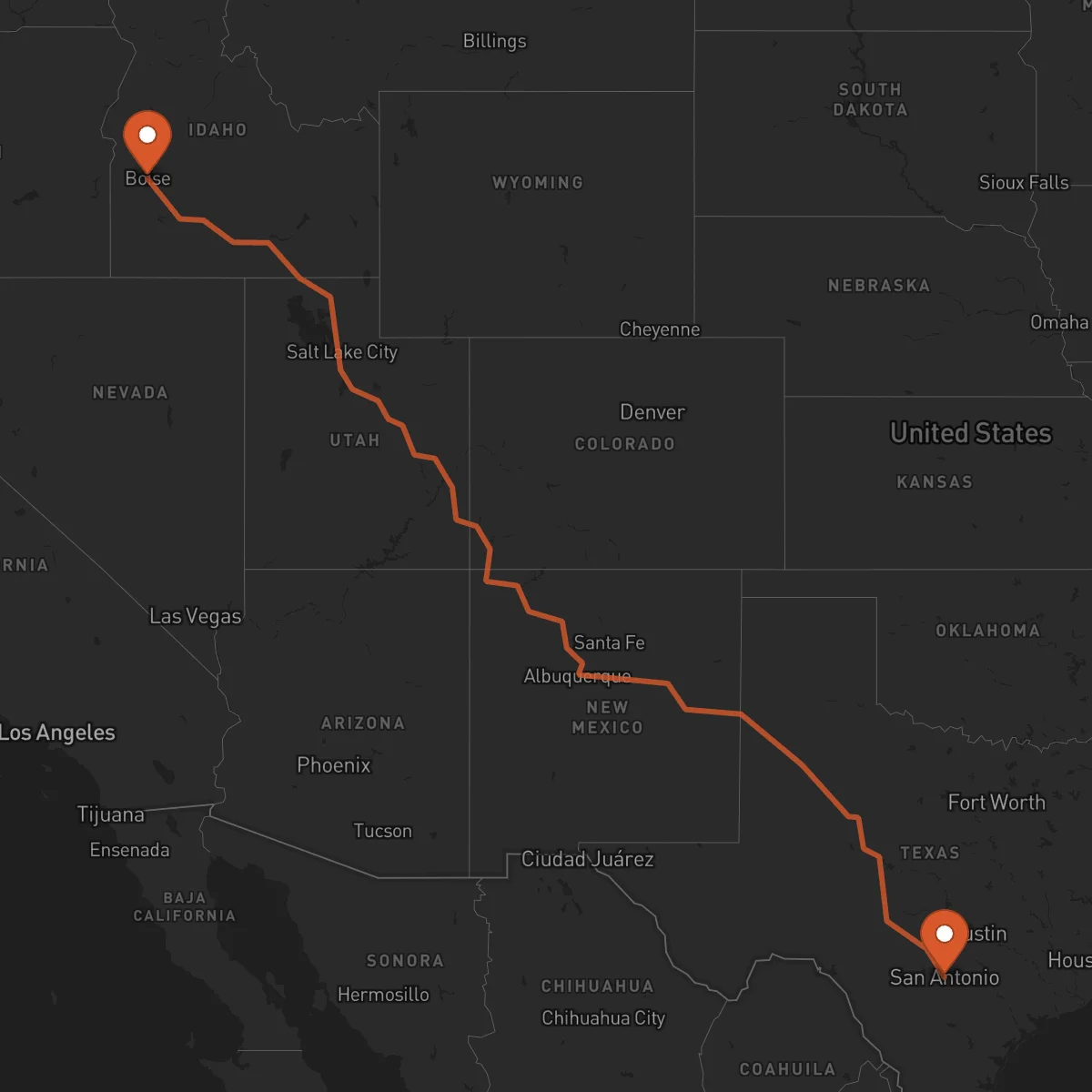
San Antonio to Boise
Boise → San AntonioFTL freight transportation service between San Antonio and Boise. Reliable logistics solutions for your business.
Route Description
Everything you need to know about the corridor San Antonio - Boise
The San Antonio to Boise corridor represents a vital domestic freight route connecting the heart of Texas with the Pacific Northwest. This 2,225 km journey traverses diverse landscapes and economic regions, facilitating the movement of goods between two strategically important commercial centers. The corridor serves as a critical link in the North American supply chain, enabling businesses to efficiently transport products across multiple states and time zones.
The route passes through major economic hubs including Dallas-Fort Worth, Oklahoma City, and Denver, each contributing to the corridor's significance. San Antonio's position as a logistics gateway to Mexico and the southern United States complements Boise's role as a distribution center for the Pacific Northwest and western Canada. This north-south connection supports cross-country commerce and strengthens regional economic integration.
Primary industries utilizing this corridor include manufacturing, agriculture, technology, and retail distribution. San Antonio's aerospace, bioscience, and cybersecurity sectors generate high-value cargo, while Boise's growing tech industry and agricultural processing facilities create consistent freight demand. The corridor also supports the movement of automotive parts, electronics, and consumer goods between these regions.
Control Terrestre optimizes operations on this corridor through our extensive network of certified transportation providers and specialized equipment. Our dedicated FTL services ensure that shipments maintain their integrity throughout the journey, with real-time tracking and professional handling at every stage. We understand the unique requirements of cross-state freight movement and provide tailored solutions that address the specific challenges of this route, including varying climate conditions and regulatory requirements across multiple jurisdictions.
Services for this Route
Available services for the corridor San Antonio - Boise
 Origin
San Antonio
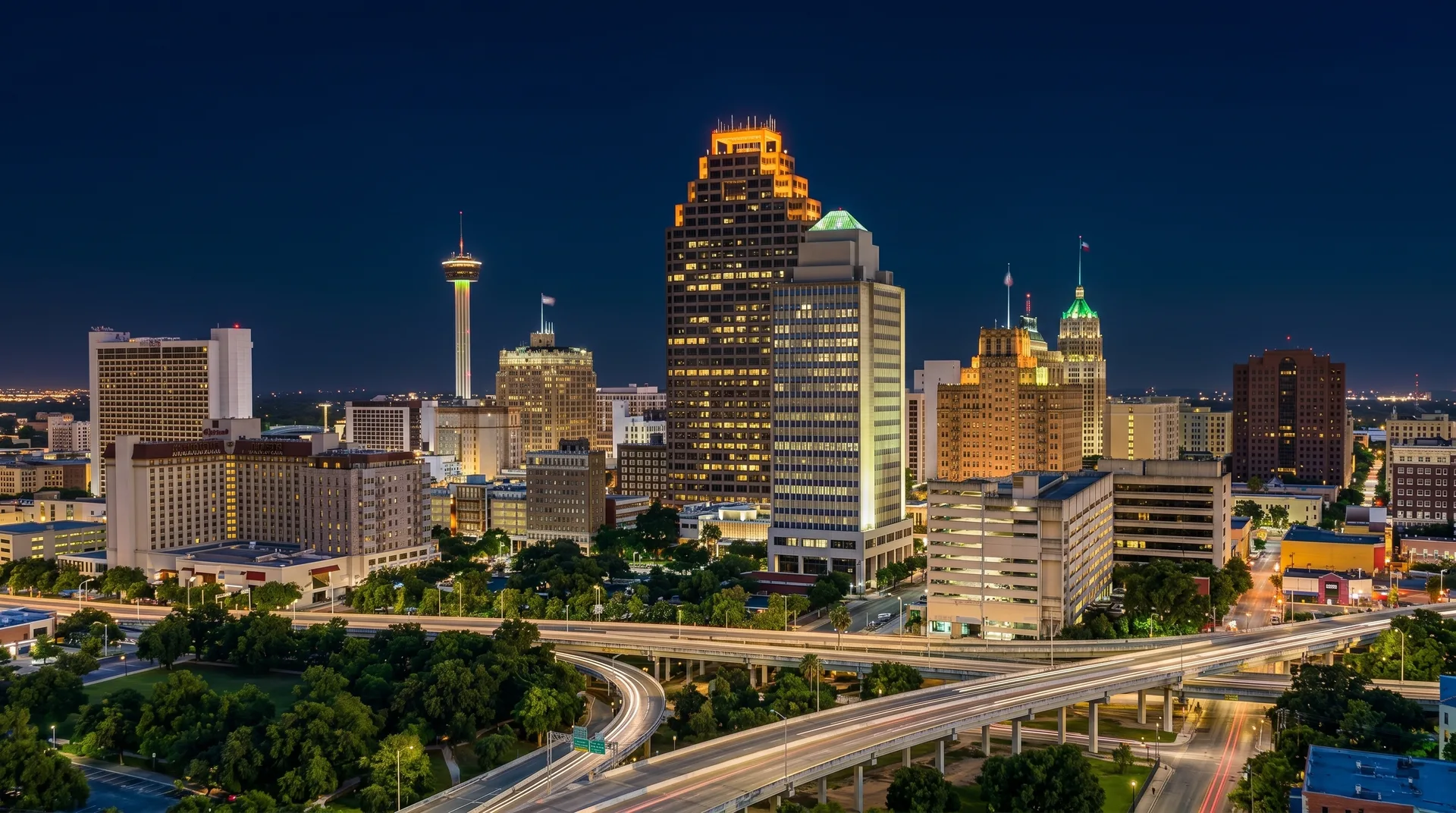
San Antonio serves as a strategic logistics hub in south-central Texas, positioned at the intersection of major transportation networks. The city's location provides direct access to Interstate 10, facilitating east-west freight movement across the southern United States, while Interstate 35 connects north to major markets like Dallas and beyond to Canada. San Antonio's logistics infrastructure includes the Port San Antonio inland port, multiple rail yards, and the San Antonio International Airport, creating multimodal freight capabilities.
The city's economy is diverse, with strong presence in aerospace manufacturing, healthcare and biosciences, military and defense contracting, and information technology. Major employers include USAA, Valero Energy, and H-E-B, all of which generate substantial freight volumes. The region's manufacturing sector, particularly in automotive and electronics, creates consistent demand for full truckload services to both domestic and international destinations.
 Destination
Boise
Boise, Idaho's capital and largest city, occupies a strategic position in the Pacific Northwest as a growing logistics and distribution center. The city's location provides access to Interstate 84, a major east-west freight corridor connecting to Portland and Salt Lake City, while Highway 95 facilitates north-south movement through the region. Boise Airport supports air cargo operations, and the nearby Port of Lewiston provides inland port capabilities via the Snake River system.
The Boise metropolitan area has experienced significant economic growth, particularly in technology, agriculture, and outdoor recreation industries. The city has attracted major tech companies, earning it the nickname "Silicon Slopes," while maintaining strong agricultural roots with potato processing and food manufacturing. Boise's distribution sector has expanded to serve the growing population of the Pacific Northwest, creating consistent demand for reliable freight transportation services to support both inbound raw materials and outbound finished products.










