Salamá to Manzanillo
Manzanillo → SalamáFTL freight transportation service between Salamá and Manzanillo. Reliable logistics solutions for your business.
Route Description
Everything you need to know about the corridor Salamá - Manzanillo
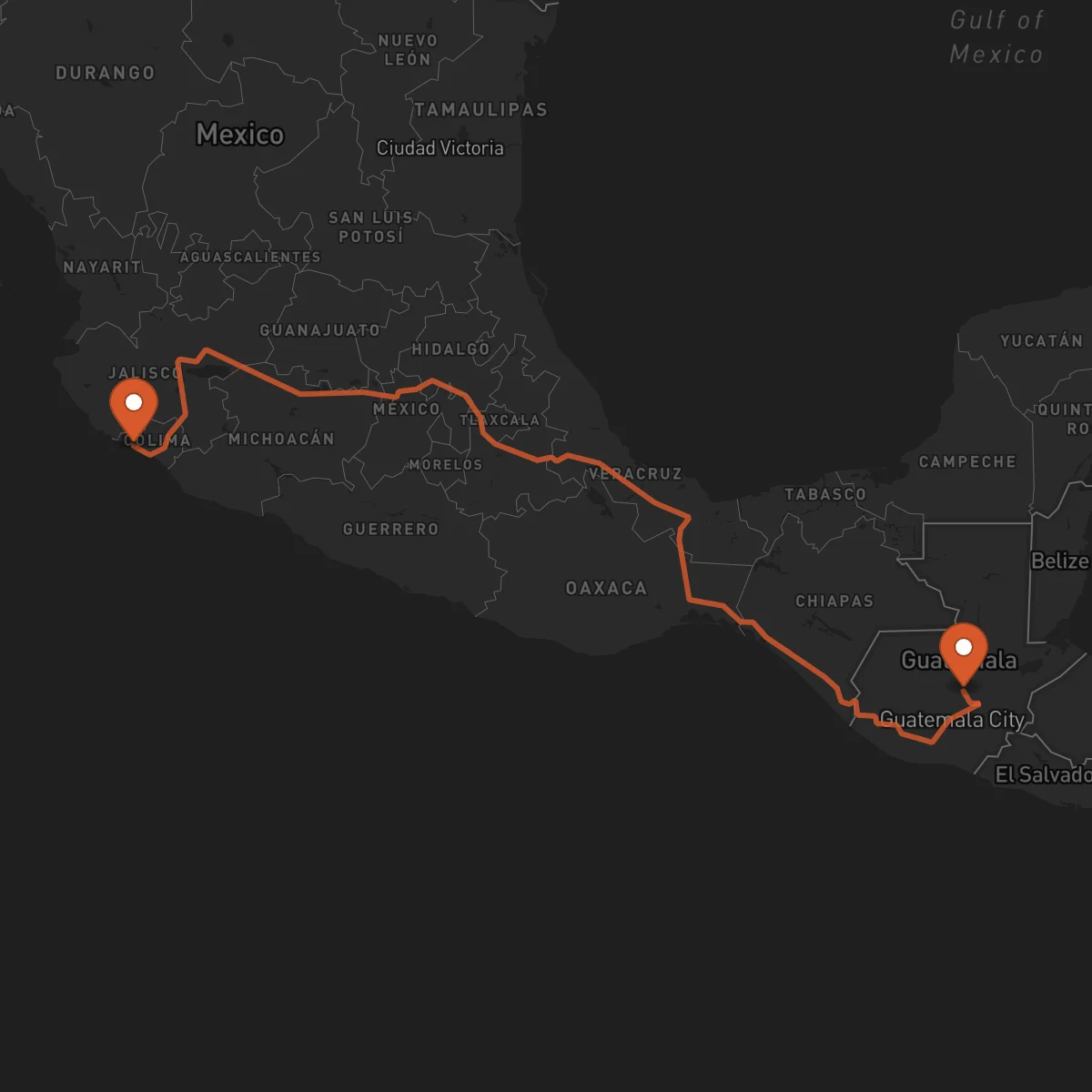
The Salamá to Manzanillo corridor is a vital north-south artery connecting the highlands of Guatemala with Mexico's Pacific coast, serving as a critical logistics bridge between Central America and North American markets. This 1,551-kilometer cross-border route facilitates the movement of goods from Guatemala's agricultural and manufacturing heartlands to one of Mexico's most significant port complexes, enabling efficient export and import flows. Strategically, it bypasses more congested routes by leveraging central Guatemala and western Mexico's highway networks, providing a direct link for time-sensitive cargo destined for Asia, the U.S., and Latin America.
Economically, the corridor supports robust industrial activity. In Guatemala, the Baja Verapaz region, centered on Salamá, is renowned for cardamom, coffee, and vegetable production, alongside growing textile and light manufacturing sectors. These goods require reliable transport to global markets. On the Mexican side, Manzanillo is a powerhouse, hosting the country's busiest port by volume, which handles containers, bulk cargo, and vehicles. The surrounding Colima state features manufacturing, agricultural exports (like mangoes and lime), and a burgeoning logistics industry that supports port-centric distribution.
Key industries leveraging this corridor include agribusiness (fresh produce, coffee, cardamom), textiles and apparel, manufactured goods, and increasingly, industrial components for Mexico's maquiladora sector. The primary transportation infrastructure relies on Guatemala's CA-14 and CA-9 highways connecting to the Mexican federal network, predominantly Fed. 200 and Fed. 190 through Chiapas, transitioning to Fed. 200D and Fed. 80D along the Pacific coast toward Colima. The principal border crossing is at Ciudad Hidalgo/Tecún Umán, a major gateway with facilities for commercial freight.
Customs considerations are paramount. Control Terrestre navigates these complexities through our alliance of certified providers, holding C-TPAT, FAST, and BASC certifications. These credentials streamline U.S. and Mexican customs procedures, enhance security protocols, and reduce potential delays. Our expertise ensures compliance with both Guatemalan and Mexican import/export regulations, documentation accuracy, and coordinated border management. We facilitate seamless operations on this corridor by managing the full FTL journey, from origin pickup in Salamá to final delivery at Manzanillo's port terminals or industrial parks, providing a single point of contact for our clients' cross-border freight needs.
Services for this Route
Available services for the corridor Salamá - Manzanillo
 Origin
Salamá
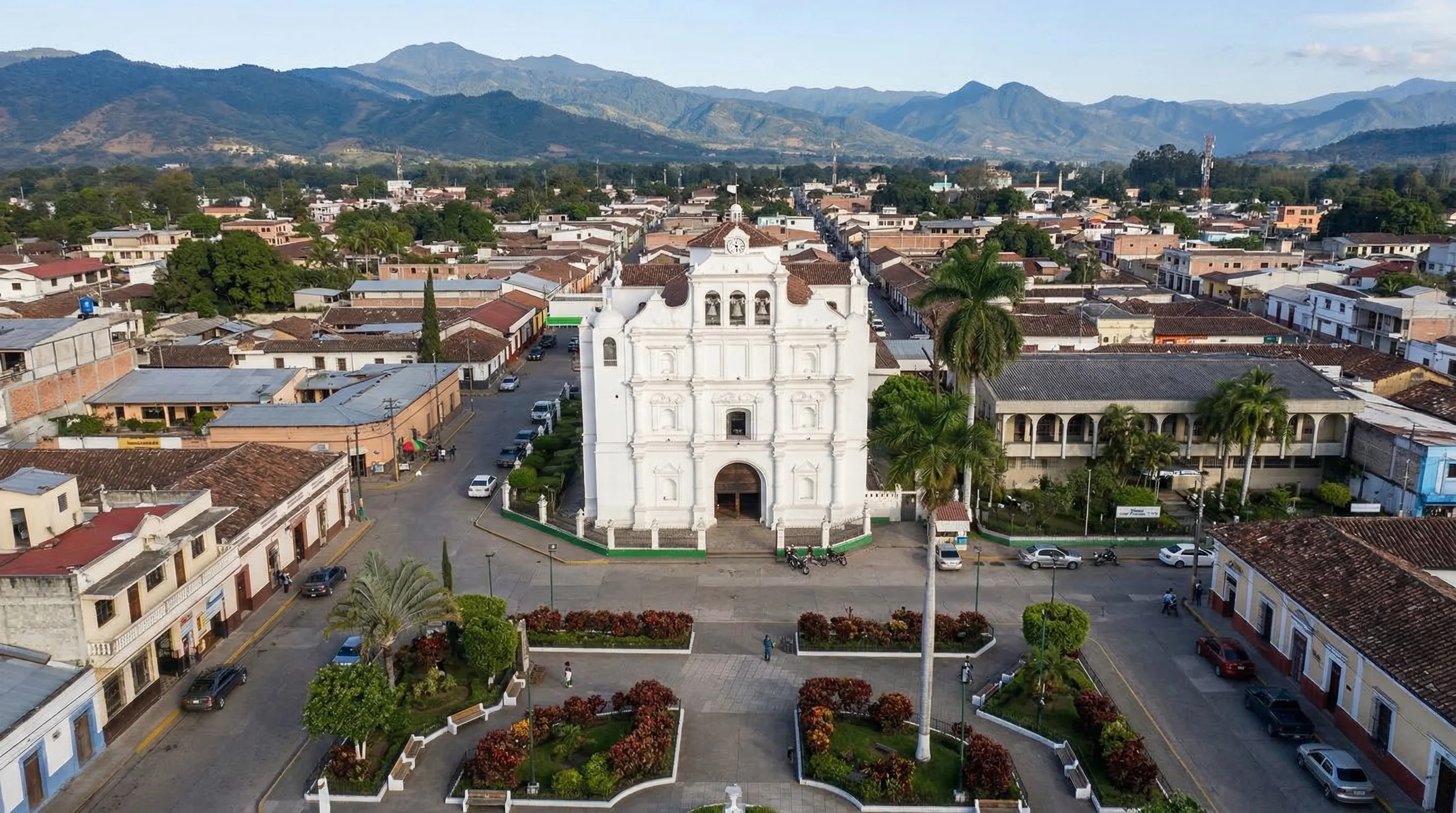
Salamá, the capital of Baja Verapaz in Guatemala, holds a strategic logistical position in the country's central highlands. It serves as a key agricultural and commercial hub for the region, well-connected by road to Guatemala City (approximately 150 km to the south) and the northern frontiers. The town is surrounded by fertile valleys, making it a primary production zone for high-value crops like cardamom, coffee, and a variety of vegetables. Its infrastructure is geared toward supporting regional distribution, with road access to the main CA-14 highway that leads directly to the major border crossing at Tecún Umán. This positioning allows for efficient consolidation of goods from surrounding farms and factories before embarking on the long cross-border journey. The local economy's reliance on export-oriented agriculture and growing light industry creates consistent demand for reliable full truckload (FTL) freight services to connect to international ports like Manzanillo.
 Destination
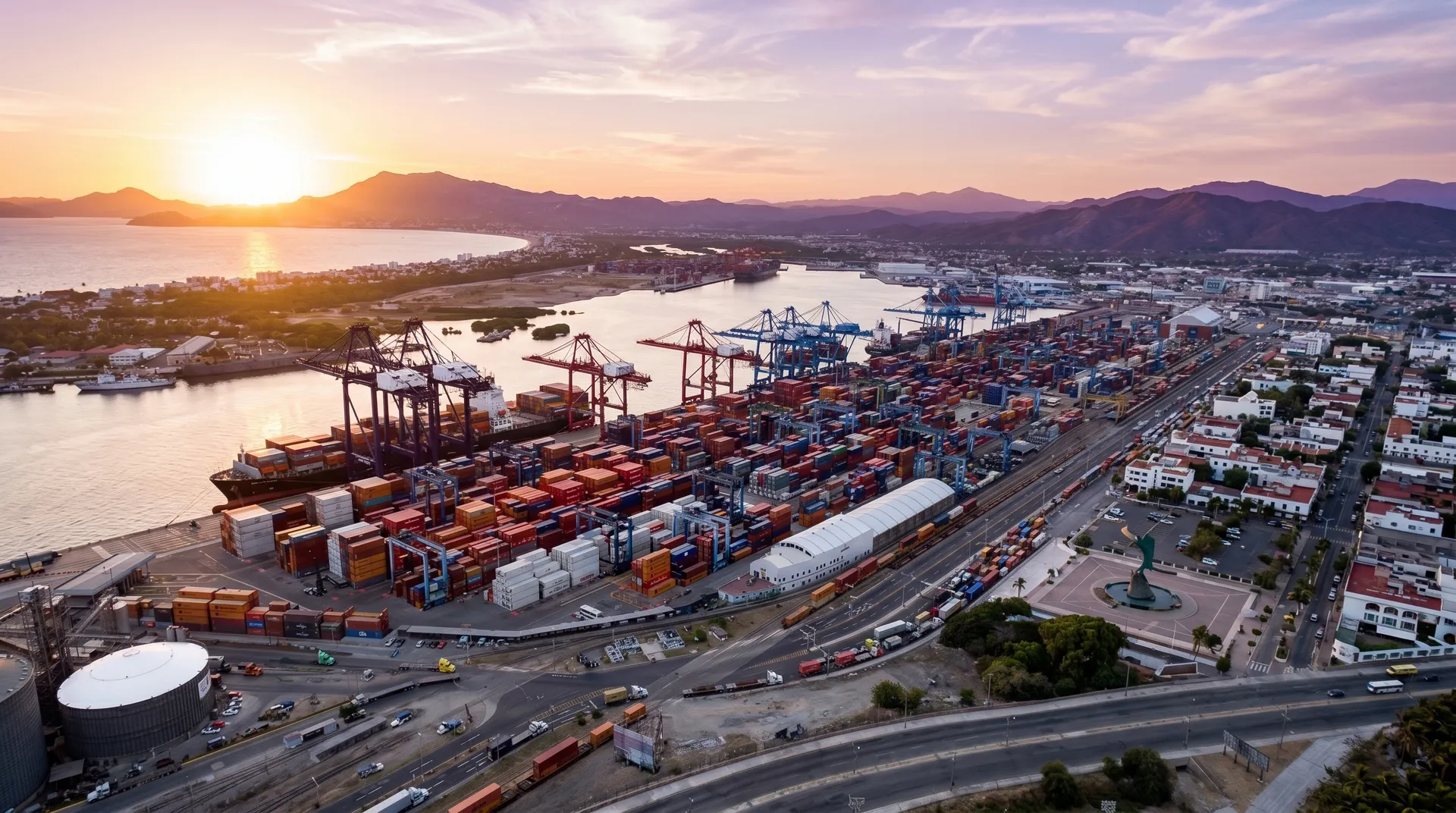
Manzanillo, located in the state of Colima, Mexico, is a globally significant strategic logistics destination due to the Manzanillo International Terminal, Mexico's busiest port. This deep-water port is a critical node for containerized cargo, bulk goods, and automobile traffic, serving as a primary gateway for trade between Asia, the U.S., and Latin America. The city's economy is intrinsically linked to port operations, maritime services, and a vast network of logistics parks, warehouses, and distribution centers catering to import/export activities. Its infrastructure is exceptional, featuring direct access to major Mexican federal highways (Fed. 200 and Fed. 200D) that connect it to the interior of Mexico and the U.S. border. The presence of specialized cargo handling facilities, including for refrigerated and oversized loads, makes it a versatile endpoint. For shippers, Manzanillo offers unparalleled connectivity for global maritime shipping, making it an essential terminus for cross-border corridors like the one from Salamá, where goods are consolidated for final export or distributed inland within Mexico.










