
Roatán to Laredo
Laredo → RoatánFTL freight transportation service between Roatán and Laredo. Reliable logistics solutions for your business.
Route Description
Everything you need to know about the corridor Roatán - Laredo
The logistics corridor between Roatán and Laredo represents a vital connection for international trade between Honduras and the United States. This 1824 km cross-border route facilitates the movement of goods from the Caribbean coast through the Central American corridor to the strategic border city of Laredo, Texas. The route traverses diverse terrain and crosses multiple jurisdictions, making it essential for companies engaged in import-export operations between Central America and North America.
The economic significance of this corridor extends beyond simple transportation, serving as a lifeline for industries that depend on timely and secure freight movement. Manufacturing, agricultural products, electronics, and consumer goods represent the primary commodities transported along this route. The corridor supports just-in-time inventory systems and supply chain optimization for businesses operating in both regions.
Key transportation infrastructure includes the CA-13 highway connecting to the CA-1 Pan-American Highway, which provides the primary overland route through Honduras, Guatemala, and Mexico before reaching Laredo. The corridor benefits from established border crossing facilities at Laredo, one of the busiest commercial ports of entry on the US-Mexico border, featuring advanced customs processing capabilities and multiple inspection lanes to facilitate efficient freight clearance.
Control Terrestre specializes in managing the complexities of this cross-border operation, providing comprehensive FTL services that ensure cargo security and regulatory compliance throughout the journey. Our experienced team coordinates all aspects of the shipment, from initial pickup in Roatán through final delivery in Laredo, handling documentation, customs procedures, and providing real-time tracking to maintain visibility across the entire supply chain.
Services for this Route
Available services for the corridor Roatán - Laredo
 Origin
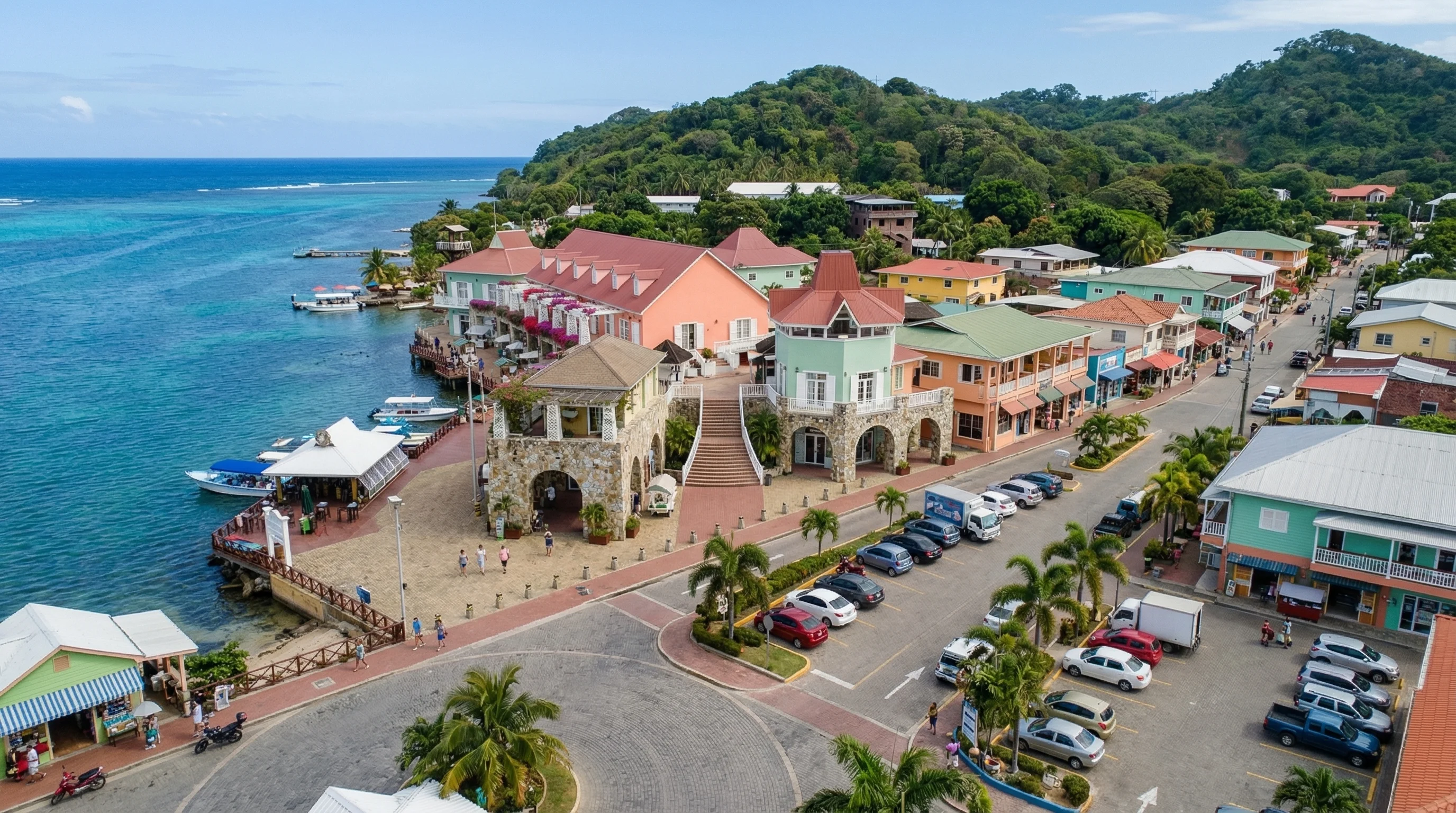
Roatán
Roatán, located in the Bay Islands of Honduras, serves as a strategic Caribbean gateway for logistics operations in Central America. The island's position provides direct access to maritime shipping routes connecting to major ports throughout the region. While primarily known for tourism, Roatán has developed infrastructure to support industrial and commercial activities, including warehousing facilities and cargo handling capabilities at the international airport and maritime terminals.
The local economy benefits from diverse industries including seafood processing, agricultural exports, and light manufacturing. The island's infrastructure includes the Juan Manuel Gálvez International Airport, which accommodates cargo aircraft, and maritime facilities capable of handling containerized and breakbulk cargo. These transportation assets enable efficient connections to mainland Honduras and beyond, making Roatán an important origin point for freight destined for North American markets.
 Destination
Laredo
Laredo, Texas stands as one of the most critical logistics hubs in North America, strategically positioned on the US-Mexico border. The city's location makes it the primary gateway for commercial trade between the United States and Mexico, handling billions of dollars in cross-border commerce annually. Laredo's infrastructure includes multiple interstate highways, extensive rail connections, and advanced freight handling facilities that support 24/7 operations.
The region's economy is deeply integrated with international trade, hosting numerous warehousing and distribution centers, manufacturing facilities, and logistics service providers. Laredo's World Trade Bridge and other border crossings feature state-of-the-art technology for cargo inspection and processing, while the city's proximity to major US markets ensures efficient distribution throughout the country. The area's industrial base includes automotive, electronics, agricultural products, and consumer goods sectors, all of which rely on the efficient movement of freight through this strategic corridor.










