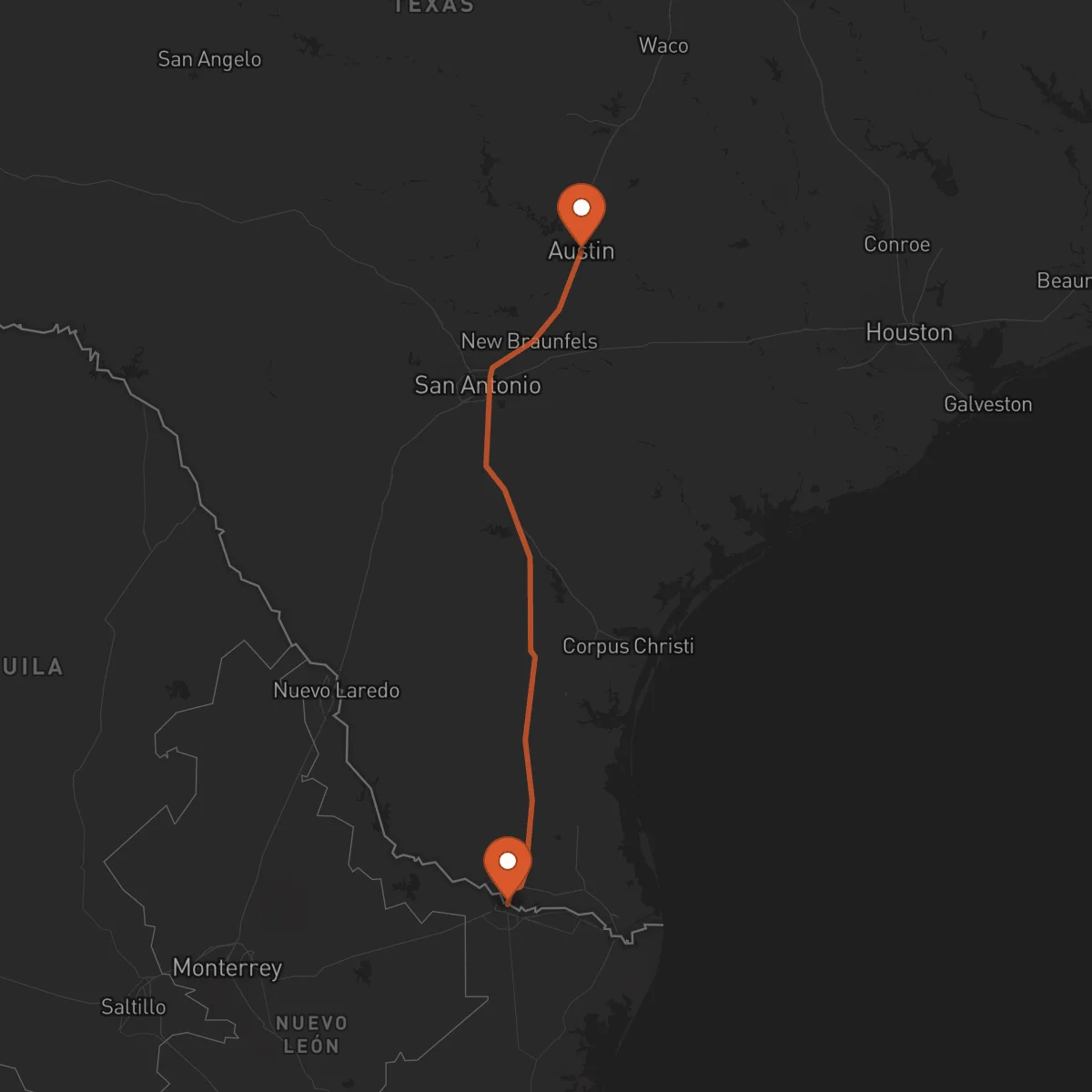
Reynosa to Austin
Austin → ReynosaFTL freight transportation service between Reynosa and Austin. Reliable logistics solutions for your business.
Route Description
Everything you need to know about the corridor Reynosa - Austin
The logistics corridor between Reynosa, Tamaulipas and Austin, Texas represents a vital commercial link connecting the industrial powerhouse of northeastern Mexico with the high-tech hub of central Texas. This 467 km cross-border route facilitates the movement of goods between Mexico's maquiladora industry and the United States' technology and manufacturing sectors. The corridor traverses the Rio Grande Valley, crossing through key border infrastructure that connects two dynamic economic regions. Control Terrestre specializes in managing this critical supply chain connection, ensuring seamless freight transportation across international boundaries while maintaining compliance with all customs and regulatory requirements.
Services for this Route
Available services for the corridor Reynosa - Austin
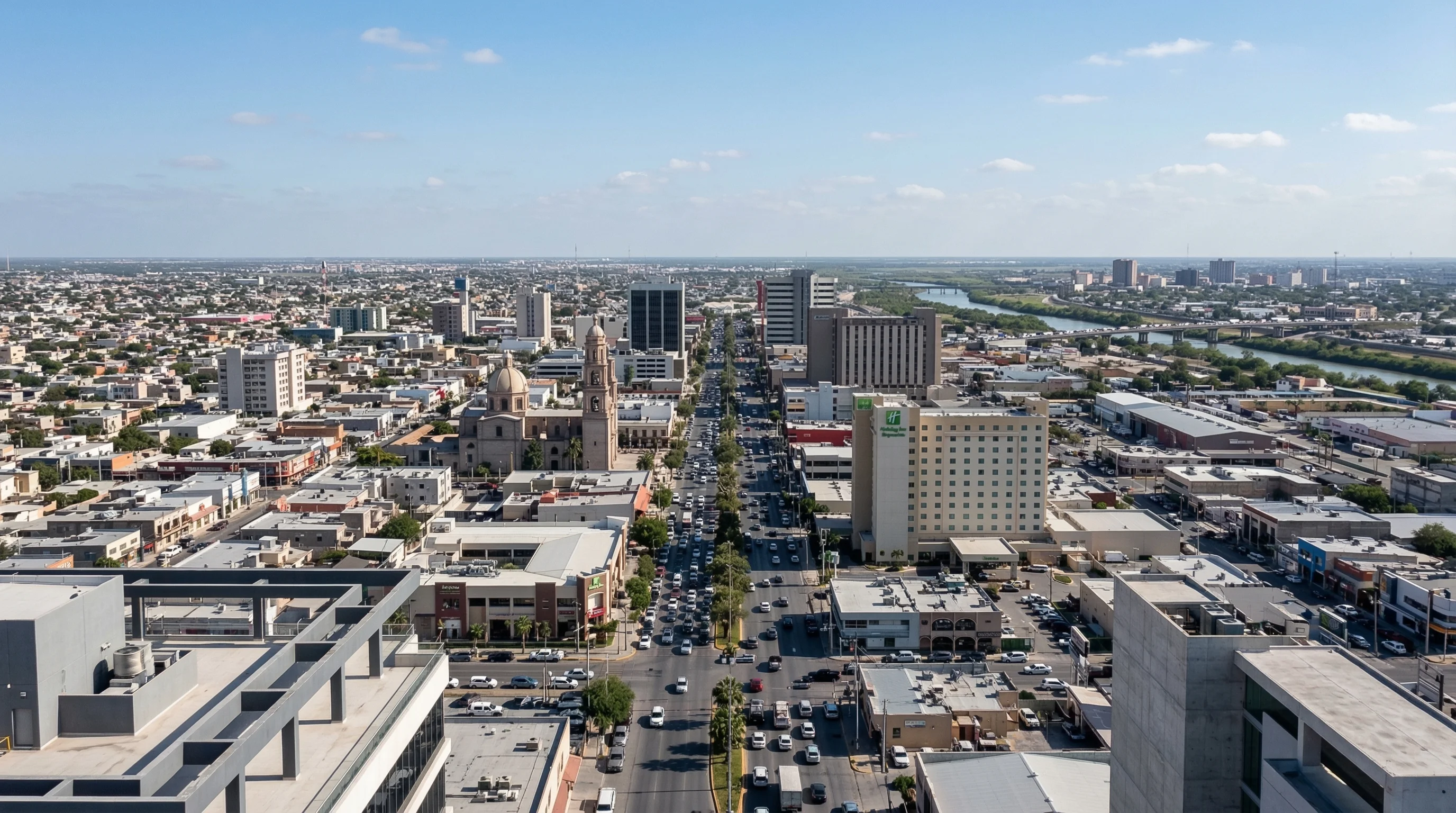 Origin
Reynosa
Reynosa stands as a strategic logistics hub in northeastern Mexico, leveraging its proximity to the U.S. border and its position within the Reynosa-McAllen metropolitan area. The city hosts a robust industrial base with over 200 maquiladoras specializing in electronics, automotive components, and medical devices. Reynosa's transportation infrastructure includes direct access to Mexican Federal Highway 85, connecting to the Pharr-Reynosa International Bridge, one of the busiest commercial crossings in North America. The city's industrial parks and manufacturing facilities make it a key origin point for cross-border freight movements.
 Destination
Austin
Austin serves as a major technology and innovation center in central Texas, home to numerous tech companies, research institutions, and manufacturing facilities. The city's strategic location provides access to major transportation networks including Interstate 35, connecting it to the broader Texas Triangle. Austin's economic landscape encompasses advanced manufacturing, electronics, aerospace, and emerging technology sectors. The city's logistics infrastructure includes multiple freight terminals, warehousing facilities, and distribution centers that support its growing industrial base and facilitate efficient freight handling for cross-border shipments.










